An angel fallen from grace: Father John Misty – God’s Favorite Customer

favorite customerI came out of Father John Misty’s third album: Pure Comedy with a bad taste in my mouth. After giving it a listen or two I was inevitably turned off by Joshua Tillman’s insufferable ability to portray himself as a character who’s sanctimonious. Yet, here I am a year later singing the praises of his newest studio LP God’s Favorite Customer. So what’s happened? Why the sudden change of heart? Well, the answer isn’t all that simple.
In an interview with NME Father John Misty, himself confirmed the album was not rooted in any specific concepts like his previous outings. In his own words, he admitted they were, in one way or another, “kind of pretentious.” In this, I saw a sign of change in Father John Misty’s mind, a glimmer of hope in a desolate wasteland of pompous, self-aware, singer-songwriter tunes. It was clear that rather than delivering a scathing social commentary he wants to talk about something much more personal. Something that was bigger than himself. This is where everything changed for me. I was in full support.

Despite his previous sentiments, God’s Favorite Customer still manages to tell an elaborate story across its forty minute runtime. For once Father John Misty is incapable of portraying himself in his usual bombastic persona. Instead, he’s inclined to sing about himself while he was in his most vulnerable state. With that said, this album isn’t so much about Father John Misty as it’s about Joshua Tillman. It’s about a man who’s been shaken to his core. It’s about being forced to examine yourself at your worst when you’re so utterly defeated by despair and hardship. Tillman explained that before the release of the album he went through a two month period where he stayed at the Bowery Hotel when he was reportedly “on the straights.” That period of time serves as the albums main inspiration and set piece.

Another theme that serves as a major inspiration for Father John Misty’s music is ironically religion. Due to its omnipresence in a myriad of ways, it’s something I’m also going to be focusing on in this article. However, I’m going to be analyzing it through the lens of someone who actually believes in God. I’ll be sure to point out the brief periods of theological ignorance Tillman often sprinkles throughout this discography whenever I find it most apt. The name of the record itself is a good place to begin.

The rather pious title can be taken in a number of ways but I see the title of God’s favorite customer as a position of prestige and weakness in some respects. To be God’s favorite customer means you constantly require His assistance. For whatever reason, you find yourself dependent upon His comforting word, calling out to Him more often than not. The title is also a bit paradoxical as God isn’t supposed to pick favorites. Romans 2 verse 11 spells this out very explicitly.

For God does not show favoritism.

This revelation makes the title of God’s favorite customer all the more insignificant as to now show favoritism everyone must be God’s favorite customer. Significance is something Tillman actively chases throughout the record. Whether the title is meant to highlight his feelings of worthlessness or to be taken humorously, its a good example of the persistent theme of religion he frequently uses without discretion. Now without any further delay, let’s get into the music, shall we?

“Hangout at the Gallows” marks the beginning of Tillman’s journey through despair. It’s carried by a slow drumbeat and a plucky bass. Father John Misty sounds desperate and even a bit deranged as he coos about the gallows. In case you don’t already know, gallows are a set of structures that were primarily used for public hangings back during a time when capital punishment was more primitive. It’s here where the title of this track should make more sense as it’s a painfully obvious pun about suicide. Tillman’s suicidal thoughts are regularly shared on this album making it a much more poignant experience. It’s a rather somber note for the album to begin on and it only gets severer as the listener trudges onward.

“Mr. Tillman” is the next track and my personal favorite. It’s a great example of self-reflection as Father John Misty doesn’t sing about himself from a first-person perspective instead; taking on the role of a hotel concierge frustrated with him. It’s a rather pleasant sounding song, with a loud acoustic guitar, charming bells, and beautiful harmonies done by Father John Misty himself. However, all of this is immediately contrasted by its decisively melancholic sentiments.

Mr. Tillman, for the seventh time. We have no knowledge of a film that is being shot outside. Those aren’t extras in a movie; they’re our clientele. No, they aren’t running lines and they aren’t exactly thrilled. Would you like a regalo on the patio? Is there someone we can call? Perhaps you shouldn’t drink alone….

The track references the hotel Tillman stayed at during that two-month period where he was having a personal dilemma. In fact, its working title was simply “Bowery.” The listener is able to take pity on poor Tillman; his humiliating actions have caused him to become a public nuisance. His crass character traits were also displayed on the previous track when he asks the audience, “Whats your politics? Whats your religion.” Both of which are inappropriate to ask so outwardly. Nonetheless, the hotel receptionist attempts to stay as professional as possible whilst subtlety scolding him.

“Just Dumb Enough To Try” is Tillman’s failed attempt at regaining his haughty stature. It’s posed like a love song but it’s conclusively about how Tillman is a failure at love and by extent life itself. This was the track that really opened my eyes to Father John Misty’s inner struggle and growth not just as a musician but as a person. While the entire album is a harsh self-reflection this is one song that really deconstructs his personal character flaws. Flaws that were undoubtedly the terminal cause of his downfall. “Date Night” maintains this theme and further exemplifies Tillman’s sleazy nature. Whether it’s supposed to be him talking to his wife or another woman entirely is not exactly clear, but a lot can be derived from his words. Despite his unfavorable situation he still tries to maintain his egocentrism.

Nothing surprises me much. And my hobbies include: Laughing in the dark. Do you want to go to the farm? Do you want to go to the park? I’ll get you ice cream if you give me your card.

This lark of a persona comes to a halt once we get to the next track “Please Don’t Die.” Father John Misty recapitulates the theme of suicide and depression as he sings from the perspective of his wife who’s very overtly pleading with him to not kill himself. It’s another song that highlights the negative characteristics of Tillman. Suicide is an act often seen as selfish to some degree. Contrary to what many may believe the pain of the victim doesn’t die along with them, instead, its carried on to the ones who truly loved and cared about them. Tillman has revealed before his struggles with depression and how much his wife has helped him through it. However, it seems their estrangement has only caused it to fester. Tillman realizes this and makes progress to end his suffering on the next track.

Tillman’s soft piano driven song, “The Palace” is him finally personally acknowledging his shortcomings. He pokes fun at his drug abuse, recognizes how badly he treats others, and admits he needs help and is ready to change.

Last night I texted your iPhone. And said I think I’m ready to come home. I’m in over my head.

It’s a hopeful end to Tillmans despair. As he, after all this time, understands the fruitlessness of maintaining his masquerade. After “The Palace” the album seldom returns to the routine subject matter Father John Misty so often tackles. “Disappointing Diamonds Are the Rarest of Them All” and “The Songwriter are both about his wife. But the title track is one of particular importance as it somewhat continues the narrative of the record.

“God’s Favorite Customer” follows Tillman on, as he puts it, “another night on the straights” where he unexpectedly calls out to God for direction. Father John Misty has made it clear he doesn’t believe in God. During his childhood played religion such a prominent role in his life that it ultimately drove him away from it and with it his evangelical parents. However, this track captures one fleeting moment where he once again drops his idiosyncratic attitude to call out to something greater than himself. Ironically he still does this selfishly as he believes the former title of God’s favorite customer entitles him to special treatment. It still manages to be a very interesting departure from his usual inflammatory statements toward religion and the bible you can’t help but see how far down the rabbit hole Tillman leaped during his dark period.

The closing track of the record “We’re Only People (And There’s Not Much Anyone Can Do About That)” is Tillman finally changing. It neatly wraps up his misadventure through suffering in his usual methodical manner. Tillman shows a better understanding of himself and other people as he decides to relate himself to them rather than attempting to further distance himself. He’s taken his period of crisis as a learning experience and seeks to change for the better. A happy ending to a sad story.

Father John Misty continues to impress as his albums show consistent maturity throughout the years. The man who had claimed to know all the answers was finally met with one that couldn’t be solved. This album is a perfect metaphor for growth both in musicality and in spirit. For the spirit is willing, but the flesh is weak.

Additional Reading:

Continue reading “An angel fallen from grace: Father John Misty – God’s Favorite Customer”

150-word track review: In the Zone – Ken Ashcorp

zone.jpg

Ken Ashcorp is one of those artists that’s consistently able to floor me. Whether it be by his masterfully created ballads or his ability to sing about anything and make it sound good, he always finds a way to fascinate my delicate mind. This track is obviously no different. In its most raw essence, the song is about sex. It’s about losing yourself and taking everything in the heat of the moment. When you’re in the zone you don’t really care what anyone else thinks, despite how vulnerable you may be.

Oh, confidence exude, God, I love that attitude. Shudder from the shutter, shut up and make me glad that I did this with you.

The constant booming guitar riff and the almost wispy way Ashcorp delivers his lyrics makes for an incredibly enjoyable track that I listen to rather regularly. Give it a listen and get in the zone.

150-word track review: Come Smile With Me – Sleepspent

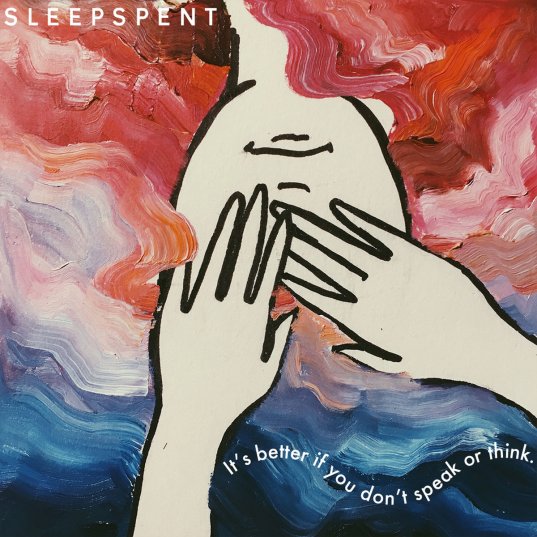
slee[.jpg

If there’s one thing I love it’s a song that puts me at ease while simultaneously being fast. Sleepspent is able to capture this very specific tone in such an impressive and engaging fashion. The track has themes of isolation in its lyrics while ultimately recounting a story of self-destruction.

When the world falls asleep it may as well be decimated. I can’t see and I can’t sleep oh, seven years of tired waiting.

The rolling acoustic guitar riffs play together nicely with the hard-hitting drums. It all culminates into this beautiful ballad sung predominately by the lead singer; Austin North. Fittingly enough, the song ends just like how it begins: abruptly.

It’s the epitome of a summertime jam. Something you can listen to as you drive across the sandy coast or as you’re drifting to sleep on a warm night. It’s sure to bring a smile to anyone listening.

150-word track review: Okay – Temporex

temp

It’s incredibly rare when you find a song that you relate to so much you’d’ve thought it was written especially for you. Such is the case of this bubbly track by Joseph N. Flores AKA Temporex. The track details the age-old struggle of being separated by the one you call yours.

Baby, I don’t know what to do. I’m just so damn far away from you. I kiss you before you get onto the train. Might not see you for months and that pains me to say…

It’s something that speaks to me very deeply at this point in time and its poignancy is made more elaborate by its contrasting production. In true Temporex fashion, the song is layered with bells, a fluffy guitar, and jazzy drums. Its ladder section is more experimental but a nice closer to an already enjoyable track. Give it a listen, it’s anything but okay.

150-word track review: Bitter – Palace

breaking me down

Lend me your brakes again, you’re more than my speed. And I’ve played heartstrings before, but not in your key.

These are the first words uttered by Palace frontman; Leo Wyndham in the second track off their 2014 EP entitled Lost in the Night. This is said after the audience is able to hear the opening guitar licks that effectively set the narrative tone for the rest of the track. It’s desolate, whispy, and above all else; cold. Those are the very few words I can use to describe this beautiful song as anything else would just come off as disingenuous.

It’s one part heartbreaking and another part reassuring to hear Wyndham sing about the bitterness of envy. It’s sung to such a minimalist yet complex instrumental that it causes the listener to focus solely on the emotional vigor echoing from Wyndham’s words. Give it a listen. You won’t feel bitter.

Additional Reading:

Continue reading “150-word track review: Bitter – Palace”

Reviewing 7 movies in about a hundred-fifty words or less

seven

Se7en (1995)

A great reflection on human morality. As you watch the film unfold you begin to question the true intentions of the police force and perhaps even mankind itself. The ending makes you consider the perspective of the murderer and whether you should feel remorse for him or people he’s hurt. Brad Pitt and Morgan Freeman play off of each other well. I find their duo to be very appropriate and entertaining to watch. It’s like a dark buddy cop movie, except David Fincher made it so it’s perfect. You can see the way the two men bond and get close to one another until it all culminates into a thrilling climax. Watch out for the number seven, it appears a lot and I can’t even begin to divulge its thematic importance. Go watch it if you haven’t already, Fincher continues to impress with his unbridled knowledge of filmmaking.

obvious-child-e1531329164174.jpg

Obvious Child (2014)

A nice little coming of age story about a woman going through real-life struggles we all must often face in society. In its simplest terms, a comedian is essentially paid to never grow up and keep a facade that basically equates to a constant lark. Yet when that fact is juxtaposed with real situations the main character must learn to overcome, it really develops into a beautiful relatable story I think anyone can get behind. Jenny Slate plays her character very well because it essentially is her, but she’s able to make it not as contrived as that may sound. I think we’ve all been in her shoes at one point or another and I would be lying if I said I couldn’t relate to her myself. The story is sweet and something to watch if you just wanna have a good time.

kill her

Kill Your Darlings (2013)

A pretentious film that documents the intertwined lives of 3 poets from the forties. I picked this film up on a whim because I thought it would be another crime film, and it also had Michael C. Hall in it but instead, I got this incredibly ostentatious film about 3 idiots attempting to induce a modern renaissance. The presentation is all over the place, the editing (primarily the audio) is rather shotty, and the acting, especially from Daniel Radcliffe, leaves much to be desired. An overall unenjoyable experience. I wouldn’t waste any time on this if I were you.

hateful_eight_twc_1-0-0.jpg

The Hateful Eight (2015)

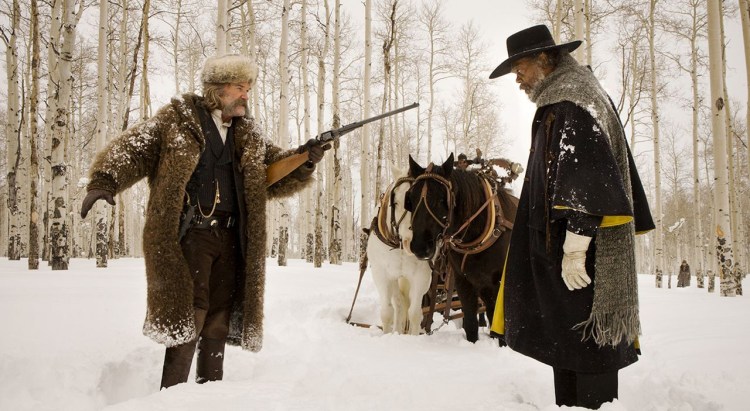
The eighth film from Quentin Tarantino manifests itself in the form of a historical film that grapples with morality and consequence. It follows the experiences of bounty hunters and captures how they all end up clashing with each other when forced together into a single room. The whole atmosphere leaves the viewer on edge for most of the film and the twists and turns it takes are especially intriguing. Samuel L. Jackson, as always, steals the show and for once Walton Goggins doesn’t play a terrible villain like he does in the next movie. Anway, it’s a Quentin Tarantino movie there’s a lot of odd nuances you aren’t going to get with anyone else directing it, have fun and watch the flick.

ant-man_and_the_wasp_bts_9.jpg

Ant-man and the Wasp (2018)

The very definition of a passable superhero film. It’s got action, and it has a decent narrative and resolves cleanly at the end. The villans are rather dull and have such clear weaknesses that it’s almost laughable. The film is played off as more comedic but not at all in the same vein as Thor: Ragnarok which is undoubtedly the best way to do it, at least in terms of films from the MCU. There’s a guy whose main role was to spout exposition at the beginning of the film, and a sub-par unnatural romantic ark that felt rushed and unnecessary. It’s not a bad movie per say just unapologetically average. I would recommend you go in with low expectations and leave with even lower ones.

Enemy (2013)

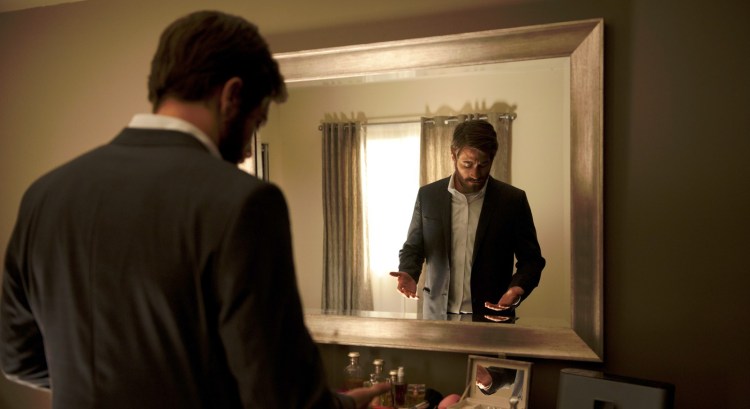
A surreal vignette about internal struggle. I really liked this one, there’s a lot of subtle themes and motifs at play that I think all types of viewers can appreciate. The film is essentially about dealing with an internal struggle and self-image, how it can ultimately break you and cause you to do things you didn’t think you would. All the while, the movie is coated in a dim yellow finish making it look more retro which is a stylistic choice I was ultimately on board with. Denis Villeneuve is responsible for films like Sicario and the recent Blade Runner reboot and I’m honestly really starting to enjoy his manner of filmmaking. Jake Gyllenhaal has the challenge of playing two characters who are so radically different I started to think they were played by different people. A must see for anyone who likes Villeneuve’s work.

pulpfic_1280.png

Pulp Fiction (1994)

Another Tarantino movie, because why not. This is one of the most interesting Christian films I’ve ever watched. The whole movie is about salvation, living a life of sin and ultimately choosing a path of righteousness. You get to see the lives of a few bad people play out and how they react when given a second chance. It’s an interesting departure from Tarantino’s standard character types because while they’re still corrupt people they actually have the possibility to make things right. It’s honestly a near perfect film and I recommend everyone give it a watch. I say near perfect because for some reason Tarantino thought it was a good idea to insert himself into the movie as a character who says the word “ni**er” at awkward times. I suppose we are all our own hamartia.

This was originally supposed to be ten films, all of which I would watch in a consecutive ten-day time span, but since I’m bad at keeping my own promises I fell just short. Some of these I watched in theaters, others I watched with friends, and some I watched alone. I suppose that could have an effect on judgment but if I’m being honest I think most of these films are worth a watch. Most of them.

Pierrot le Fou and the appeal of arthouse

the foolArthouse is a genre of film that is made to circumvent the traditional style of filmmaking omnipresent within the current scope of contemporary cinema. They are meant to be an experimental and serious artistic work not aimed at a commercial audience. They are often very confusing, strange, yet simultaneously charming films that transcend and challenge the tedious approach many of us take to the theater regular basis. The biggest appeal of arthouse to me is that you really feel like you’re watching a film made by real people. People who want you to accurately see their vision. People who want to communicate a complex story and present you with something you’ve never considered before.

If you want something different. If you want something engaging. If you want something that isn’t boring. If you want to truly be entertained, then I cannot recommend arthouse films enough.

The film I’m talking about today is undoubtedly arthouse but was also apart of the new wave movement. New wave refers to a period in cinema that stretched from the late 50’s to the late 60’s localized entirely in France where some of the best and most influential films were released. Pierrot le Fou is unmistakably no different.

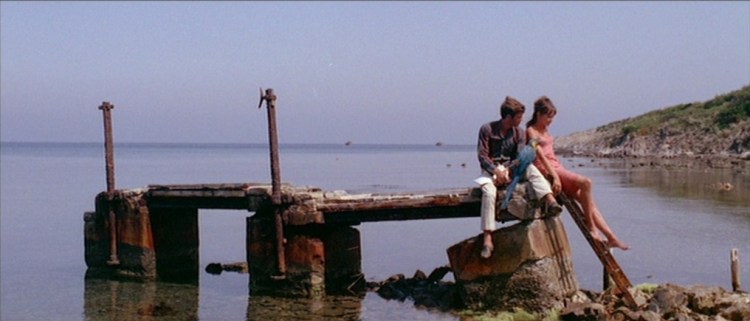
The film follows the misadventures of disgruntled Ferdinand “Pierrot” Griffon and Marianne Renoir, portrayed by Jean-Paul Belmondo and Anna Karina respectively, as they run away to take on a life of crime together. It’s a rather meager backdrop to compliment the true meaning behind the enigmatic narrative and themes present throughout the film.

At the beginning of the film, Ferdinand, who I’ll be referring to as Pierrot from now on, speaks to an American Film director at a dull party and meekly says, “I’ve always wanted to know exactly what cinema is.” The response he gets from the man, who is an actual American director; Samuel Fuller is the best starting point for this article and is the simplest way I can explain the film as far as motifs are concerned.

A film is like a battleground. There’s love, hate, action, violence, death…in one word: emotions.

Pierrot le Fou is all of these things condensed into 110 minutes and it’s exhibited in such an enthralling style it’s hard to even catch all of it unless you force yourself to examine it thoroughly, which I did. There’s love in the way Pierrot and Marianne are unable to understand it. There’s hate in the way that Jean-Luc Godard decided to depict Anna’s character because they were going through a divorce, which I’ll get into later. There’s action and death following Pierrot everywhere he goes because Marianne craves it. Putting it in its most straightforward form; it’s all just emotions. The emotions of Godard told cinematically. They say to write what you know and Godard certainly did; when he decided to adapt the 1962 novel Obsession into a film.

Love is an elusive topic explored often by many artists but something I really enjoy about Pierrot le Fou is how its weaved between the narrative and its other themes. The two leads are supposedly in love and yet have no idea what it is or what they’re even talking about. They ruthlessly jump into compulsive situations without considering the bigger picture and call it love. Their tender moments are always colored with a lack of sincerity that makes them seem so ingenuine. As their perception of love changes so does their clothes to reflect the period of time they’re in. In the middle of the film when they settle on the French Riviera Marianne grows bored of the mundanity and exclaims “I’m tired of wearing the same dress every day!” This reflects the side of her that so desperately wants to “live.” Yet Pierrot had already considered that living.

Both of them see living as completely different things and the audience gets to see how they clash. Sometimes quite humorously as they both break the fourth wall several times, further engrossing the audience into their chaotic ventures. Its a rather risky move to break the fourth wall in a film such as this but I believe it creates a more immersive experience. During Marianne’s speech to Pierrot where she tells him she want’s to go dancing she stares directly into the camera and repeats “I just want to live.” Marianne is trying to gain sympathy from the audience here, but the manner in which she delivers her words and her cold stare into the camera ends up having the opposite effect.

Godard continues to deconstruct the unhealthy relationship between the two characters by portraying their relationship as a criminal partnership. I think that’s the most salient motif displayed in the film. Pierrot leaves behind his stable life with a wealthy Italian woman to go into the great unknown with someone he hasn’t seen in years. Perhaps that’s the reason why the film title translates to “Crazy Pete.” In all the confusion he changes his perception of love to coincide with Marianne except she was never in love in the first place.

Godard is attempting to piece together his feelings within the film and show the audience the true grandeur of his emotions while also creating this cinematic marvel. The film is a portrait. A portrait of himself and if that isn’t something special that adds a layer of depth to this already profound from then I don’t know what will. In a way, it’s saddening to see Godard unravel himself in front of the audience because it means throughout this film he was entirely vulnerable.

The cuts are sometimes jarring, the music begins and then ends abruptly at seemingly random times, but the cinematography is beautiful and the language is pretty. It’s all reminiscent of someone who is in bewildered anguish, desperately trying to decipher their own emotions they have no hope of ever comprehending. It’s even more tragic when you see the fate of our hero Pierrot. A fate I won’t spoil in this article because its one thing to read about it, but it’s another to see and feel it. Life is so different from novels.

To experience Pierrot le Fou is to experience something truly remarkable. It’s opened my eyes to a boundless ocean of new possibilities in film I hadn’t yet explored. I know I call it an arthouse piece but in all honesty, this is a film that excels that simple label. It’s an amalgamation of so many ideas and themes its hard to confine it to one description, but perhaps that’s the essence of art house cinema. It houses all the “weird” things deemed unacceptable for a general commercial audience. You cant market arthouse films they aren’t meant to be just a film. Its vitality comes from the fact it’s the most authentic version of art there is.

I would say that the appeal of arthouse is whatever you get out of it. I certainly gained a lot out of Pierrot le Fou. Go watch it if you’re not afraid to read subtitles and even if you are I still recommend you do anyway. There’s a lot I didn’t talk about in this feeble little article I’m sure you can find out for yourself and if you don’t want to, oh well c’est la vie!

Additional Reading:

Continue reading “Pierrot le Fou and the appeal of arthouse”

The Last of Us: how to make fictional characters come to life

better last of us

One of the vows I made this summer was to start playing video games again. Video games are an art form not many people are able to recognize as such, and the fact I was even marginally taking part in that viewpoint by not playing them really bothered me. They provide an opportunity to tell immense immersive narratives with some of the worlds greatest minds behind them. Yet, many simply write it off as nothing but violence and nonsensical power fantasies. On the surface perhaps that’s what many games may seem like, but to the people who are actually experiencing them, they’re much more than that.

It’s true that numerous video games are a type of escapism for particular individuals however, I believe they can also ground us back in the space we inhabit, maybe even with a greater appreciation than we had before. They provide unforgettable experiences the player could have never even dreamed of. I’m aware this sentiment doesn’t hold true for all titles, but the one we’re talking about today could not be more fitting of my previous declarations.

When I asked my friend Noah to let me borrow his copy of The Last of Us I wasn’t aware that by the end of it I would be ashamed I didn’t spend a cent on it. The game warrants the utmost praise and acclaim for masterfully blending a heart-wrenching story with creative survival style gameplay. I’m going to attempt to analyze as much of the narrative and overall style of the game itself as I can in this article without ruining the integrity of it. I would love it if everyone were to experience this game in its entirety on their own. However, there will be some spoilers in this appraisal. So if you don’t want it ruined for you. I suggest you turn back now.

I’ll never forget the title screen for The Last of Us. It’s just a simple window with some foliage peeking out with and a mere, “Press Any Button To Start” message at the bottom, but for some reason, it holds so much thematic purpose. The area around the shutter is very damaged due to the overgrowth, but at the same time, it’s so gorgeous. It’s almost as if it’s trying to say that despite the dire straights the world is currently in, life continues to flourish and go on as if nothing happened. There’s a level of poignancy there that shouldn’t be lost on the player once they begin their journey as it’s carried throughout the duration of the game. It’s also incredibly tranquil which is a stark contrast to what directly follows.

The very first scene between the main character; Joel and his daughter Sarah, portrayed by Troy Baker and Hana Hayes respectively, sets up The Last of Us and Joel’s character perfectly. You see one of the few times where he is truly happy and then you get to see how that side of him was broken. Not just because of the death of his daughter but also due to the broader implication of the outbreak itself.

I’ve always found the use of a virus as a plot device to be hackneyed and contrived, very rarely is it ever done with a level of elegance that warrants recognition. However, this is something that The Last of Us is able to brilliantly subvert. The outbreak is reduced to a backdrop to allow the blooming relationship between Joel and his eventual sidekick Ellie to come into the spotlight. The focal point isn’t the infection; it’s the characters. In its purest essence, The Last of Us is quite literally about the last of us. The hardships one must undergo to survive in a cruel world, and how pure love can still blossom from it.

There’s twenty-year gap following the prologue where the player can observe how far the world has fallen. The camera quietly focuses on Joel as he sharply rises out of his bed in his dimly lit room. Given his stunned reaction, it’s reasonable to assume the prologue cutscenes are what he was dreaming about. However, what’s clear just by looking at him is that a lot has changed after the twenty-year lull. The shift in his demeanor and the tone in his voice implies he’s being haunted by his past. This will be the first of the many scenes where the player watches him awake from desperate slumber. The creative director and writer of The Last of Us; Neil Druckman later added in a commentary released for the game:

It’s another one of those moments…. where its like; it just feels like Joel is just always exhausted. Like this world is just bearing down on him.

The world itself has been utterly destroyed by the outbreak and now society has opted for a community-driven democracy with military-controlled quarantine zones. For once in a post-apocalyptic setting the antagonist is not a tyrannical ruler or society itself. In fact, The Last of Us does not have a set antagonist leaving a lot of room for moral ambiguity in Joel’s often heinous actions. There’s even room to question Joel whether he’s even the protagonist at all. This gives the player the option to decide on their own how they feel about the various characters present.

The topic of ethics is made more complex by the introduction of Ellie; the secondary protagonist and foil to Joel. When she’s first revealed to Joel and his partner at the time; Tess their relationship is non-existent, in fact, he barely acknowledges her in their first meeting. When he’s asked to smuggle her, both he and Ellie both put up a fight and Tess retorts by saying she’s “just cargo.” It’s an amazing and simultaneously unusual starting point that their unbreakable bond will eventually build upon over the course of the game and it’s not very long before the two are able to connect.

The first time Ellie opens up to Joel occurs as they make their way towards the capital building where the fireflies are supposedly located. They reach as roof where Ellie then remarks at the view of the horizon. Joel is sure to take note of her childish wonder and crosses his arms looking down at his watch. The watch is of particular importance because it was what his late daughter got him for his birthday, before the outbreak. The watch serves as his single connection to home and humanity despite the fact it’s broken, which Ellie also makes casual note of. When he looked down at his watch after Ellie admired the view it was because that moment reminded him of Sarah, and by extent; home.

This is one of several pivotal moments throughout The Last of Us where Joel’s tried and trusted methods of surviving are questioned. The player has no idea how long he’s probably closed himself off from that old side of himself, but all of a sudden when Ellie comes into the picture it’s as if it never left. Even after the death of Tess, his longtime partner, Ellie is still there to serve as the single link between them. Even if he isn’t very receptive to it. Druckman later explained why Joel reacted to Tess’ death the way he did once again in the commentary:

Joel knows what he needs to do to survive which is let go. He needs to let go fast of these things or it will kill you.

Up until Ellie’s arrival, Joel was able to keep this routine up successfully for at least twenty years. He had even become estranged from his younger brother, Tommy, during that time but once more Ellie is able to inadvertently bring them back together during the Fall chapter. Joel and Ellie actually meet up with a lot of new and old faces through their dangerous venture. Two people, in particular, Henry and his kid brother Sam mirror our main duo in dignity.

To put it bluntly, both Henry and Sam end up meeting a horrible fate by the end of the Summer chapter. Which causes a multitude of internal struggles within Joel. As he begins to wonder if he and Ellie will share the same fate. This is why he attempts to leave Ellie with Tommy and also why he inevitably fails to.

Joel realizes Ellie is his second chance at living again. Ellie symbolizes everything he wanted that was taken away from him at the beginning of the game and after all this time he finally has a reason for surviving other than just doing it for the sake of doing it. Druckman later said:

It’s kinda this theme, like this idea of; I’ve done all these crappy things but it’s all okay if I can do this one thing right.

There are two scenarios where Joel’s connection with Ellie is put in jeopardy. The first of which is when Ellie is captured by cannibals and the second is at the end of the game. Both of which are defining moments for our two budding companions.

When Ellie is held captive, Joel rushes to go find her turning back to his older roots to do so. He tortures two men and brutally murders both of them just to get simple information. Here the player is able to empathize with both sides of him. The player has had time to connect with Ellie at the same rate as Joel making their sentiments identical. When he eventually finds Ellie they share their first true tender moment together in a sweet embrace and the player is able to partake in that experience with them.

Game designers typically want their players to share the emotions and thoughts of the protagonist they control and the developers at Naughty Dog are able to capture this perfectly. You play as Ellie when she escapes and murders her captors to participate in the anger she feels toward them, but you play as Joel when you end up finding her to share the distress in possibly losing her. Point of view continues to play a major role chiefly in the final moments of The Last of Us.

The conclusive chapter; Spring marks the inception of Joel’s new relationship with Ellie. We’re once again treated to some playful dialogue between the two as Joel promises to teach her how to swim and play guitar. He is once again able to relish Ellie’s innocence as they gaze at a passing tower of Giraffes. It’s in this chapter where he seems to be the most content just spending time with her. However, their good times don’t last for very long as they both find themselves in another bind that ends up landing them in a hospital controlled by the fireflies. However, what happens here changes everything.

Ellie’s original caretaker; Marlene explains to Joel that in order to extract the cure from Ellie they essentially must kill her. This obviously doesn’t sit well with him and the player is then treated to one of the most crushing moments in gaming history as he singlehandedly fights through the hospital, killing off the fireflies, and preventing the cure for the outbreak from being made. Prior to this event, it was unknown how far Joel’s attachment to Ellie stretched but in this single moment, the player is able to witness just how far he will go to stay with Ellie. He sacrifices humanity itself in order to desperately hold on to someone to fight for. The entire reason why you were with Ellie in the first place is reduced to nothing in a mere chapter. It then cuts to an epilogue where you appropriately play as Ellie.

As Ellie, you question Joel’s actions at the hospital asking if what he said about what transpired was true. Joel, in order to save himself, looks her in the eyes and lies to her. Ellie’s final, “okay” in response to Joel’s farce can be taken a number of different ways with different implication and is said by Naughty Dog to be up to interpretation. It’s a true testament to the overall effect this title has had on the industry as a whole. Seeing the way Joel and by extent, I was able to connect with Ellie over the course of the game and then at the end watching it culminate into this beautiful lie is one of the greatest gaming experiences I’ve ever had.

To me, The Last of Us is the benchmark all other video game developers should aspire to reach in terms of writing. There are so many nuances, so many subtle touches within its characters that make it such a gratifying adventure. I can only think of a few games that are able to match and even fewer games that have surpassed its level of prowess.  It’s mindboggling to think it came out five years ago back in the Summer of 2013.

I desperately await the release of The Last of Us Part II in hopes it will capture even a modicum of the vitality present in its predecessor. My only wish is that this is not the last we get to see of Joel and Ellie’s relationship.

Music & Mindset: songs in the Summer

Summer has always been a harbinger of surreal experiences for me. I’m not exactly sure why, but whenever it comes time for that big yellow star to start really shining I always end up in a bizarre atmosphere that lasts as long as the season does. Call it Summer blues or June gloom, I’m not sure. However, one thing I do know that’s heightened during this time is my appreciation for music.

There a few songs I always tend to play around this time that I can truly connect with during these three months only. So that’s what I’m going to talk about today. Hopefully, in the process of this article, I can introduce a few people to some great artists. Some you may have already heard of, some maybe not. Perhaps you’ll also learn a little more about me.

The XX – Islands

I first heard this track back in the Summer of 2016 appropriately enough. On my inaugural listen I instantly conjured a scene in my mind I really wasn’t able to appreciate at the time. That scene was about summer.

The first few sounds you hear repeat for a few moments before it abruptly jumps into the main guitar riff. For whatever reason, it always reminded me of the suns rays. The way the repetitive tone drones at such a low frequency is almost warming to the ear, as it should be. The guitar continues to play a soft melody and works in tandem with the smooth bass groove. The drums are snappy but not too loud and operate a bit lower in the mix.

And I am yours now. So now I don’t ever have to leave. I’ve been found now. So now I’ll never explore.

Overall, the song creates a very serene atmosphere. Even in the final moments of the track where the instruments begin to get faster, the overall serenity is not damaged or hindered. It’s a calm, steady rise and fall that is brought to a sudden cathartic end. The listener is left with the faint reverberations the instruments left behind before being halted.

This is the first song I think of when I imagine summer. I suppose the title is more apt than one would first expect. Aside from the production, I find it easiest to explain the piece in terms of experience more than anything else. It feels like you’re listening to a journey, your journey, and the whole time the sun is beaming down on you, up till you reach an oasis of nothing but pure joy. This is especially amazing because it’s able to achieve this in just under three minutes.

Summer Salt – Sweet To Me

I suppose its time for me to get a bit sappy. The song is about a girl and spending a perfect day with her.  I like it so much because I’ve always envisioned a perfect day that could play along with this simple tune. Much like the song, I also imagine who that special someone I can spend it with might be. The lyrics simultaneously invoke sentiments on who it really is:

You’re so sweet to me. Will you be sour later?

It’s this uncertainty in the singer’s words that really resonate with me here. In the same vein as “Islands,” this track is also tailored for easy listening. However, that also leaves some room for vulnerability. It’s that little feeling there that I like to focus on. I like how it’s carried throughout the track and seems to drive it all the way to the end.

There’s a nice little guitar solo at the end of the track that effectively plays out the song until it eventually plays out. I always enjoyed that choice to let it fade rather than end because it implies it never has ended. Much like the sun and life itself for that matter, it will continue to beat on ceaselessly into the present.

I know the track itself is supposed to give off a beachy summer vibe, I mean, it’s the namesake of the band after all. One could say that means the song is a bit contrived but I think that’s the point, and to be frank, I don’t really care.

Animal Collective – Fireworks

I had never heard about Animal Collective before listening to this track back in February 2016 and it’s a real shame because for a little while, “Fireworks” was my favorite song of all time. I understand that’s a bold statement but before this song, I had never connected with any piece of music like it.

I can’t explain the complex emotions this song evokes within me. It’s able to trigger so many memories, it’s like a road trip every time I hear it. When I hear it I picture those unforgettable warm summer nights I spent outside when the air is still and all I could hear were the crickets chirping.

This song is like audible nostalgia. It makes me feel like I’m a kid again where all my worries were minor compared to what I have to think about now. It was a simpler time back then, and anything that can bring me back to those golden years deserves the utmost praise for doing so.

Sonically there are so many intricacies within the track and if I were asked to describe all of them we would be here for a while. So for the sake of time, I’ll only explain my favorite facets.

The song begins with a rhythmic tone that is present throughout the entire seven-minute runtime. It immediately creates a steady beating tempo that’s only further heightened by Avey Tare’s non-lexical vocables. By the time the actual words come in, the song has already reached a point of musical prowess. An achievement made salient by Tare’s powerful words.

And I can’t lift you up, cause my mind is tired. It’s family beaches that I desire. A sacred night, where we’ll watch the fireworks… Flashing eyes and they’re colored why. They make me feel. That I’m only all I see sometimes.

I love this song. I love its melancholic disposition. I love the way it makes me feel. I love the twisted sounds and the way it uses them. I love the way Tare delivers his lyrics. Most importantly; I love how its best enjoyed during the summer. It only comes around once a year and its best to bask in it now while we have it.

I hope with this article I have introduced you to some really solid artists. In an industry plagued by nameless faces its great to hear something truly unique edge its way out of the bright horizon.

An addendum to my piece on BROCKHAMPTON and Ameer Vann

I think it’s a virtue for one to be able to admit they’re wrong. It implies they have a sense of humility and tact. Today I figured out just how wrong I was and now I have to opportunity to tell you why.

Following the publication of my article on Ameer Vann and the end of BROCKHAMPTON, more information began to surface on the sordid affairs that took place. I’ve read over the article from Pitchfork that details two accounts on what happened to the two strong women that endured Ameer’s abuse and I’ve reneged my sentiments on the whole debacle.

I now realize how malicious the entire situation was and I can see why the members of BROCKHAMPTON decided to give Ameer the boot. It’s clear they were told the full story before it went public and made their choice based on that.

I apologize for any misinformation or manipulation I may have indirectly caused. I hope we can move past this travesty and look towards a brighter future where such macabre things like this don’t take place so often.