Today the popular American business magazine: Forbes released an article and video detailing the process behind the creation of Kanye West’s Yeezy line. In said video, hundreds of Yeezy samples were shown in the classic sneaker wheel format. Among them were some unreleased Yeezys yet to be officially announced and or released.
Yeezy 350 V3Yeezy 451Yeezy Basketball
Aside from that, the video is incredibly interesting. Kanye West is an incredibly fascinating artist who’s known for his vibrant and sometimes off-kilter personality. However, the video itself doesn’t focus much on him but his creations. It’s a nice change of pace from the usual publicity he’s been known to receive to the past. While some of his quirks still manage to rear its way into his interactions with the interviewer it’s equally as easy to pick up on the passion he speaks with as he reminisces about the Yeezy line.
Once again, Kanye thanks the popular anime film Akira for inspiring the creation of the Yeezy brand but he also cites the Lamborgini as another big influence. He even goes as far as to call the Yeezy “the Lamborgini of shoes.” When asked about numbers Kanye responded with “I’m not a numbers guy” and then launched into a long-winded speech about how you cant calculate the love you feel when creating something by using a complicated metaphor about the interviewer’s grandmother.
The article and video are strangely entertaining and getting to new Yeezy’s up close and personal are very exciting. Hopefully, the world will get to see these models relatively soon. We are running on Kanye time after all.
Inspired by a recent breakup Ari Aster has unveiled the follow up to his directorial debut film; Hereditary with an equally disturbing cult horror film simply titled: Midsommar. The film treads slightly different ground from his previous focusing entirely on an unsettling cult hidden deep within the Swedish forest. It’s in a similar vein to the cult seen at the end of Hereditary except they’re much more gruesome and frightening.
The film tackles themes of grief and the many struggles associated with a relationship. The film itself is very much as Aster describes it, “a breakup movie.” Whereas Hereditary focused on the horrors associated with family Midsommar takes a much more personal approach and focuses on two characters who are dating.
Once again, much like Hereditary Aster uses these dynamics in order to deconstruct them as a whole and for a second time, every young character seems to be really into drugs.
Throughout the film, the main couple, Dani and Christian, struggle with their intrinsic differences. The audience watches as their relationship slowly unravels before them all culminating into an astonishing climax and ending.
It’s everything you’d expect from a cult horror film but much more. Ari Aster’s cinematography and writing sensibilities seem to only get better with everything he sets his mind to. Lucky for cinema his time of filmmaking has only begun.
Since the release of his debut album, Freudian, Daniel Caesar has remained relatively quiet. Back in October of 2018, he released the single “Who Hurt You” featuring T-Pain which confirmed his improving sound and longevity within the music industry. The very same month, he was also featured very prominently on The Free Nationals single; “Beauty and Essex.” While these tracks were good indicators of Caesar’s growth as a singer and as a songwriter there were no leads as to when a new project from the Canadian singer would release.
Then, with no prior warning, on June 24th, 2019 Caesar announced on Twitter a special show in Los Angeles limited to the first 200 guests that arrived. In the days following, Caesar would then announce the title along with the release date of his new project. Attached was a cryptic video of a man in what appears to be a space suit walking in the desert with an audio excerpt of an interview with physician J. Robert Oppenheimer discussing the very first nuclear device. This same audio snippet appears at the beginning of the opening track of CASE STUDY 01 simply titled, “ENTROPY.”
The album itself marks a much more mature and calculated interpretation of existentialist and sexual themes. Daniel Caesar still uses jazz-infused hip-hop to carry his stellar vocals but he experiments a little more on this album with some lo-fi influenced elements and singer-songwriter guitar leads. Caesar also uses several scientific terms in order to set the thematic basis for numerous tracks on this record. For instance, one track is titled “SUPERPOSITION” which is a scientific principle where when two waves interact they have the chance to combine to make each other bigger, cancel each other out, or most commonly both. He uses this concept in the song as a way of explaining his own reason for living and by extent life itself. One could say the central idea of this record is that Caesar is using his life and experiences as a case study for these scientific phenomena and his songs are simply the conclusions of his analysis.
Daniel Caesar’s exponential development as a musician reverberates heavily throughout this record and cements Caesar as one of the most significant players in the RnB music scene. CASE STUDY 01 is available on Apple Music, Spotify, and most other music platforms.
After their latest album Year of the Snitch released back in June of 2018 the iconic experimental hip-hop trio: Death Grips has finally released some new music fans can sink their teeth into. It all started when they were announced as special guests on Warp Record’s new music event”WXAXRXP.” This lead fans to speculate that the California-based group would finally be unveiling something brand new after the success that was Year of the Snitch. The album was praised for being truly experimental and uncompromising and after its success fans were eager to see how the group would reinvent themselves once again.
It would seem good things really do come to those who wait because on June 21st Death Grips debut 30-Minutes of unreleased music on NTS Radio as part of their special guest appearance. It was labeled as a special show interestingly titled Gmail and The Restraining Orders. This is previously unheard of content and for many, it seems to house some of Death Grips’ most notable work to date.
One commenter by the name of “King Nothing” on youtube noted the EP’s nostalgic appeal and remarked, “I feel like I’m listening to Death grips for the first time again” much to the agreement of several others. A few others claimed that the trio also seemed to use samples from a lot of the cuts off of one of their previous albums Fashion Week and also Government Plates. However, one of the most fascinating statements that were made was one by a commenter named “olive” which merely said, “I have a feeling this isn’t the last we’ll be hearing from death grips this year.”
One can only hope, but for now, you can listen to this masterpiece of an EP on youtube.
In many ways, Tony Stark and The Mad Titan Thanos are very similar people. However, in many other more significant ways they are fundamentally different. There was a popular meme that circulated that posed the question of six children and three chairs. Many famously said that Thanos would rather kill three of them while Tony would build three more. While it’s certainly meant to be more humorous than anything else, this also perfectly demonstrates the crucial disparity between Tony and Thanos. Regardless of their similarities, they will always be marked by one stark contrast, pun intended.
The battle between Tony and Thanos is one of the few solo battles any avenger gets with the mad titan. Its purpose is instrumental to the overarching character progression of Tony and the overall tone of the film. Infinity War is very much about Thanos rather than the Avengers. The story is about his journey, to achieve what he believes is a perfect balance. Throughout the film, the audience is constantly reminded through his misadventures that behind almost every villain is a person who truly believes they’re right. Recall that once confronted about his heinous actions by his daughter Gamora, Thanos claims he’s the “only one that knows” that the resources of the world are finite.
The battle between Tony and Thanos is as much about brains as it is about brawn. The power of Tony’s sheer intellect has surmounted itself into his nanotech, armor that can literally morph itself into anything he desires. Thanos’ infinity gauntlet is the epitome of his endeavors he spent who knows how long meticulously planning. It’s abundantly clear both of these men are intelligent. Thanos himself claims that they’re both “cursed with knowledge.”
While the audience has been aware of the underlying similarities between the Mad Titan and the Ironman this is the first time we’ve been made overwhelmingly aware of it. From this, its clear Thanos considers Tony and equal in some respects. Tony refuses to accept their similarities and in his usual snarky fashion responds to Thanos with, “my only curse is you.” Then, the fight ensues.
The fight itself is rather short, at only a minute and a half long. However, much is shown in that battle that adds to both characters. Tony was the first Avenger to make Thanos bleed, a feat that is made much grander once you realize the Russo Brothers have gone on record to say that Thanos has invincible skin. This truly shows the extent of Tony Stark’s power and intellect and, on the other hand, how even at his most powerful, Tony still couldn’t win. Even so, Thanos is impressed if not a bit patronizing. When he tells Tony that he has his respect it almost sounds completely genuine. This line also serves as a reinforcement of the duality between the two.
The battle between Tony Stark and Thanos is one of the most important of the MCU. It’s defining, climactic and most of all, entertaining. These are two larger than life characters bought together by what seems like fate finally meeting face to face. It’s as grandiose as it sounds, and a true spectacle. If only it didn’t end so bitterly.
I believe the nicest part of watching a John Wick film is that you don’t need to watch them in order. I watched John Wick Chapter 3: Parabellum with almost no knowledge of the previous two films and I was still able to enjoy it thoroughly. Were a few plot points and relationships unclear to me? Sure. Did that affect my overall enjoyment of the film? Not in the slightest. In fact, John Wick 3 accomplishes a lot more in its relatively confining genre than its other contemporaries. Action films are about very few things. I’ve overheard a lot of my friends call films like John Wick “brain dead movies.” While that may seem like a rather demeaning term I believe it succinctly describes an entertaining concept. It’s rather refreshing to not have to think so hard about a film and enjoy it for the pure spectacle that it really is, and I think the John Wick franchise captures that idea perfectly.
Another one of the many things the John Wick series of films does well is theming. At the start of John Wick 3, the audience is immediately thrown into the dark side of New York. The parts where angels fear to tread and only the worst criminals would even dare to inhabit. It’s a rather cold open but I think it fits nicely considering the rather dark tone of the film. This immense focus on world building is what makes John Wick a cut above the rest. When the stage is set so purposefully it makes the inevitable action that is bound to come along with it a lot more comprehensive and enjoyable. As I said before, even with no explanation I was still able to get into the film and its plot with relative ease and I believe that’s what the filmmakers were trying to achieve. John Wick uses its simple story very effectively in order to make itself more accessible.
While I still haven’t watched the previous two films it’s my understanding these things have been a precedent throughout the series. Here are a few other things John Wick Chapter 3: Parabellum does well that I’ve been told has been done well in the previous films.
Fight scenes with no music
A film with no score is like a body without bones. It is an integral part of storytelling that can be used for better or for worse. It is incredibly difficult to score a scene however it is equally as difficult to know when not to score one. However, John Wick 3 is one film that understands when not to score. Many of the early fight scenes in the film have no soundtrack at all. The only sounds that occupy the empty space are the grunts of Wick and the various foley sound effects. Music is typically used to make a scene more tense and exciting but John Wick subverts this common practice opting to take a much more immersive approach. This, in turn, accentuates the ambient sounds and physical noises of the characters. Necks snapping, flesh tearing, arms breaking, and in one scene, horses kicking, all of it sounds and feels so real. As a member of the audience, you really feel like you’re in the film watching it happen live. Long takes and handheld camera movements also add to the overall sense of immersion of the film and when combined with no music John Wick truly feels authentic.
Amazing sound design
Every sound is so loud it feels like everything has been dialed up to eleven. Remember the first gunshot in Christopher Nolan’s Dunkirk and how that was so loud and impactful? Well, imagine that for an entire film. Every gunshot fired, every bone that breaks, every piece of glass that shatters can be heard with a disturbing amount of clarity. This, once again, adds to the authenticity of the film. It makes every punch and hit seem that much harder. There were times where I actually found myself reacting to the punches on screen. The quality of the sound effects is also incredibly polished. There was obviously a great deal of care put into making everything sound and feel realistic.
Interesting subtitles
This is one of the more strange things about John Wick 3 but its something I found to be one part comedic and another part fascinating. Often times in films the subtitles are like this omniscient part of the screen. In English speaking films whenever there’s a scene that calls for subtitles I always wonder why they even needed to do it. I’ve maintained the idea that subtitles ruin the immersion and my overall suspension of disbelief. However, John Wick 3 has a different way of doing subtitles. Instead of doing static text at the bottom of the screen, the subtitles themselves are alive and part of the scene. A lot of latent intent can be derived from reading the animated text. It’s quite difficult to explain this idea adequately without any visual aid but honestly, it’s more something to experience than to simply see.
Overall John Wick Chapter 3: Parabellum is a good film. Action movies are often grouped within their own little field of mediocrity but what ultimately sets them apart are the choices made by its filmmakers.
I started this website one year ago today with almost no direction. I gave the website a title with almost no meaning, all I had was this vague ambition to write, and so I did. Somehow kept this place consistent for a whole year. In that year this place has grown far bigger than I ever thought was possible. I don’t like sharing much about myself on here. This place is supposed to be about media, not about me. Be that as it may, this is still my website and everything I’ve released here thus far has been an extension of myself.
There has been one big misconception about me many have been falsely claiming as truth. So I figure I would take the time today to clear that misconception up.
So here’s a revelation: I am not a reviewer or a critic. I know! Crazy! But yes, I do not consider myself a reviewer or a critic. The purpose of this website since the beginning has been to analyze media and entertainment and for the most part, I think I’ve done a good job at keeping that theme consistent, with a few minor exceptions of course.
There’s an awkward stigma associated with critics that I find myself distancing from more and more. After all, this is Turn off the Bright Lights, not Buring the Celluloid. All joking aside, I’ve detested the critic typecast simply because of the little importance it denotes. This is not to criticize people who do reviews. There’s nothing wrong with being a reviewer. I just wouldn’t like to consider myself one. To put things bluntly, I have terrible opinions. I wouldn’t call myself contrarian, but others certainly have. I have a fixed way I view most things and if I were to speak with that perspective constantly at the crux of my articles, I don’t think anyone would bother reading. Not like many people actually read these things, but I’d like the keep the choice few that do.
Some may begin to call into question the fact I’ve done reviews in the past and that is a completely valid point. However, I’ve realized the fault in doing so, and because of that, I’ve only continued my 150-word track reviews but even in just doing those many people still get the wrong idea about my website. I was recently contacted by an independent artist who wanted me to write a review for their new EP. I told them I don’t do reviews and we settled on a track review instead. When I did that, however, something still felt wrong to me.
Originally I did track reviews to fill empty space between articles. At the time I didn’t have a consistent schedule like I do now. As things have progressed here I’ve slowly begun to realize how unnecessary they are now.
So as of today, I’m killing all reviews on this website. Instead, I’m going to be replacing them with a new segment that I call “artist spotlight.” This is going to be my chance to expose general audiences to artists they wouldn’t have bothered to go find otherwise. There is a chance track reviews will return in some form, but their overall structure will be completely reformatted to the point where they will be almost unrecognizable. Anyway, the first spotlight will be out next week.
And with that, my stigma has hopefully been effectively killed. Now I can go on to focus on yet another question. A question that I’ve wanted to answer for a very long time.
Something I’ve asked myself at least a hundred times is why. Why do I write? I’ve mulled it over for a while and the answer has come to me in short bursts. It takes a lot to admit something to yourself, when you’re younger feelings aren’t the most simple thing in the world. Regardless, I’ve kept this website up for a year. While it hasn’t remained entirely consistent I’ve made the effort to always release something. Even if it was just once a month.
Once again, I ask myself, “Why?” Why do I do this? Why even bother? Why do I put up with being called a reviewer by people who have no idea what an analytical essay is? Why do I continue to write despite being ridiculed by people around me? Why do I write for a website that not even my own girlfriend reads?
It’s because I love it. There is nothing in this world I’ve ever felt more accomplished doing and I mean that wholeheartedly. I want to do this forever. I want to release the countless thoughts I have on a regular basis and show them off for all to see. I am a writer and if we want to get really personal, I am an artist.
For every callow comment I’ve received there’s another that inspires me to keep going. Even if I have to pull myself back up there’s never been a doubt in my mind that I love doing this. Regardless of the few people who actually read these things I’ve told myself I have been doing this for me and that intent hasn’t changed. I thank everyone who has supported me through this year. I’m genuinely glad I’ve made it this far and can’t wait to go even farther. The new year is upon us as we are beginning to move into a new era where we turn off the bright lights.
Moontower is a three-piece electronic-pop trio dedicated to giving their audiences synth-infused musical experiences capable of captivating even the most cynical of listeners. The band went public early 2018 and since then the three USC students who make up the band have built their own interesting version of reality within their singles. They’re currently readying up to release their first big project on April 25th titled “Season 1: The Ballad of William Hollywood.”
Being naturally curious, I contacted one of the members; Jacob Culver in hopes of revealing the most salient details necessary for understanding what exactly they’re doing with their new project. To my surprise, he and the rest of the band were incredibly congenial and equally as eager to spill a few choice details about their imminent project. So without further ado, here is everything you need to know about Season 1.
First and foremost, for anyone not familiar with who you are, who William is, or what you guys do, in your own words give us a brief rundown of who you guys really are and what you’re doing here.
Tom: We are an indie electronic band made up of Jacob Culver, Devan Welsh, and myself, Tom Carpenter and we’ve been playing together as Moontower for a little less than a year and a half. Although we started off by simply putting on shows in backyards and house parties without music released, we are so excited to now be touring across the country and are gearing up to share our debut project “Season 1: The Ballad of William Hollywood”
Jacob: Just for clarification… Season 1 includes everything Moontower is going to be doing for the near future. The live shows, the music, all our video content, and the branding are all under the “Season 1” umbrella. “The Ballad of William Hollywood” is a three-part video series inside of Season 1 that tells the origin story of William Hollywood. You’ve gotten to know the three of us pretty well, and now it’s time for you to get to know William.
You’ve been crafting an intricate story with your music for over a year, what’s this all building up to? How does it play into “The Ballad of William Hollywood?”
Jacob: We have been hinting for a year that all the music, all the imagery, the oranges, the single covers – all are a part of a bigger world. “The Ballad of William Hollywood” and Season 1 is that world, but we needed to take the first year to figure out our sound, and our brand as a group. We always knew that we wanted to tell multidimensional stories, but we didn’t want to put the cart before the horse. We needed to know what Moontower should sound, look, and feel like – and we could only learn that through trial and error. If we would have released Season 1 at the beginning, it would have been disingenuous, and not fully realized. That’s why we waited so long to put music out and then once we did, waited even longer so we could play live and meet as many of our fans as possible so that we knew how to tailor this world to the people who would be open to falling in love with it. I think you’ll find that, while The Ballad of William Hollywood is weird and surrealist, its message is universal. Everyone has at some point tried to be something they’re not. Love can make you lose sight of your own identity, but it also eventually is where we find peace.
What made you choose a season based structure rather than just releasing regular albums?
Devan: We love regular albums! Nothing against them. If the goal behind a Season is to create a multi-dimensional story-based world to fall into, then the music has to have depth in the narrative. In terms of albums, the three of us can trace some of our favorites back to concept albums, where there’s a bigger picture, instead of just a compilation of good songs. When I first met Tom in our Freshman year of college, his 20 favorite albums were up on his dorm room wall (most of them concept albums, no surprise there). One of them, “Modern Vampires of the City” (Vampire Weekend) is an album I’ve come to appreciate much more because of Tom’s love for its narrative (which I’m sure he’d love to elaborate on) – not only is the sound of the album very well done, but the story makes you fall in love with it that much more. One of my personal favorites is Coldplay’s “Mylo Xyloto”, an Orwellian society-type setting where a “love conquers all” type narrative takes place. Besides it being some of Coldplay’s best pop music, I fell in love with a story that helped me get through some of the harder times of growing up.
Tom: I’ll talk Modern Vampires for way too long but it’s just such a beautiful coming of age story. You definitely need to listen to it if you haven’t! It’s just so powerful and inspiring when the artists you look up to put the work in for there to be rabbit holes to fall down, extra little tidbits which make tracks hold hands on a project or sonic universes to get lost in.
Jacob: We’ve always tried to push ourselves outside of our comfort zone. That’s why when we started Moontower, we built all our own staging, lighting, production, visuals, and basically toured a mini-festival set around college campuses. We didn’t know what we were doing at first, but the idea of learning something new every day got us out of bed and excited! When we thought about releasing our first project, we wanted to keep that same mentality. All of us have released music before and played live before – that just wasn’t going to be enough for us. We dove headfirst into creating the world that is Season 1 because we wanted to challenge ourselves to do more, to learn something, and we thought that our fans deserved more. We created Moontower to be a world you can live in. With most other bands, you’re just watching from the outside.
How is the pilot you guys released back in February 2018 going to differ from the real thing?
Devan: For all intents and purposes, the Pilot is the intro to William’s character and the backdrop for Season 1. It’s not necessarily supposed to answer any questions, but moreover, give an idea of the weirdness behind William’s proclamation of love. The only way I can explain the Pilot episode is this: you know how when you watch Planet Earth and see birds trying to impress other birds, and as a human, you have no idea what’s going on, but the birds do? Anyways – episodes of Season 1 will answer the questions we wanted people to be asking when Pilot was released.
Jacob: William also needed us to make the Pilot so he had something to show Fat Beep (the production company behind “The Ballad of William Hollywood” and a lot of Season 1). It was a proof of concept and a way to prove to ourselves that we could do this.
Speaking of William, we see a lot of him on your official Instagram and we hear a lot about him in your wonderful songs, but who is he?
Devan: William is our roommate, friend, and a talented film-maker! We met William during our Sophomore year, which was around when the ideation phase of this project began, and told him our idea for Season 1, which he heavily related to.
Jacob: William’s story, his upbringing is shockingly similar to ours. While it’s most natural for us to tell our story through music, he expresses himself visually, and so it made perfect sense for us to let him head the creation of his own ballad. What he created was perfect – you get our story told through the music behind the episodes and his story is told literally by him acting it out on screen.
What are a few things your fans can expect from this upcoming season? Are your enigmatic single covers finally going to make sense?
Tom: Our goal is to make music that you can enjoy on its own but becomes all the more potent when you have the whole thing. If you love a single on its own, that’s awesome! But if you want more, to lose yourself in the entire project, we really hope that you do.
Devan: The single covers are all plot points of Season 1, so yes, by the end of the episodic narrative, the singles we’ve released will make more sense.
Jacob: We just hope people find themselves in the videos and find a home in Moontower. One of the most beautiful things is to see all of our fans becoming friends and supporting each other. It seems like the further we go the more that happens, I hope that continues.
How long has this project been in the works for?
Devan: About a year and a half, which is about the length of time that we’ve been a band for. The plot was created around late-August of 2017 which is when our first show was.
What are you guys hoping to achieve with your first season?
Devan: One the surface, hopefully, some sense of nostalgia for the way you felt when you were younger. More specifically, we’re happy to finally share the story and its parts – the videos tell a beautiful narrative, and we stand behind every sound and lyric in the music.
Jacob: We hope people feel like they’re part of something new, part of a community, and part of something that’s only just beginning.
Tom: I hope that you see some of yourself inside of the music and videos and that, even if it’s not for you, you come to expect more from other projects.
How many seasons do you guys plan on doing? Is William going to be the main focus for everything? Is it going to be episodic or will each season be boiled down into one video?
Devan: We’re not necessarily sure! As long as we possibly can.
Jacob: “The Ballad of William Hollywood” is just one part of Season 1. There will most likely be other long-form video series within Season 1. As Dev said, we’re not sure how the other Seasons will play out, depends on the stories we want to tell, when it makes sense to, and how they develop day to day.
Tom: Our heads are all already in Season 2 and 3 though already… there are a lot of stories we want to tell!
Where can your fans connect with you in order to deepen their appreciation for your incredible sound?
Devan: Our live show means everything to us. See us live.
Jacob: Yeah, see us live. But also, come hang after the show, we love to tour because we love to meet people. We’re thankful that our fans always make us feel at home wherever we are.
Tom: Yes! Like Jacob said, come dance with us while we’re on stage and kick it with us when we’re not. Being able to meet new people is what Moontower is all about.
Our Instagram (@thisismoontower) houses all of the news and info.
Our YouTube (@FatBeep) will house all the episodic videos for Season 1 and other Seasons to come.
Our Spotify houses the music – Season 1 will be officially released May 9.
Season 1 premiers tomorrow on FatBeep then will follow a weekly schedule until May 9th, be sure to tune in!
Originally written: March 28th, 2019 for a school newspaper.
On December 22, 2018, the United States began what would soon become the longest government shutdown in history. It lasted thirty-five days and occurred when Donald Trump and Congress couldn’t reach an agreement on the budget for the upcoming fiscal year. Around 800,000 employees had to shut down partially or in full. More than 420,000 of those were government workers who were expected to work without pay. CSNBC reported that the government shutdown cost the economy $11 billion, including a permanent $3 billion loss.
Glancing at a few articles posted early on into the shutdown many expected the government shutdown to end somewhat quickly. Vox even went as far as to call it “a game of chicken” where “in the end, someone has to give in.” With this in mind, one might be met with a plethora of polarizing questions. Here’s everything as it occurred, and a few other key things to consider.
Main concerns over the shutdown arose after it began to overstay its proverbial welcome. It had carried itself into the new year and at this point, hundreds of thousands of federal employees were working unpaid for nine straight days. By January 4th, 2019 the New York Times was reporting that Trump claimed the shutdown could last months or even years. While this is impossible, due to the fact that the fiscal year ends on September 30th, 2019, this possibility was still incredibly alarming to the general public who are mostly politically unaware.
On January 8th, 2019 Trump delivered his first primetime address from the Oval Office. During this address, Trump slightly mentions the devastating effects of the shutdown but his focus remains on the Democrats, who don’t support the border wall. Trump claims in his speech that, “This situation could be solved in a 45-minute meeting. I have invited Congressional leadership to the White House tomorrow to get this done. Hopefully, we can rise above partisan politics in order to support national security.” In the very same article that chronicles this speech, TIME magazine reports that the shutdown has “no clear end in sight.” At this point, some federal workers and contractors affected by the shutdown have turned to crowdfund sites, like GoFundMe, to raise funds for rent and bills. Many government facilities have also ceased action.
On January 10th, Donald Trump threatens to declare a national emergency to circumvent Congress if he can’t reach a deal with Democrats to fund his promised border wall. The following day many federal workers miss their first paycheck. Some workers who are used to earning six-figure salaries now expect an average weekly take-home pay of roughly $500. Then the following day, the shutdown breaks the record for the longest government shutdown in history. The previous occurred in December 1995 at only 21 days.
In the days following, it’s astonishingly clear no negotiations will be made without addressing Trump’s proposal for the wall, a wall that is now estimated to cost around $8.6 billion to create. The government shutdown would later end on January 25th due to Trump’s support for a three-week funding measure that would reopen the government until February 15th. By this point, Federal district courts had officially run out of funds and Federal workers missed yet another paycheck.
However, the aftermath of the whole fiasco was equally as alarming. A bipartisan group reached an agreement which included a $1.375 billion deal for 55 miles of steel border fencing and another $1.7 billion for other security measures. On February 15th, at the White House Rose Garden, President Trump announced that he had signed the spending bill to keep the government open. This was after Trump had already blocked the back pay of federal contractors who were still penniless from the shutdown. During this time Trump also declared a national emergency over the border crisis, hoping to get access to $8 billion to use for the wall.
This was the de facto end of the government shutdown but in its wake, the issue of the state of emergency would take its place. It’s easy to point fingers and blame a single figure for the government shutdown but the fact of the matter is that this was a team effort. It should be noted all federal employees affected were paid back after the debacle was over. Several other provisions were made to keep things running regardless of the government’s status. It’s important to remember that while this moment in history was dire, society was able to come out from it in one piece and is ultimately stronger for it. The government shutdown is a strong representation of American society banding together against all odds.




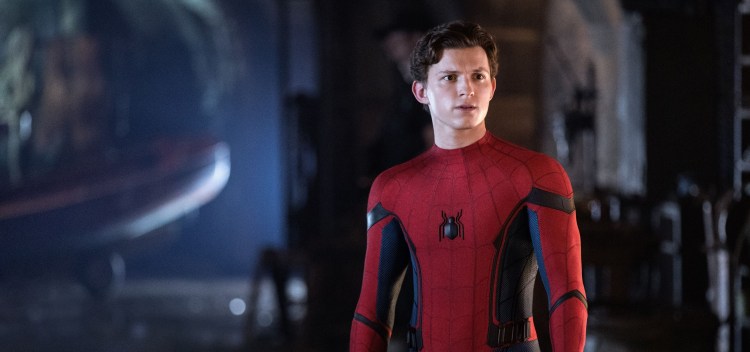
 Inspired by a recent breakup Ari Aster has unveiled the follow up to his directorial debut film; Hereditary with an equally disturbing cult horror film simply titled: Midsommar. The film treads slightly different ground from his previous focusing entirely on an unsettling cult hidden deep within the Swedish forest. It’s in a similar vein to the cult seen at the end of Hereditary except they’re much more gruesome and frightening.
 Since the release of his debut album, Freudian, Daniel Caesar has remained relatively quiet. Back in October of 2018, he released the single “
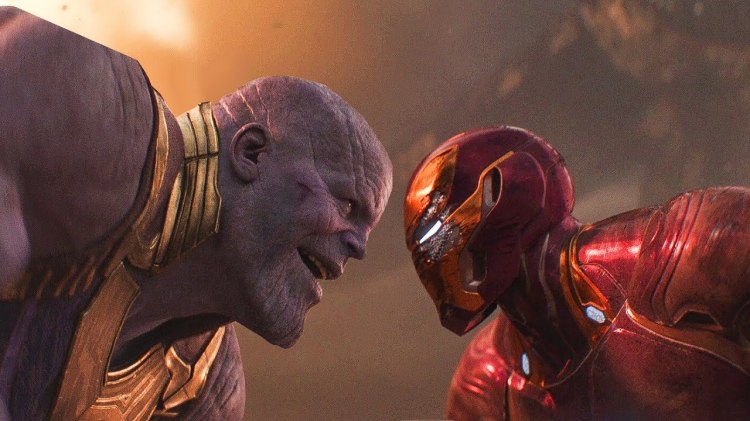 In many ways, Tony Stark and The Mad Titan Thanos are very similar people. However, in many other more significant ways they are fundamentally different. There was a popular meme that circulated that posed the question of six children and three chairs. Many famously said that Thanos would rather kill three of them while Tony would build three more. While it’s certainly meant to be more humorous than anything else, this also perfectly demonstrates the crucial disparity between Tony and Thanos. Regardless of their similarities, they will always be marked by one stark contrast, pun intended.
 I believe the nicest part of watching a John Wick film is that you don’t need to watch them in order. I watched John Wick Chapter 3: Parabellum with almost no knowledge of the previous two films and I was still able to enjoy it thoroughly. Were a few plot points and relationships unclear to me? Sure. Did that affect my overall enjoyment of the film? Not in the slightest. In fact, John Wick 3 accomplishes a lot more in its relatively confining genre than its other contemporaries. Action films are about very few things. I’ve overheard a lot of my friends call films like John Wick “brain dead movies.” While that may seem like a rather demeaning term I believe it succinctly describes an entertaining concept. It’s rather refreshing to not have to think so hard about a film and enjoy it for the pure spectacle that it really is, and I think the John Wick franchise captures that idea perfectly.
 Originally written: March 28th, 2019 for a school newspaper.
