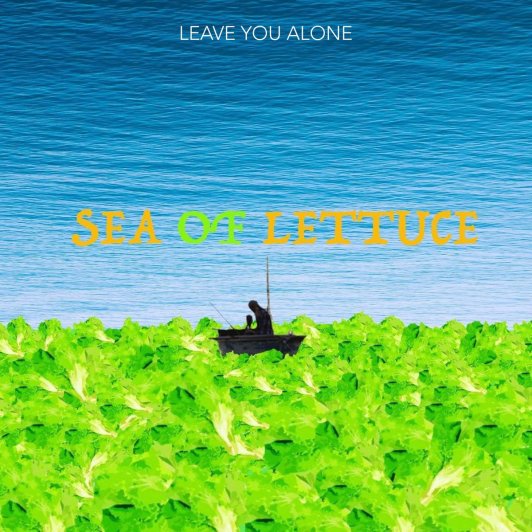
150-word track review: Leave you alone – Sea of Lettuce

a0947467109_10.jpg

There are those strange periods of life where something just doesn’t feel right. where your motivation seems to have completely withered away under the weight of your own hubris. It’s these emotions that Sea of Lettuce is able to capture so effortlessly in a short three-minute timespan.

Waking up but I just stay in bed. Trying to get you off my mind instead. I don’t remember all the things I said. Losing memories somewhere in my head.

It’s these small glimpses at overall disinterest that really resonate with me personally. The singer is in a rut emotionally but continues on aimlessly. The drums tumble on peacefully and the guitar rhythmically strums to the melancholic sentiments of the singer.

And I know. It’s my own fault, that I say I’ll call you.

A great song for the winter. Give it a listen, you won’t be able to leave this one alone.

Slaughterhouse-Five: A peculiar scowl at the war

Kurt_VonnegutThe nineteen sixties were characterized by one word; “counterculture.” To the citizens of America, this was the mantra that carried the public towards a future that went off the beaten path. Suffering from two world wars and several economic recessions America was desperate to look toward a future where peace was a possible option. This is the world Kurt Vonnegut lived in while he wrote his World War 2 inspired classic; Slaughterhouse-Five. The novel is filled to the brim with dark humor, cynical observation, and countless allusions to sci-fi culture. Above all else, however, what this story embodies is war itself.

At first, Kurt directly addresses the audience explaining how difficult it actually was the write the novel and giving context to the main event it revolves around; the bombing of Dresden. He expresses his distaste for war but simultaneously denounces the validity of anti-war novels. This is one of the many instances of Vonnegut being contrarian to the contrarians, so to speak. While the novel was written and published during the counterculture movement Vonnegut distances himself from making any radical statements, opting for a whimsical yet realistic approach to his war novel.

I think of how useless the Dresden part of my memory has been, and yet how tempting Dresden has been to write about

He continues his almost inebriated rambling while finally coming to a conclusion about how he is going to begin and end the novel.

It begins like this: Listen: Billy Pilgrim has come unstuck in time. It ends like this: Poo-tee-weet?

The rest of the novel then focuses on our main protagonist, Billy Pilgrim, a tall slender war veteran desperately attempting to piece together his memories, while also time traveling to random moments in his life. It’s through these random bits of time travel where the audience is introduced to one of the novels core concepts: perception of time. In Billy Pilgrim’s constructed reality, time itself is not chronological but rather simultaneous.

All moments, past, present and future, always have existed, always will exist… It is just an illusion we have here on Earth that one moment follows another one, like beads on a string, and that once a moment is gone it is gone forever.

It’s this description of time that allows the novel to be told in a seemingly haphazard order. The narrator goes from describing Billy’s job as an optometrist for one moment then suddenly skips to a point in time where Billy was being held as a prisoner of war. For an average novel, this would likely be seen as a faux pas on the authors part. Having the story told so jarringly is likely to make any piece of commercial media unintelligible. However, Vonnegut masterfully uses this motif to his advantage as it reflects the confusion and utterly inexplicable nature of the war itself.

Kurt Vonnegut makes countless unrealistic references to strange things like the existence of aliens, extraterrestrial planets, time travel, and juxtaposes all of it with the very real bombing of Dresden. So in essence what we have here are these completely baseless claims about extraterrestrial life, and out of body experiences mirroring these horrific realistic accounts about the travesty of Dresden. Without having any reasonable connection to each other these two separate ideas are somehow being grouped together through the simple fact that both are incredibly controversial and ultimately meaningless.

Since their popularization during the “pulp era” in the nineteen twenties and thirties science fiction novels have carried along with them a negative stigma that has since plagued the genre as a whole. Due to the sheer oversaturation of science fiction stories being told and their often eccentric technicolor cover art, these cheaply produced pieces of fiction were not considered to have any sort of literary merit. However, Vonnegut subverts this gaudy moniker most sci-fi novels carry by creating something more than just an intriguing story. Between the cynicism and humor, the reader can understand the true effects war has on humans. How once they return their new civilian surroundings seem almost “alien.”

The bombing of Dresden has been said to have taken the lives of around 25,000 people with some conflicting accounts reaching as high as 500,000. Many of those lives were said to have been primarily women and children. Many critics of the bombing have even claimed Dresden was of little strategic significance and could have been avoided entirely. A conclusively meaningless attack lead to the tragic deaths of thousands, and all we can say was that it needed to be done. This rather indifferent reaction to mass genocide is also reflected in the way Billy himself views it.

When a Tralfamadorian sees a corpse, all he thinks is that the dead person is in bad condition in that particular moment, but that the same person is just fine in plenty of other moments. Now, when I myself hear that somebody is dead, I simply shrug and say what the Tralfamadorians say about dead people, which is “So it goes.”

As the body count of the war continues so does the rabbit hole of unfeasibility. Billy’s strange behavior is simply a representation of what’s around him, and all things considered, he seems pretty rational. In a world where mass bombings are seen as necessary, and the countless slaughter of innocent civilians is overlooked it’s no wonder Billy believes he was abducted by aliens.

Whereas Billy represents the counterculture movement, where everyone else is wrong, and your radical ideas are the benchmark of human progression. Kurt Vonnegut himself is the one simply sitting idly by, watching the world crumble below him. He explicitly admits to being present there at the bombing and instead of trying to do something, all he can muster is a few sarcastic jabs. He’s been changed by what he’s seen, hardened by it. Even years later nothing still made sense after seeing the true horrors of it all.

Slaughterhouse-five understands that it is a bizarre, awkward package that the post office has to x-ray five times before shipping out of the country, however, the bow on top is very pretty and crafted with care. It understands that society will never understand it so it makes itself incomprehensible. It’s self-aware and silly yet thought-provoking and respectful. The world doesn’t realize how badly it needs another writer like Kurt Vonnegut. His unfortunate passing in 2007 only seems to echo the words of his writing. So it goes.

88rising Head in the Clouds Music and Arts Festival @ the LA State Historic Park in Los Angeles (9/22/18)

88The first thing I noticed when I arrived at the 88rising’s Head in the Clouds festival was the sheer number of diverse people who were present. While many of them were of eastern descent, which makes sense considering the fact 88rising is a primarily eastern-based label, it was just so interesting seeing how true they stayed to their core demographic. That’s not to say that I felt alienated in any way, in fact, the entire atmosphere was astonishingly welcoming. I just think this is the precedent 88rising is trying to set with their emphasis on Asian culture and well, they certainly hit the mark. Regardless of your decent, the festival was a safe space created to bridge the gap between the east and west, welcome to everyone.

The complete festival took up about half of the LA State Historic Park; an area that spans around 32 acres in its entirety. Needless to say, it was a big event that caught the eye of more than its festival-goers. What’s more, is the abundance of things you could actually do once inside.

The first thing I did was stop by the concert merch store which was the attraction that garnered the longest line by far. I’ll spare you the gory details of that venture, but let’s just say I waited 2 hours to spend 60 dollars on one sweatshirt for the simple purpose of having a keepsake. Totally worth it. Aside from that, there were several other displays that accumulated respectable lines themselves. There was another merch booth that exclusively sold GUESS branded 88rising clothes modeled to look like a pop-up shop. Each patron also had the opportunity to go to a photo booth which would take a high-quality photo of you in front of the 88rising logo and an array of clouds, a small nod to the name of the festival.

With all of that said, it should be apparent that the main focus wasn’t necessarily placed on the musicians that performed at the festival, rather I believe the true allure was the overall experience of simply being there. I missed many of the acts the festival boasted, however that fact did not hinder my overall perception of the festival. I was still capable of hearing everyone who performed from of the distances I was at. Some of what I heard actually made me upset I hadn’t listened to some of the artists beforehand. Some of the artists like Sen Morimoto, August 08, and KOHH all had such a powerful presence on stage it was hard to keep myself from joining the crowd prematurely.

Sen Morimoto had the uncanny ability to connect with everyone in the crowd, even the people who weren’t in the immediate vicinity. He was very charismatic between tracks, chatting with the crowd and giving input on what his songs mean to him. He ended his set with a song he felt, “describes the moment you figure out what you want to do with yourself.”

August 08 followed shortly after and was easily one of the most high-energy artists that went up. By far one of the most shocking moments that occurred that evening was when he introduced fellow LA rapper DUCKWRTH as one of the mystery guests advertised on the main stage schedule. They both ended up performing a song together.

KOHH was the first artist I came to the main stage to thoroughly observe. Having never heard his music before, I was pleasantly surprised when I found myself jumping to his discography. He blurs the lines between contemporary rap music and eastern tradition. Being a primarily Japanese artist it’s rather obvious I couldn’t understand a word of what he was saying. However, that did not hinder my experience one bit and the few words I could pick up on I proudly proclaimed whilst feverishly jumping.

I stayed in the crowd after listening to KOHH and patiently awaited for NIKI to appear onstage. All around me the crowd seemed to buzz strenuously, the sun had not gone down at this point and everyone’s face was still lit naturally. I watched their smiles become wider as NIKI finally arrived onstage. She began to sing the crowd mellowed to listen to her melodically coo. It was a slow beginning but ramped up as she moved into her debut single, “See U Never.” The track itself deals with incredibly stoic and cold subject matter but NIKI juxtaposes it with her bubbly high-pitched voice. This seemed to be a common theme as that same motif carried on until the end where she finished her set with a track from her album Zephyr entitled “Friends.” It was an emotional finale to an already touching performance but what made it even more poignant was when she got choked up as she sang the chorus.  She could hardly utter the word “friends” and laughed at herself apologetically. That single moment made the whole production feel worth it, it became more personal like there was a true reason to be there in the crowd that day.

Time passed and it was soon nightfall. The one thing everyone had on their minds was when Joji was going to make his star-appearance. We were already behind schedule due to the surprise appearance of Californian rapper Anderson Paak, the second of the two mystery musicians slated to perform on the main stage. At this point, the crowd was determined to see the night through as was I. As Murda Beatz exited the stage a small chant began to form calling for Joji’s name. It continued for a few moments then slowly died down and then rose up again for brief periods. Until all of a sudden, the screen went black and a small video of Joji appeared. The video was of him sitting on a couch at first. The look in his eyes was jaded until he noticed the audience before him, he leaned toward the camera and attempted to break out of the frame to which he was confined in. For a moment there it almost seemed like he would until the screen went black again. The crowd was silent, teeming with anticipation. Without skipping a beat the melodic chime of the “Will He” instrumental began to play and the crowd immediately erupted in a cathartic cheer.

Joji stepped on stage and started to sing, and as he sang so did the faces around me. Everyone was ostensibly entranced by his sonorous voice and melancholy vibes. It was as if the whole world had stopped simply to stare at what was taking place there. The crowd continued to chant until we had reached the end of the song. As we waited impatiently for the next track to start playing, Joji took time to thank the audience for showing up that night and spending their day at the festival. Then without any further delay, we were already onto the next track “Demons.” Once again the crowd began to sing along with Joji. However, during some of the pauses between lyrics, he always ad-libbing small phrases. The most comical of these being his trademark mantra, “Unblock me, bitch!” Since his inception, Joji has always been associated with brief bouts dark humor. Not just within his character but within his music as well. “Bitter Fuck” had always been a bit humorous to me, but hearing it live offered a new level of poignancy I hadn’t yet contemplated.

Joji closed his performance with his most recent single “SLOW DANCING IN THE DARK” it was the song everyone had secretly been hoping he would perform live but never knew if he would or not. To the pleasure of many, including myself, the former was the case. As Joji uttered the opening lyrics the crowd beneath him started to sway and follow along. The surrealness of the moment reached its peak as the climax of the power ballad reached its most visceral period: the chorus. And just like that, as abruptly as it started, the song faded to nothingness and all we were left with was the ambient sounds of the crowd settling. Joji thanked the audience once again for listening, and calmly exited the stage. Everyone was left wondering if they even had enough energy for Rich Brian’s upcoming performance. However, something told me we would. Suffice it to say, I wasn’t wrong.

150-word track review: SLOW DANCING IN THE DARK – Joji

cant you seeJoji continues to impress me with his unmatched understanding of music. I was incredibly skeptical about his newest venture as I noticed he’s been departing from his older lo-fi roots instead focusing his efforts on more commercially beneficial sound. However, his newest single for his upcoming sophomore album BALLADS1 has dispelled any sort of fears that I’ve been mulling.

It’s a Joji song in its purest form. It’s about failed love with a beat that mixes lo-fi percussion and R&B style melodies. It seemingly follows the narrative build from Joji’s prior single “Yeah Right” that evidently deals with similar subject matter.

It’s impossible for me to adequately describe my love for what Joji does. He’s able to put out an amazing track month after month and stands out among his contemporaries.  I implore you to give this track a listen, who knows, maybe you’ll find yourself slow dancing to it.

The painful truth behind The Truman Show

truman-e1536190104152.pngIn some aspects, The Truman Show is a better representation of our current world than the one it was meant to reflect. Originally released in 1998 the film centers around Truman Burbank in a society that, unbeknownst to him, is completely fabricated. The time period is enough to establish the film was supposed to reflect the post-cold war era, where Americans were still paranoid after trudging through years of potential nuclear war. It also was created during the time when reality television was becoming something of a phenomenon. Programs like Survivor and Big Brother became massive commercial powerhouses spawning versions of itself worldwide.

As their influence began to reach farther the more they became more and more a part of everyday life. At home or in public, conversations shifted to be about the people onscreen. We now had a weekly stream of programming that gave us something to talk about. And it was all real. Right? Well, that’s the thing. We don’t know how much we can separate the fact from farce. I suppose that’s the salient allure of reality television. To attempt to read between the lines of a show that in its simplest form is just a by-product of its superior predecessors.

However, the show within The Truman Show attempts to circumvent this potential discrepancy by making its main character as authentic as possible. The only downside is that to make him feel and act real, he must not know everything around him isn’t. Truman’s first inclination of this truth comes at the beginning of the film when a stage light falls in the middle of his picturesque suburban neighborhood. The light is marked “Sirius” after the real-life star system. It’s widely known as the worlds brightest star. This would prove to be the catalyst for a new wave of discovery for Truman.

Many cite the appearance of Truman’s deceased father as the reason for why he begins to question the reality he’s been conceived in. Even the director of the fake television show says the same thing later in the film. However, many are quick the write off the strange happening that occurs right at the beginning. Not only does it allude to something much more sinister for Truman, but it also resonates with the audience as well.

The whole premise itself is rather ironic and opens up a lot of conversations about existentialism, societal values, and consumerism. Is Truman’s life really worth living if everything is a lie? What does The Truman Show tell us about our reality that we can’t seem to figure out ourselves? Well, there’s certainly a lot to unpack in those sentiments.

Existentialism is a philosophical theory that emphasizes the existence of the individual person as a free and responsible agent determining their own development through acts of the will. As an audience can we say Truman is really living a free life governed by his own will? The natural response would likely be no. As his entire life has been determined by the producers and writers of his show. There are set rules he’s playing by. Rules he’s unaware of. So isn’t it fair to say that because he has these rules he’s unaware of he’s still technically living his own life? Regardless of the predetermined events he still has the ability to live, the things that happen to him are simply out of his control. However, isn’t this the case for everyone? Not just Truman. Here in lies the central argument used by Truman show fans. It’s why within the film there are people who want to free Truman and others who don’t. In fact, it’s the director, Christof’s, rebuttal to Sylvia when she argues for the release of Truman.

He could leave at any time. If his was more than just a vague ambition, if he was absolutely determined to discover the truth, there’s no way we could prevent him.

It’s that use of the phase vague ambition that makes Christof’s words seem so persuasive. In truth, we all hold some sort of vague ambition to go out and do something. American culture since the beginning of time has been based around the idea of “The American Dream.” It’s the de facto ethos that drives society. Its what makes the character of Truman so inspiring, not only in our world but in the fictional world of the movie itself. To many in the film, Truman is seen as a hero of sorts, a cultural icon whose influence is shown in the movie to have spread well beyond America. It’s here where the audience learns about what society values.

I’ll never forget the final words the movie plays out on. When all is said and done and Truman finally reaches the end of his 29-year long torment he utters his catchphrase whilst looking straight into the camera before heading out into the great unknown.

In case I don’t see ya, good afternoon, good evening, and good night!

Now, this alone would have been enough to appropriately end the cinematic masterpiece that is The Truman Show. However, the true final line of the film solidifies the overall intent director Peter Weir had when he created this film. The true final words the film ends on comes from two policemen who were shown watching the show throughout the film. As Truman leaves through the black door, the transmission is abruptly cut and one of the policemen remarks:

Let’s see what else is on.

As all great things begin, they must also end. And in the end, we’re left with a promise of something else that may be on. The insatiable audience is left craving more and yet we search for something else. The next craze to obsess over before another one follows in its wake. History continues to repeat itself. Truman was simply a passing fad that seemed to have overstayed its welcome. As the world became used to the prospect of reality television we became increasingly apathetic to its potentially damaging effects. Not just to the actors in these shows but the people watching them.

There have been several instances of reality television stars experiencing intense hardship after appearing on reality television. Real World: New Orleans alum Preston Roberson-Charles detailed the overwhelming wave of negative feedback and struggles he experienced after appearing on the show. However, there’s also a flipside to this painful truth if you consider the fact that our current President, Donald Trump, initially gained notoriety due to his appearance on the reality television show The Apprentice. While the prospect of a future president coming exclusively from reality television seems very unlikely, the thought is enough to spur some interesting debate. You never know, often times fact is stranger than fiction.

Additional Reading:

Continue reading “The painful truth behind The Truman Show”

A light criticism of “desktop films”

searching.jpgSearching is the directorial debut by Aneesh Chaganty and tells its story almost entirely through a computer screen. While there’s nothing new there it’s certainly an interesting choice, especially for someones very first feature-length film. However, that begs the question. With this inherent stipulation cinematically, does the film still manage to be entertaining? Surprisingly, yes.

I went into this film without knowing a single thing about it. In passing, I may have seen a few promotional videos here and there but none of it seems to stick in my mind. So when the first thing I saw was a computer screen I was more than just skeptical of the film’s fidelity. The main issue with choosing to make a film that takes place entirely on a computer screen is the inherent lack of visual stimulation. When the majority of the screen is simply white space the audience is practically inclined to get bored. However, I think Chaganty uses this to his advantage. There’s always a logical reason for why the audience is able to see what’s happening, whether it’s on security cameras or newscasts. Chaganty also isn’t afraid to make computers do things they normally can’t. A risk I think was well worth the slight loss of immersion. Often times, the point of view will begin to zoom in on a specific detail or element on the screen, which makes for some incredibly tense moments.

All in all, I was satisfied. While the film’s storytelling is formulaic at times, the overall mystery albeit thrilling is a bit predictable in some moments, and it sometimes gets confused about what its overall purpose is; the one thing the film consistently manages to be is entertaining. At this point, I’m just searching for a movie that takes place entirely on a PlayStation party chat.

Additional Reading:

Continue reading “A light criticism of “desktop films””

150-word track review: Cake – Scott James

shelter

Scott James grapples with the loss of innocence in the opener to his 2017 album Shelter Island Heights. He begins by saying:

Now I’ve done it too. It’s funny how it happens.

These ominous words carry their tension throughout the track as James continues to lament his choices even going into denial halfway through as he repeats in the chorus:

Course I’d like to lose it. Won’t you help me lose it.

As the listener reaches the end, the drums and horns kick in to form a beautiful ballad that compliments its melancholic tone. A stark contrast from the soft guitar that the track begins on. The whole track just simply feels like it builds up to that one moment of musical euphoria. Where the listener is immersed in the desolate world. It’s clear no one does build ups like he does. Listen to it, should be a piece of cake.

My problem with teen novels epitomized in one book part 1/2

totally uneditedA few years ago, back when I was a freshman in high school, a girl I had a hopeless crush on recommended me a book. Despite having little to no information, guidelines, or knowledge of its core demographic I quickly sprung at the opportunity to have something to talk about with her. It took me about three days to finish the nearly 400-page monster and once I had finished I was left feeling more clueless and dejected than I was before. Why did I feel this way you might ask? It’s because I had realized this novel, To All The Boys I’ve Loved Before, epitomized all of my quandaries with contemporary young adult novels.

One thing I’ve prided authors like John Green for doing in their teenage romance novels is their uncanny ability to write realistic characters, with realistic goals, and difficulties.

As an example, I’ll use Paper Towns. Quentin Jacobsen, the protagonist of the story, at a glance, seems to be your typical nerdy teenager, hopelessly in love with a girl who seems to be way out of his league. My mistake, I think I just explained every John Green novel pre-Fault In Our Stars. Kidding aside, Quentin’s characterization is purposely very generic at a first but also painfully realistic. Should the reader decide to go deeper into the story, there’s find a very complex character with discernable flaws and contradictions. As the novel reaches its climax you begin to pick apart the logical fallacies Quentin is driven by. He makes several morally questionable decisions, abandons his friends, and actively allows his feelings to dictate his actions. His incredibly callow nature also works in tandem with the overall purpose of Paper Towns as it serves to criticize the act of idolization. Something so ubiquitous amongst teenage relationships.

The point I’m trying to make is that I could imagine Quentin as a feasible person as I read Paper Towns. He has a purpose, he has imperfections, and he has personal growth. On the flipside, the main character of To All The Boys I’ve Loved Before; Lara Jean Covey, besides having an awkwardly long name, possesses one of the most ambiguous and unrealistic characterizations of all time.

On one hand, Lara Jean is written like an innocent, sheltered, perfect girl who fades into the background. However, there are points in the novel where she does a complete 180 and Jenny Han, the author, attempts to pass her off as some glorified dream girl who’s super popular, and charismatic. Lara Jean has several out of character moments it’s jarring to comprehend, let alone read. Jenny Han could have used Lara Jean’s frequent lapses to her advantage and make a complex statement about the role significant others play in our budding lives and how easily malleable we are during our adolescence. However, she makes no attempt to do so, which makes me believe she’s a bit of a lazy writer. If Lara Jean’s inconsistencies have no real purpose behind them, then they must be a mistake, otherwise, why have them at all?

I’m fully aware that people do change and that looks and that actions can be deceiving but Lara Jean explains herself so plainly it’s hard to gauge whether I should believe what she’s saying or what I’m reading. She’s so enigmatic that she breaks my suspension of disbelief even for a novel labeled as fiction. The biggest tell for me is the fact I can’t think of anyone I know that would do the things she does in the novel under the same pretenses in real life. I suppose you could argue and say that a lack of characterization is Lara Jean’s characterization. From some aspects that could be interesting but aside from that, her personality is not appealing or subversive it’s simply unrealistic and grounded in a reality so detached from the one it’s supposed to take place in. For comparison, allow me to explain a fleshed out character done right in To All The Boys I’ve Loved Before; Chris.

Chris is one of Lara Jean’s friends who she spends time with on numerous occasions throughout the book. They form the “Odd Couple” as they seem to be polar opposites. However, unlike Lara Jean, Chris is a funny, defined character, with very clear flaws, and interesting dialogue. She effectively plays foil to Lara Jean’s supposed goody-two-shoes attitude and while a bit stereotypical I believe she’s a well-written character. I’ve seen many attempts to call her an unnecessary part of the novel and I couldn’t disagree more. While her role in the novel is not instrumental she is a good example of the many influences Lara Jean has in her life that ultimately affect her mindset. It’s also a good indicator that she’s not a very judgemental person as if her seemingly perfect persona couldn’t be any more emphasized.

Another qualm I have with To All The Boys I’ve Loved Before is its ending. As I reached page 250 I was already well aware the plot was heading nowhere, but desperate for answers I trudged onward, bitterly optimistic. To my despair, the ending was lackluster and as I closed the book my word fears were confirmed. Jenny Han had already planned for a sequel before the novel was even published and purposely made the ending unfulfilling. So unfulfilling it’s not even worth spoiling in this article. I’m fully cognizant that it’s an astonishingly difficult task to end a book. I struggle with ending every article I write on here. However, when I finished the book I felt like a fool. I felt as if I had been swindled by the punitive hands of an author I wasn’t even a fan of. Now it is true that Jenny Han did go on record saying she actually did plan for a sequel about halfway through the first book for the purpose of developing another character that was only mentioned briefly in the story. However, I could think of a thousand different ways she could have handled this dilemma without feeling the need to release a sequel.

Before I continue I should note that I actually wrote this review back in 2015 when I first read the novel. However even as time passes I still find myself resentful of this pitiful collection of paper. Perhaps it’s deeper than just Jenny Han’s inability to write something vaguely coherent, but I believe that the biggest detriment the novel has caused is the inadvertent message it’s spreading to people my age. Another reason why I continue to praise John Green for his contemporary young adult romance novels is due to his realistic approach to teenage love. To put it bluntly, they don’t know what love is. While many view Lara Jean’s fake relationship with Peter as funny and harmless I see an opportunity for misunderstanding. I believe Jenny Han was attempting to make a statement about the way she views modern teenage romance by creating a fake romance between Lara Jean and Peter, however, I think the true intentions of that message were lost in the utterly difficult translation. This is made even more muddled when Lara Jean kisses her sisters ex-boyfriend during all of this, which is a whole different story I can write a thousand negative articles on. However, I believe one more will suffice.

This is part one of a two-part series. In the next part, I will gauge whether the film adaptation of this novel is worth watching or if it falls flat on its face much like its predecessor whilst analyzing it from a theatrical standpoint. In a world so abundant with amateurish romance novels being produced daily it’s daunting this book -that had so much potential- must add to it. I suppose she really shouldn’t have mailed those letters.

Additional Reading:

Continue reading “My problem with teen novels epitomized in one book part 1/2”

An angel fallen from grace: Father John Misty – God’s Favorite Customer

favorite customerI came out of Father John Misty’s third album: Pure Comedy with a bad taste in my mouth. After giving it a listen or two I was inevitably turned off by Joshua Tillman’s insufferable ability to portray himself as a character who’s sanctimonious. Yet, here I am a year later singing the praises of his newest studio LP God’s Favorite Customer. So what’s happened? Why the sudden change of heart? Well, the answer isn’t all that simple.

In an interview with NME Father John Misty, himself confirmed the album was not rooted in any specific concepts like his previous outings. In his own words, he admitted they were, in one way or another, “kind of pretentious.” In this, I saw a sign of change in Father John Misty’s mind, a glimmer of hope in a desolate wasteland of pompous, self-aware, singer-songwriter tunes. It was clear that rather than delivering a scathing social commentary he wants to talk about something much more personal. Something that was bigger than himself. This is where everything changed for me. I was in full support.

Despite his previous sentiments, God’s Favorite Customer still manages to tell an elaborate story across its forty minute runtime. For once Father John Misty is incapable of portraying himself in his usual bombastic persona. Instead, he’s inclined to sing about himself while he was in his most vulnerable state. With that said, this album isn’t so much about Father John Misty as it’s about Joshua Tillman. It’s about a man who’s been shaken to his core. It’s about being forced to examine yourself at your worst when you’re so utterly defeated by despair and hardship. Tillman explained that before the release of the album he went through a two month period where he stayed at the Bowery Hotel when he was reportedly “on the straights.” That period of time serves as the albums main inspiration and set piece.

Another theme that serves as a major inspiration for Father John Misty’s music is ironically religion. Due to its omnipresence in a myriad of ways, it’s something I’m also going to be focusing on in this article. However, I’m going to be analyzing it through the lens of someone who actually believes in God. I’ll be sure to point out the brief periods of theological ignorance Tillman often sprinkles throughout this discography whenever I find it most apt. The name of the record itself is a good place to begin.

The rather pious title can be taken in a number of ways but I see the title of God’s favorite customer as a position of prestige and weakness in some respects. To be God’s favorite customer means you constantly require His assistance. For whatever reason, you find yourself dependent upon His comforting word, calling out to Him more often than not. The title is also a bit paradoxical as God isn’t supposed to pick favorites. Romans 2 verse 11 spells this out very explicitly.

For God does not show favoritism.

This revelation makes the title of God’s favorite customer all the more insignificant as to now show favoritism everyone must be God’s favorite customer. Significance is something Tillman actively chases throughout the record. Whether the title is meant to highlight his feelings of worthlessness or to be taken humorously, its a good example of the persistent theme of religion he frequently uses without discretion. Now without any further delay, let’s get into the music, shall we?

“Hangout at the Gallows” marks the beginning of Tillman’s journey through despair. It’s carried by a slow drumbeat and a plucky bass. Father John Misty sounds desperate and even a bit deranged as he coos about the gallows. In case you don’t already know, gallows are a set of structures that were primarily used for public hangings back during a time when capital punishment was more primitive. It’s here where the title of this track should make more sense as it’s a painfully obvious pun about suicide. Tillman’s suicidal thoughts are regularly shared on this album making it a much more poignant experience. It’s a rather somber note for the album to begin on and it only gets severer as the listener trudges onward.

“Mr. Tillman” is the next track and my personal favorite. It’s a great example of self-reflection as Father John Misty doesn’t sing about himself from a first-person perspective instead; taking on the role of a hotel concierge frustrated with him. It’s a rather pleasant sounding song, with a loud acoustic guitar, charming bells, and beautiful harmonies done by Father John Misty himself. However, all of this is immediately contrasted by its decisively melancholic sentiments.

Mr. Tillman, for the seventh time. We have no knowledge of a film that is being shot outside. Those aren’t extras in a movie; they’re our clientele. No, they aren’t running lines and they aren’t exactly thrilled. Would you like a regalo on the patio? Is there someone we can call? Perhaps you shouldn’t drink alone….

The track references the hotel Tillman stayed at during that two-month period where he was having a personal dilemma. In fact, its working title was simply “Bowery.” The listener is able to take pity on poor Tillman; his humiliating actions have caused him to become a public nuisance. His crass character traits were also displayed on the previous track when he asks the audience, “Whats your politics? Whats your religion.” Both of which are inappropriate to ask so outwardly. Nonetheless, the hotel receptionist attempts to stay as professional as possible whilst subtlety scolding him.

“Just Dumb Enough To Try” is Tillman’s failed attempt at regaining his haughty stature. It’s posed like a love song but it’s conclusively about how Tillman is a failure at love and by extent life itself. This was the track that really opened my eyes to Father John Misty’s inner struggle and growth not just as a musician but as a person. While the entire album is a harsh self-reflection this is one song that really deconstructs his personal character flaws. Flaws that were undoubtedly the terminal cause of his downfall. “Date Night” maintains this theme and further exemplifies Tillman’s sleazy nature. Whether it’s supposed to be him talking to his wife or another woman entirely is not exactly clear, but a lot can be derived from his words. Despite his unfavorable situation he still tries to maintain his egocentrism.

Nothing surprises me much. And my hobbies include: Laughing in the dark. Do you want to go to the farm? Do you want to go to the park? I’ll get you ice cream if you give me your card.

This lark of a persona comes to a halt once we get to the next track “Please Don’t Die.” Father John Misty recapitulates the theme of suicide and depression as he sings from the perspective of his wife who’s very overtly pleading with him to not kill himself. It’s another song that highlights the negative characteristics of Tillman. Suicide is an act often seen as selfish to some degree. Contrary to what many may believe the pain of the victim doesn’t die along with them, instead, its carried on to the ones who truly loved and cared about them. Tillman has revealed before his struggles with depression and how much his wife has helped him through it. However, it seems their estrangement has only caused it to fester. Tillman realizes this and makes progress to end his suffering on the next track.

Tillman’s soft piano driven song, “The Palace” is him finally personally acknowledging his shortcomings. He pokes fun at his drug abuse, recognizes how badly he treats others, and admits he needs help and is ready to change.

Last night I texted your iPhone. And said I think I’m ready to come home. I’m in over my head.

It’s a hopeful end to Tillmans despair. As he, after all this time, understands the fruitlessness of maintaining his masquerade. After “The Palace” the album seldom returns to the routine subject matter Father John Misty so often tackles. “Disappointing Diamonds Are the Rarest of Them All” and “The Songwriter are both about his wife. But the title track is one of particular importance as it somewhat continues the narrative of the record.

“God’s Favorite Customer” follows Tillman on, as he puts it, “another night on the straights” where he unexpectedly calls out to God for direction. Father John Misty has made it clear he doesn’t believe in God. During his childhood played religion such a prominent role in his life that it ultimately drove him away from it and with it his evangelical parents. However, this track captures one fleeting moment where he once again drops his idiosyncratic attitude to call out to something greater than himself. Ironically he still does this selfishly as he believes the former title of God’s favorite customer entitles him to special treatment. It still manages to be a very interesting departure from his usual inflammatory statements toward religion and the bible you can’t help but see how far down the rabbit hole Tillman leaped during his dark period.

The closing track of the record “We’re Only People (And There’s Not Much Anyone Can Do About That)” is Tillman finally changing. It neatly wraps up his misadventure through suffering in his usual methodical manner. Tillman shows a better understanding of himself and other people as he decides to relate himself to them rather than attempting to further distance himself. He’s taken his period of crisis as a learning experience and seeks to change for the better. A happy ending to a sad story.

Father John Misty continues to impress as his albums show consistent maturity throughout the years. The man who had claimed to know all the answers was finally met with one that couldn’t be solved. This album is a perfect metaphor for growth both in musicality and in spirit. For the spirit is willing, but the flesh is weak.

Additional Reading:

Continue reading “An angel fallen from grace: Father John Misty – God’s Favorite Customer”
150-word track review: In the Zone – Ken Ashcorp

zone.jpg

Ken Ashcorp is one of those artists that’s consistently able to floor me. Whether it be by his masterfully created ballads or his ability to sing about anything and make it sound good, he always finds a way to fascinate my delicate mind. This track is obviously no different. In its most raw essence, the song is about sex. It’s about losing yourself and taking everything in the heat of the moment. When you’re in the zone you don’t really care what anyone else thinks, despite how vulnerable you may be.

Oh, confidence exude, God, I love that attitude. Shudder from the shutter, shut up and make me glad that I did this with you.

The constant booming guitar riff and the almost wispy way Ashcorp delivers his lyrics makes for an incredibly enjoyable track that I listen to rather regularly. Give it a listen and get in the zone.