
Hello, this is a redirect to a radio story I did about Park Chan-wook’s film “Oldboy” for The World.
You can listen to or read it here.
Thank you.
Hello, this is a redirect to a radio story I did about Park Chan-wook’s film “Oldboy” for The World.
You can listen to or read it here.
Thank you.

On July 15th two-thirds of Injury Reserve premiered a double music video at a special event in Los Angeles at the 2220 Arts + Archive. The videos in question were for a previous song released on their 2021 album By The Time I Get to Phoenix called “Bye Storm” and for a new song released under their new artist name By Storm entitled “Double Trio.” Along with the premiere of new material, Nathaniel Ritchie, stage name Ritchie With a T, and Parker Corey sat down with fellow artist Harmony Holiday for a Mythscience Talks discussion about the following presentation.
Once the event started, fans were ushered into a theater behind the small performing hall. The theater was large and supported ample seating. On the stage, in front of the wooded and bricked walls, was a grey couch and black chair facing toward the audience. As Ritchie and Corey sat with Holiday, the conversation began.
It’s been a rough couple of years for the Arizona-based group. Following the loss of their third member Jordan Groggs, who performed under the name Stepa J. Groggs, the band embarked on a worldwide tour whilst grappling with what to do without one of their core components. For the remaining members, it was always a battle of extremes, never in the middle. The internal dilemma they described during the conversation was almost verbatim what Ritchie had already told Huck Magazine two years prior, “ I can imagine him joking and saying: ‘Y’all better still do this shit!’. But then I can also imagine him saying: ‘You better not step on a stage without me!” Ultimately they decided that they couldn’t continue the name with just them two. Injury Reserve’s slogan was always 3/3, and there was no reason to change that.
They needed to find a way to transition into something different and reopen the conversation about the group making new material. After their time away they had finally figured out how. Ritchie described their circumstances, and how it took two years to make a single track. The subsequent video for the aforementioned song “Double Trio” as well as “Bye Storm” represents their rebirth into By Storm and the last thing they will ever do under the Injury Reserve name.
The video itself was ethereal and poignant first starting with the warm track “Bye Storm” which makes heavy use of a sample from Brian Eno. Clips of the band’s time together as a full team flash by in a heavily edited montage. For many, it was their first time seeing new footage of Groggs before his unfortunate passing. The second half of the video was a bit more traditional this time taking place in the very theater fans were sitting in. Ritchie lays in a makeshift wooded bed, which fans could recognize from a previous social media post. A linen blanket is placed precariously on top of him and interlaced is footage of him dancing in a yellow suit and rapping along with his own lyrics. The song itself is very reminiscent of their lo-fi material from 2020, the last 40 seconds break into a speedy footwork track while the camera spins around the art studio interior.
Post-screening followed another conversation about the video which according to Corey, in a very mild way is about learning how to cope with disaster. They also spoke on the struggle of honoring their former groupmate without commodifying his death. Even in past material, they wondered if what they were doing was ethically right, especially in an era where AI-generated singers and posthumous verses are now widespread. Corey remarked that creating the music video for “Knees” wasn’t easy referring to the silhouette of Groggs they added in post, referencing his absence in the video.
Aside from the creation of the dual music video, the group detailed how they aimed to maintain its structure with just Corey and Ritchie as the central focus. Ritchie described the process as a maturing period. How both members had to learn how to trust each other personally and creatively. Learning how to live with the flaw and natural processes that come with music creation. The breakdown at the end of “Double Trio” was heavily opposed by Ritchie, before he eventually gave in and allowed Corey to have more creative freedom.
At the tail end of the event, questions were opened up to the floor. Fans asked the group about their favorite records, their relationship with fellow musician and engineer Zeroh, and where they tend to draw inspiration from. This portion ended up going on longer than expected because Ritchie kept asking for more questions to “end on a better vibe.” Despite the extra questions from fans, something was still on our minds even after the event ended.
The whole purpose behind the shift from Injury Reserve to By Storm is not simply aesthetic but also ideological. With the new name comes with it a new set of principles and boundaries. Ritchie and Corey stressed the importance of the “now” and how they want to worry less about how future projects may be perceived once released. The members recalled how surprised they were by the overwhelmingly positive reception of their previous record, initially believing fans would hate it. They wanted to avoid having those fears from here on out.
Regardless, we spoke with Ritchie post-show to ask where he wants to see By Storm go from here; if there were any sort of endgame. His response was sanguine, “There is no endgame…I think a lot of what we do has no goal, it has a lot to do with just competition and boredom, and there’s never a like a grand scheme when we’re doing anything.”
“Has it always been that way?”, we asked.
“We’ve matured into that. I think when we made Floss we definitely had a visual goal of what we wanted to make, and I think maybe Phoenix was the second time that’s ever happened, but at the same time, it didn’t happen until we started making songs…I don’t know that’s kind of a hard question,” said Ritchie.
Despite the apparent lack of a traditional game plan, Injury Reserve has always made a splash when it mattered and it was clear that momentum was building into something that would have equal stopping power. The group would not reveal when the double music video would release but said it should be “soon.” They also assured fans that while Injury Reserve is no more performing songs from that moniker is still fair game. With that being said, it would seem this is all just the calm before the storm.
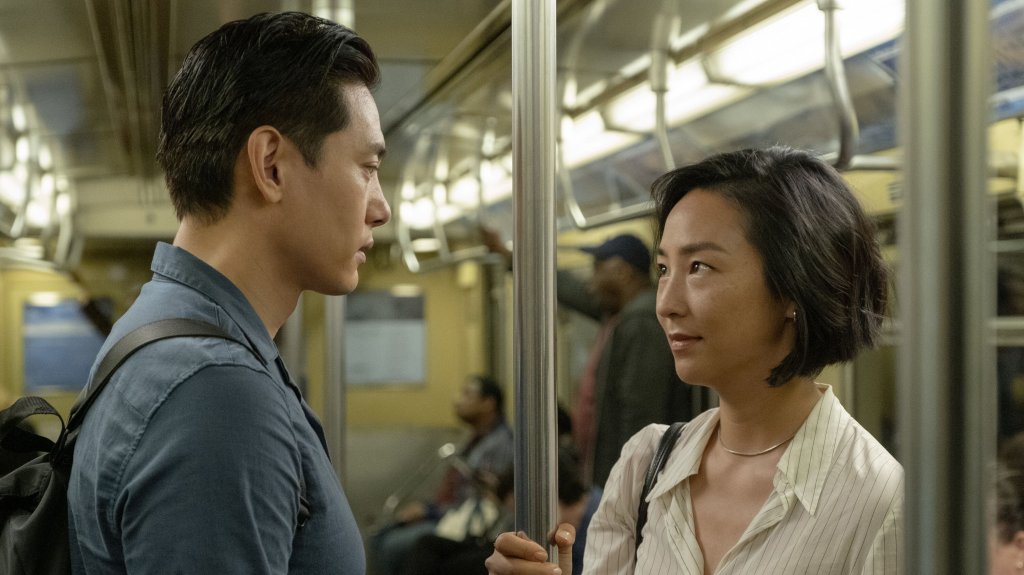
Past Lives is slated to be 2023’s sleeper hit at the box office. It’s managed to remain a crowd favorite amongst its high-profile counterparts like Spiderman: Across the Spider-Verse and Indiana Jones and the Dial of Destiny, much thanks to the recent mainstream appeal A24 films have reached in the past few years. Not unlike last year’s Everything Everywhere All At Once, the indie entertainment company struck cinematic gold on the chance they took with South Korean-Canadian playwright Celine Song. The only difference has unfortunately been in numbers. Despite both films’ immediate cultural relevance, the contrast in narrative scope has not tamed the ever-evolving, ever-fickle, theatrical zeitgeist.
Numbers aside, Past Lives stands as an immensely satisfying film about the treachery of brutal romanticism and the inherently convoluted nature of interpersonal relationships. It’s truly refreshing to watch a film that feels like it was written by someone who lived through tangible experiences interesting enough to be stretched into a feature. Someone drawing on what they know, versus what they think. For that reason, Celine Song’s very first outing as a writer-director is nothing short of exemplary and inspiring.
It’s already been confirmed that Past Lives is a pretty autobiographical interpretation of an experience Song had between her real-life Korean childhood lover and her very white American husband. So the small pieces that bring the story to life feel menial when compared to the bigger picture. Indeed it seems almost unimportant to analyze the framework by which the story is being told, the looming shots of New York City and Seoul are standard indie film fair. The same could be said about the sparsely written dialogue and the overall pacing of the narrative.
Instead, the strongest portions arise from the deft intricacy of the prose and what plays out on screen. It seems to be fully aware of the modern cultural landscape and plays with the expectations that come with society naturally. What the audience is left with while the credits roll is unprecedented and something that should echo throughout the contemporary cinematic landscape. Past Lives may not be as categorically successful when compared to its vast peers, but it very well may be the first of its kind; a blueprint for more-successful predecessors yet to come.
Fairytales don’t exist, at least, not in the way movies portray them, and while it’s true Past Lives can be a fan of the contrived at moments, namely thanks to a convenient Uber driver, there’s a moderate effort to portray something feasible and fantasy deconstructing. What makes the film a wonder is that it bathes in the confines of reality. It’s a story we’ve seen play out a thousand times, but a version you can actually take seriously. In the real world settling down is okay; it’s what most people end up doing and who ultimately deserves the extraordinary is arbitrary and certainly isn’t based on any sort of merit or reverence.
The main character and author surrogate, Nora (Greta Lee), whose Korean name is Na Young, the same as Songs, is caught between the quixotic lens of two different schools of thought. Eastern ideals of unstoppable fate and Western manifest destiny. Throughout the film, she struggles between the split personalities she created after immigrating out of Korea. Hae Sung (Yoo Teo), her childhood lover from Korea, holds steady in his belief in “in-yun” and refuses to let go of his past view of Na Young. “In-yun” is what validates his feelings for his childhood sweetheart but Nora in her new life ironically uses it to flirt with her future-husband Arthur (John Magaro).
Arthur can be understood as the other side of the proverbial coin, his relatively typical meeting and marriage with Nora, is uninteresting compared to the fabled romance that seems to exist transcontinentally. His status as a writer exacerbates this moral dilemma further and unlocks his own fears about his relationship with Nora. He feels like he’s stepping in the way of someone achieving their fate, something they were entitled to go and get. His “right” to Nora.
This is also where the equally ill-considered fetishization of Ha Young and Korean women in general precipitated by both Arthur and Hae Sung is reproached. Nora reminds Arthur and by extension the audience that she’s “just a Korean girl.” That her ethnic status doesn’t warrant any sort of special treatment. That “Korean side” that both men want to unlock is not unique to her in any meaningful way. This is not so much to imply that either side likes her simply because she is Korean, although that could certainly serve as a harsh interpretation. Rather, our protagonist simply being dignified as a Korean seems to intermittently halt her life progress and cause doubt.
It’s important to note that this clash between ideologies is purely subtextual. There is no scene where people scream at each other and violently break furniture. There are no righteous displays of brazen chivalry or glamorized confrontation. Along with a laundry list of other realities, Past Lives remind us that some battles are awkward and insignificant. They’re meandering and rarely end with someone slamming the door in angst. None of this is to say that Past Lives offers no theatrical or dramatic substance. Rather, the film takes its basis in reality earnestly.
Arthur can be understood as a representation of the audience themselves, he picks apart how fantastical the elements of the plot truly are and laments how perfectly conclusive it would be if Nora were to leave everything for Hae Sung. It’s vulnerable and maybe even a little pathetic, but it’s also exactly what the audience is thinking. Where a slap in the face or bitter argument would usually go, a well-worded retort is anchored in its place. As Nora reminds Arthur that leaving everything behind for one guy she has barely spoken to in 24 years would be ludicrous and irresponsible. At last, the irreverent idealization of “true romance” commonly shared and idealized is appropriately questioned and rebuked.
Aside from romance, Past Lives is also an immigrant story. Ha Young struggles to pick an American name before settling on Nora, and the next time we see her, she’s already earning herself an artist residency in the United States. Her reopened communication with Hae Sung reminds her of the disconnect between her and her roots. She remarks how masculine Hae Sung is but in a very traditional “Korean way,” something that makes her feel less Korean. In a way, Hae Sung represents her guilt and perhaps unresolved grievances from leaving her native country at such a young age. As a result, she experiences the all too familiar immigrant woe, being too ethnic for Western society but too Western for ethnic society. Whatever Hae Sung saw in the little girl he met so long ago doesn’t exist anymore, but that doesn’t make it any less real. It’s simply a mere shadow, the many parts that make up the matter.
The thesis of the film is built into the beginning. Nora’s mother while talking about their inevitable move from Korea to Canada says to Hae Sung’s mom, “It’s true that if you leave you lose things, but you also gain things, too.” Choosing what you leave behind is difficult, especially when it isn’t a choice at all. Past Lives is a cruel reminder that every hello must be followed by a goodbye. That the recollections of missed connections are simply just that. Our communal faith in mythical concepts like “true love” wanes with our lives passing us in between.

Bristol St. in Costa Mesa, CA has yet another spot fashion enthusiasts can add to their weekend thrift spree. It’s called “HENCH” and it’s the new official storefront for the underground clothing brand Basketcase Gallery. In reality, the store is just it’s just their studio space repurposed and rearranged to suit shopping needs. However, one step inside will make you forget that little fact and immerse you in an experience that captures that grey area in between a trendy boutique you’d find in LA intermixed with a mellow thrift store from your hometown.
For Basketcase Gallery, the ambiance seems to be just as important as the product itself. In contrast to the high-density shopping centers surrounding the store, HENCH feels more than the sum of its parts. The store is designed like a free-for-all all, with limited first come first served garments scattered throughout the space no bigger than the average office. Although what may seem small on the outside tends to feel bigger on the inside. Despite the hustle and bustle of avid shoppers parading around the studio space, it kept its more independent and intimate atmosphere at the forefront, “Need 2” by Pine Grove playing melodically in the background via speakers, the walls adorned with collages of vintage memorabilia and monochromatic photography.
The products available in the store were mainly restocked past season pieces from the brand as well as a few in-store exclusives to commemorate its grand opening. Also sold were multiple racks containing over 200 recycled vintage t-shirts. All of them came complete with Basketcase branding on the inside and tagging upper back, effectively making the garments reversible.
I pulled out two vintage tops; an Iron Maiden band tee that someone had just put back and a thin black hoodie with the PlayStation 2 logo slapped on the chest. I spotted 27-year-old Zach Kinninger, Basketcase Gallery’s mastermind, and asked what the damage was. He told me all vintage was $80 a piece, remarking afterward that I was getting a pretty good deal. Considering the alternative prices on online markets like Grailed or Depop, his words weren’t too far from the truth.
Kinninger wears his heart on his sleeve, he’s present in every moment, cheerfully speaking to customers, taking photos with anyone who asks, and thanking everyone for stopping by. Whatever initial spark got him to start the brand clearly hasn’t left. He took me outside to conduct the interview away from the hungry crowds sifting through the ample selection of garments, but still within earshot of hangers sliding along the metal frames of clothing racks.
“It’s something that I would have wanted to see as a like a younger person I think,” said Kinninger, when asked about the inspiration behind opening a shop right next to two massive shopping districts. “It’s also just where I work every week,” he continued, “This is my studio space that we do our product photography, we do our design work, we have infrastructural conversations, you know? This is where we work. I’m interested in sharing that physically, like a shared sort of work in progress.”
The HENCH storefront is an experiment in the brand’s ongoing quest to satiate the constantly evolving fashion paradigm. It’s also a chance to have something more personalized for dedicated fans of the brand without having to commit to something massive, like a pop-up shop, or a full-scale promotional rollout. “…we try and create like a moment and do really like thoughtful marketing and make it feel like a big event that everyone can kinda come and have fun but I wanted to do something with the studio space that was a little bit more casual and private,” said the budding mogul.
According to Kinninger, the current plan is to keep the storefront Instagram page @hench.offline private and do small exclusive rollouts for the studio to gauge creative interest. This would appear to split the brand into two distinct sides; the high-volume monthly online releases versus the more lassies-faire “if-you-know-you-know” weekly in-store drops. “I think I’m supposed to be like aspirational in every conversation and tell you how we’re gonna grow it and be dynamic and explosive but…I’m okay if we grow it and we do another one in New York like this or I’m okay if like in six months from now we decide, ‘Oh you know what? We wanna be more private again’ and we shut it down,” he said, “Everything is kind of like a test.”
Like most things in life, Basketcase Gallery seems to be an object constantly in motion. It’s that evolutionary nature that draws people into the central ethos of the brand, that perpetually maneuvering ebb and flow. They’ve always tried to attack something new and see if it sticks. They offer custom screen printing at their pop-up events, collaborated with Adidas, create cinematic short films to promote their online drops, and even once gave $50 tattoos alongside their product. Now they have an official store. “I don’t think there’s a brand that’s doing exactly what I want to be doing and that’s why we’re doing this,” a hard claim to deny from Kinninger after seeing what his brainchild has already achieved.
The HENCH storefront is located on 702 Randolph Ave and is open on weekends from 12 P.M. – 6 P.M.
UPDATE: As of May 2024, HENCH is no longer open to the public.

Hello, this is a redirect to a poem I wrote to end my two-year tenure at the UCSD Guardian.
You can read it here.
Thank you.
I don’t really care about writing about myself. I feel like I’ve made this abundantly clear.
So I won’t. What I will say is that the past year has been life-changing for me and I am very excited for what’s ahead. I thank this blog for everything it’s given me. I sincerely believe I wouldn’t be anywhere without it.
My brief tenure at UCSD is coming to a close, I call it a tenure because that’s what it has felt like.
As I walk out the door, I reflect happily. I’m not a fan of education, and the melancholy I feel is purely aesthetic.
Like splendor in the grass, I can only mourn youth. Not the echos of fate.
In a cruel sense, that almost feels more undeserving.
I’m going to post my senior sendoff for the Guardian here, and afterward, I hope to come back to TOTBL as my main source of writing. To continue building my portfolio and make something of this humble little column.
Thank you for reading.
Please turn off the bright lights.

The integration of big data into something as simple as music listening is a far more invasive process than we would originally consider. Now more than ever, we are seldom without the effects of an analyzed dataset telling us what to do.
It’s hard to imagine a time when big data hasn’t influenced the music industry. In nearly every avenue consumer data and behavior have been exploited to create what can only be considered a whole new era of music listening. The cultural zeitgeist has always been on the minds of artists and studio executives alike, but what happens when consumer data is the only metric taken into account for creating user experiences on major platforms?
There are a variety of ways in which big data finds its way into your habits and consumer behaviors. Every retail company has a “predictive analysis” department devoted to understanding its market by analyzing its personal patterns and shopping conventions. What most people don’t understand is that music is a business, not just an art form. Analytics and data are just as important to the music industry as to any other retailer on the market. Streaming services want to keep your subscriptions and artists want you to listen to their music. They’ll go to great lengths just to achieve this.
Nowadays music listening has been completely streamlined. Patrons only have a select amount of avenues to listen to music but a greater amount of choices than ever before. So, what’s the solution to this pressing dilemma? How do you get people to want to listen? The answer comes in the form of big data. Big data in the music industry has highly affected the way in which listeners discover, consume, and engage with music. Subsequently, changes in music marketing and even how artists achieve success are all consequences of its latent usage.
Technology has been one of the biggest factors that have influenced the industry at large. However, it’s not just technology that creates these complex and robust algorithms designed to keep the listener engaged. Nick Seaver has a fantastic book on big data and the music industry called “Computing Taste” which goes in-depth on how algorithms are determined and created for people by people. It’s a process that touches areas of study like psychology and even neurology in some instances. One of the terms the book speaks on is called the “hang-around-factor.” It’s a blanket term that essentially describes what factor is going to keep the listener engaged and listening to any recommended song.
If you’ve listened to a song before that was recommended to you and within the first few seconds you instantly skipped it, people working the algorithm stop at nothing to understand why you made that choice. They want to create a butterfly effect of sorts and see where every road meets. Every single change needs to be scrutinized for its relative impact, positive or negative.
The main idea of such an algorithm is to inevitably get you hooked on whatever a given station is playing. The information age that we find ourselves in today will really only get you to the tip of the iceberg. However, the market is driven by socio-economical factors that inherently benefit from a consumer’s willingness to be eclectic. Algorithms have to essentially trap their consumers, they have to convince you to want to stay and listen. The most important thing to any algorithm is whether it can captivate the listener or not.
Seaver goes into more in detail on how recommenders are actually able to calculate what someone wants to listen to by comparing “predicted values” and “actual values” to create “ root mean squared error:” While we won’t be getting into that it’s still a concept worth noting because of it’s an inherent connection to the metrics that algorithms use. “RMSE” can only be understood in isolation and can easily fall to time, they are simply just sets of data that only exist in a flashbulb memory. Seaver mentions an alternative to the RMSE known as “captivation metrics” which have the ability to measure over time and outside of the usual confines RSME has.
“Captivation Metrics” are invisible a lot of the time but also tangible actions taken by any given consumer, in a way they’re a lot like how we think about data colloquially. This is data generated from retention rates, to repeated listening all the way to tracking your basic interactions with a given medium. They measure the level of engagement and attention that a piece of content and they’re so important because they make a bigger splash due to their retention. It’s essentially a feedback loop of sorts using suggestions crafted to encourage engagement, swiftly boosting your visibility in the logs. It’s a rather simple ideology, the more time you spend creating data for someone to study the more important of a consumer you are.
The only downside to such a business model is the lack of individuality. While you may think that your curation is completely unique to your person there’s an intrinsic and most definitely intentional consequence to relying on them. Ultimately, it leads to a narrowing of musical tastes and a lack of diverse music consumption. You are unlikely to be exposed to new or niche genres and encouraged to homogenize. Moreover, algorithms tend to prioritize artists that generate the most streams and buzz. This is how big data has affected music marketing, artists now have to conform to established conventions and play to trends in order to gain visibility.
To be able to market your music effectively, you have to paint a picture of what your audience is like. Whether you can mold them is another story. The beginning is always the hardest part because of the lack of available data present. However, the steps following are all there to learn about who is listening. To create a profile and use it for you, or against you. So what are listeners actually like? It’s a question once again posed and answered by Seaver.
Music is marketed not necessarily to a person but rather an idea, an idea based on a realm of factors predetermined by those who created the image in the first place. The purpose is to bridge the gap between the listener and the process of captivating. This is the part where you’re meant to become a part of the process. In nearly all cases, a listener will rarely coincide perfectly with the image marketed to you. However, there is meant to be an inherent realm of relatability that makes it nonetheless easy to identify with.
Nowadays recommendations and viewers of the listener are what Seaver describes as “post demographic.” Something that is meant to move away from traditional demographic categories, such as age, sex, race, and gender, and toward a more nuanced understanding of consumer behavior. This trend in algorithms has been made possible by the wave of big data. Music marketers desire a more curated and unique strategy to appeal to their audiences, however, despite this, there is technically no way to divorce from traditional demographic matrixes. Despite their best efforts, music marketers understand this as well which is why marketing has always included some appeal to tried and true demographic factors.
This has also created a shift in how artists achieve success, with record labels relying more heavily on data to identify emerging trends and new talent. One of the most ironic trends of recent years has been AI-generated artwork. American rapper Lil Yachty recently released his fifth studio album Let’s Start Here which features an AI-generated album cover. The cover itself isn’t too outwardly appealing, it depicts a businessy crowd of people with crooked and warped smiles. It’s supposed to emphasize the uncanny valley effect their faces generate and it received a lot of media coverage for being one of the first popular contemporary albums to use Ai-generated artwork.
There’s been a lot of questions on whether this is a genuine form of artistic expression but the most intriguing part about its usage has been its indifferent integration into such a popular medium. It lightly signals our growing desensitization of big data in our everyday consumer practices. It’s fun to poke and laugh about eerie and strange internet artwork but we don’t realize our growing cultural numbing to these concepts. However, that’s the entire point.
Big data wants to be invisible, it wants to be this character that falls just outside the line of comprehension. It’s often difficult to grasp due to its sheer size and complexity, the vast amounts of information, and cutting-edge tools. It’s always at work, shaping our experiences and influencing our decisions. By keeping itself in the shadows, it’s able to exert a widely felt impact on a wide range of industries, including the music industry, without being thoroughly scrutinized.
Lorraine Daston wrote in her essay “Objectivity and the Escape from Perspective” that objectivity is a concept that is hard to disconnect from “point of view” and it would seem big data has made that harder.
A user determined entirely of ones and zeros is just a black mirror reflecting back their own preferences and habits. It cannot stand in or substitute for the human making the decisions. What big data is unable to replicate or communicate are the deep characterizations that lead human decision-making in the first place.
Humanity must ask themselves if they’re ok with the way something as pure as music is so heavily integrated with the capitalist nature of big data. We aren’t just selling a product anymore, in a lot of ways we have become to the product. Part of the industrial chain continues to move at an indefatigable pace.
Bibliography
Daston, Lorraine. “Objectivity and the Escape from Perspective.” Social Studies of Science, vol.
22, no. 4, 1992, pp. 597–618. JSTOR, http://www.jstor.org/stable/285456. Accessed 20
Mar. 2023.
Duhigg, Charles. “How Companies Learn Your Secrets.” The New York Times, The New York
Times, 16 Feb. 2012,
https://www.nytimes.com/2012/02/19/magazine/shopping-habits.html.
Seaver, Nick. Computing Taste: Algorithms and the Makers of Music Recommendation.
University Press of Chicago, 2022.

Hello, this is a redirect to an article I contributed to for The UCSD Guardian about our experience at The San Diego Asian Film Festival 2022.
You can read it here.
Thank you.

Hello, this is a redirect to an article I contributed to for The UCSD Guardian about some of our favorite pieces of Halloween media.
You can read it here.
Thank you.


 Turn off the Bright Lights