The Ten Best Movies of 2023

2023 is a year of missed potential. The writer’s and actor’s strikes that took place this year overwhelmed most of its relevant film releases. It would appear that the risk of greed in the industry has overridden the pursuit of innovative works and created a dangerous precedent for the future of cinema. That being said, there were still a few standout projects that were released this year in the United States that deserve their flowers. This list will highlight ten of them, in order of their U.S. (theatrical or limited) release dates with a dozen or so honorable mentions below.

Honorable Mentions:

  • “Infinity Pool” (Brandon Cronenberg)
  • “Tori and Lokita” (Luc Dardenne, Jean-Pierre Dardenne)
  • “Smoking Causes Coughing” (Quentin Dupieux)
  • “Bait” / “Enys Men” (Mark Jenkin)
  • “Evil Dead Rise” (Lee Cronin)
  • “Master Gardener” (Paul Schrader)
  • “Spider-Man: Across the Spider-Verse” (Joaquim Dos Santos, Justin K. Thompson, Kemp Powers)
  • “Past Lives” (Celine Song)
  • “Godland” (Hlynur Pálmason)
  • “Oppenheimer” (Christopher Nolan)
  • “The Beasts” (Rodrigo Sorogoyen)
  • “Killers of the Flower Moon” (Martin Scorsese)
  • “Anatomy of a Fall” (Justine Triet)
  • “The Taste of Things” (Tran Anh Hung)
  • “The Killer” (David Fincher)
  • “Monster” (Hirokazu Kore-eda)
  • “In Our Day” (Hong Sang-soo)
  • “Poor Things” (Yorgos Lanthimos)

“Skinamarink” (Kyle Edward Ball)

January 13, 2023

The beginning of 2023 marked a weird start for horror movies. No, not just because of “M3GAN,” the movie about a TikTok-dancing killer doll, but because of Kyle Edward Ball’s directorial debut “Skinamarink:” the first horror movie to hit theaters with as low of a budget as “Paranormal Activity” since, well, “Paranormal Activity.” However, its reason for existing within the mainstream stratosphere is a little harder to comprehend. For one, “Paranormal Activity” was a safe bet because it was being made during the profitable “found footage” era of horror movies which “The Blair Witch Project” had launched all the way back in 1999. “Skinamarink,” on the other hand, is a slow-paced, low-fidelity, experimental horror movie that’s almost exclusively composed of strictly still shots of the inside of a house and the people living in it.

It’s amazing that “Skinamarink” even exists, but it’s more amazing that Shudder took the risk to have such an “acquired taste” passion project showcased across the country’s most popular theater chains instead of sending it straight to VOD. That said, the experience of seeing this in an audience of people forced to endure a level of patience higher than your usual horror flick feels like the genesis of a new horror genre for years to come. Just like how people loathed “The Blair Witch Project” when it first came out only for it to later become a cult classic, “Skinamarink” might have as much of a fighting chance to eventually gain a similar following of fans so noticeable that it encourages other studios and filmmakers to join in on the bandwagon. Sorry “M3GAN.” You might not have the upper hand in terms of longevity compared to this one.

Not to mention, that sequence involving the parents is maybe the scariest moment I’ve seen in a horror film so far this decade.

“Return to Seoul” (Davy Chou)

February 17, 2023

“Return to Seoul” is the best cinematic character study of the year, elevated even further by Park Ji-min’s enthralling performance debut as Freddie – a French woman in her mid-20s who visits the country she was born in (South Korea) to track down her biological parents. The film spans an entire decade as we see her visit Seoul only to then get permanently trapped there by her own will or, at least, a piece of it. 

What makes “Return to Seoul” especially effective is how believable the flaws of Freddie are fleshed out to be, and how they all connect back to a sort of childhood trauma that’s being gradually dug up. She goes through a diverse multitude of careers and lifestyles, only to continuously be slung back by one consistent factor that seems to keep leaving her abandoned and segregated from having the intimate relationships she might need to become a more fulfilled person. The powerful depiction here is of someone imprisoned in an unavoidable, life-defining path that she was born with, and can therefore never completely escape no matter the impressive lengths she goes to divert it. 

The ending is also perhaps the most heartbreaking conclusion of 2023. It’s sheer daggers to the heart. Definitely watch out for what up-and-coming director Davy Chou does next.

“Pacifiction” (Albert Serra)

February 17, 2023

Out of all the great movies you’ll see on this list, “Pacifiction,” however, is effortlessly the #1 must-see of 2023. Director Albert Serra proposes age-old questions: what if politicians are just the facade of a region’s leadership? What if they’ve been indoctrinated by a cult, believing that they’ll make them gods among men by the bribe of excess, submerged permanently in its lush abyss of resources purloined from their oppressive colonialist methods? A bit hyperspecific, for sure, but through masterful execution, you need look no further, for Serra deviously proves to you that they are (likely) nothing more than doped-up puppets gyrating in a nightclub. How embarrassing would that be, for all of us really?

I’d best describe “Pacifiction” as a three-hour limbo, near hypnosis that forces you into a gradually swelling turmoil of having to accept this cold-hard reality that’s insinuated from the beginning but never submitted to until many confrontations later, despite the fact that nothing is ever 100% confirmed. Sometimes less is more for us though; we want the gnawing mystery to end sooner by means of physical and mental surrender. Watch as Serra steadily turns the beautiful, exotic Polynesian island of Tahiti into another pipe-dream facade enhanced by plausible corruption. Like what happens to our lead protagonist, and hopefully you by the end of it, the experience really does become depressing when you acknowledge more and more that you have no control over it. All you can do is stand by till the truth comes tumbling forth like a freight train.

The global politics of the film are rational and simple, yet alarming, coming off as an effective warning regarding the capabilities of intellectual maneuver from your government. How they might get a secondary party to do their dirty work, so they can control without consequences, perhaps freely wage war even…

“Rimini” (Ulrich Seidl)

March 15, 2023

Hey! Do you like Darren Aronofsky’s “The Wrestler?” Well boy, do I have the film for you!

“Rimini” (the first of perhaps another trilogy from director Ulrich Seidl) is like a love child between cinéma-vérité and the usual formal qualities you’d find in an indie comedy. It can be excruciating to watch just based on how real it appears, but the intentional dry humor brings a charm to it that allows you to not feel too bad about the circumstances that have fallen upon a character named Richie Bravo (Michael Thomas) who’s very much deserved everything coming to him. He’s the classic washed-out, micro-celebrity womanizer who becomes desperate to reconnect with a family member he’s left behind due to his unhealthy indulgence in this ever-so-dying glitzy career. His narrative, however, has a distinct and relevant political context (Muslim immigration in Italy) and a contemplative generational background to boot, one where the failures of predecessors upon their successors make them compromisers of their lineage, almost required to eradicate it with fresh identity, submitting entirely to their kin, and pathetically so.

The movie is extremely Freudian as well, kicking off with the death of the ex-icon’s mother. Let’s just say, it makes for some *groundbreakingly* uncomfortable sex scenes to endure.

“John Wick: Chapter 4” (Chad Stahelski)

March 24, 2023

This is probably the closest cinema has ever gotten to conceiving an ideal, seemingly perpetuatal action movie purgatory for closeted sadists, which doesn’t nearly rival what they get out of all those video games that inspired this, but you still get the picture. The fourth and supposedly final entry in the “John Wick” franchise may essentially be another recap of the themes that the last three movies have been about, but this is otherwise an absolute triumph for the “style > substance” believers. It’s always a pleasure seeing an action movie in theaters that clearly sought out to not waste a single penny of its massive budget.

“Beau is Afraid” (Ari Aster)

April 21, 2023

Why “Beau is Afraid” and Ari Aster’s prior feature “Midsommar” work slightly more than his textbook-familiar debut is because, at their core, they’re just him venting about fragments of his personal life through a methodically abstract, sort of self-psychoanalyzing metafiction, much in the same manner as say someone like David Lynch did with his early work. How deeply personal this is beams to a point where you can’t help but get wrapped up in his self-indulgence, considering people’s use of imagination in order for them to try understanding themselves and their lives is just generally interesting to read from an outsider point-of-view. Especially when it’s expressed this vividly, which Aster has only gotten better and better at doing.

It’s his funniest flick too, which helps, and Mommy Mona is by far Aster’s most iconic character to date.

“Asteroid City” (Wes Anderson)

June 23, 2023

Sometimes I question if every new Wes Anderson movie is just him attempting to make something even more quotable than the last, but perhaps that’s just a natural byproduct of his ever-swelling existential crisis that he continues to channel through his seemingly perpetual talking heads, each functioning as one vignette-esc example after the other of the oh-so-silly performances we find ourselves habituating to in hopes of manifesting a grip over our insubordinate lives.

In other words: this is what making too many movies will do to a mofo.

All joking aside, “Asteroid City” is easily Anderson’s best since “The Grand Budapest Hotel.” Wouldn’t say I’ve felt this much of his iconic “collective melancholy” since “Moonrise Kingdom” too. In addition, he’s molded that feeling now with his so-called “self-indulgent”, so-called “new” hyper-specific and speedy filmmaking that people took qualms with in his previous feature “The French Dispatch.” But let’s be real here, what more do you expect from someone who has always been known to do those things? If he’s just going to keep doing it, why not keep pushing the limits of it?

“Evil Does Not Exist” (Ryusuke Hamaguchi)

November 4, 2023 (Screened at the 2023 San Diego Asian Film Festival)

My full thoughts on Ryusuke Hamaguchi’s latest feature-length are already up on this site, but here’s a brief summary of what I said.

“Evil Does Not Exist” isn’t concerned with showing you that evil does exist, but rather incentivizing you to think that it can. From the moment the film opens, with a worm’s-eye-view dolly capturing the tops of snowy trees and the endless bright blue sky, there is a permeating sense of innocence — suggested via a young girl’s perspective as she walks through these woods — paralleled with nature. This level of purity is, for the most part, preserved for the duration of the movie, in the sense that nothing is ever fully exposed to the point where the viewer can become desensitized to all the answers.

This movie is once again proof that Hamaguchi is steadily becoming a master at making his audience reconsider what they once knew in their own lives – which may now seem too calm to be true – via his relatable yet manufactured stories about characters realizing that there is always more to everything. He also reminds us once more that the death of innocence is often the draw of fictional movies and stories in general, usually at first mysterious yet eventually debunked. How? By choosing this time, despite these norms, to not completely kill it, but rather disrupt it a bit, especially during its unforgettable climax.

“May December” (Todd Haynes)

December 1, 2023

One of the main characters of “May December,” Gracie Atherton-Yoo (Julianne Moore), is Todd Hayne’s personification of someone who’s won at life by never allowing peers control over her delusional superiority complex. The most powerful people in the world are usually the ones who don’t give a single care about their actions, no matter how nefarious they may be.

In other words, she’s a celebrity, alright.

Elizabeth Berry (Natalie Portman), our other protagonist, acts as a secondary example (more of a bystander’s immersion) of this sinister desire to victimize people — like the unfortunate Joe Yoo (Charles Melton) — via developing the all-mighty self-serving personality and its hyperbolized justifications. Humanity suffers from their own attraction to anti-villains coming on top at the end of the day, “like Tony Soprano”. I suppose that search for nuance just feels comfortably real coming from us performers; it’s why we choose to play those kinds of parts, pretending like nothing is variable between each other whether we’re the predator or prey like we’re completely free because we’ve vindicated all our polarizing, cryptic instincts. 

“Love” isn’t just “love” like the leading heads of “May December” have convinced themselves it to be; it’s much more complicated than that. Oh, but the books, the plays… the movies! It’s as if they were tailor-made for us to incessantly express that kind of hogwash fabricating inside: the great human defense mechanism that presumes and theorizes in favor of you.

“The Zone of Interest” (Jonathan Glazer)

December 15, 2023

Introducing: Jonathan Glazer, at his most reserved. Even in hindsight, this is the coldest movie he’s directed yet. It’s essentially 105 minutes of brainwashing viewers to slowly turn a blind eye alongside the Nazi NPC’s at what’s unmistakably evil — opening them up to recontextualizing for its also familiar yet rather discreet, and more subtle appearances — till it all just homogenizes into the government’s formidably modern and up-and-coming tint of the nuclear family.

Ergo, this is a surefire innovative method of encouraging an audience to really unravel the conception of atrocities such as the Holocaust, despite how disappointing the frankly anemic (or worse: ordinary, as if they were even *gasp* relatable) answers may make them feel about something so seemingly unreasonable that we’re still processing it to this day.

The toughest pill to swallow here is acknowledging that our humanity more often than not, chooses to oppress for the beneficiaries of their personal lives given what the political environment demands of its citizens, no matter how big or small the feet of getting there may entail. The happiness in contemporary *capitalistic* life has become drawing a veil (like in the form of a backyard garden or a towering enclosure wall) over the pain we inaugurate onto others. It’s hard to imagine Nazism going on for longer than it did, and yet, the nerve-racking effect in “The Zone of Interest” is that it makes you do so effortlessly. Perhaps it’s even enough of a mind game to wake some consumers up about our species’s continuing primary aim at the problematic material world. Go ahead. Give it a good listen for a change…

Top 5 Albums of 2023

Following 2022’s year of comebacks from superstars like Kendrick Lamar, Beyonce, and Taylor Swift the current year, in comparison, feels like it’s the comedown of a bad trip. That may sound liberating, but it’s not nearly as cathartic as it should be. I’ll admit I didn’t listen to as many albums from 2023 as I did from 2022, but that was plainly due to the fatigue caused by the slew of disappointing and passable projects that were levied to the top of recommended album lists. Artists that were once reliable for their consistency from one release to the next found themselves amongst a pool of common mediocrity. However, I wouldn’t put the blame on artists alone. It’s hard to trust modern consumers today who are quickly getting used to TikTok as the new most effective tactic available. There’s a trudge that didn’t exist here before, and now all of a sudden finding new music isn’t as gratifying used to be.

You’ll notice I dramatically cut my usual number of entries from 50 to just five. That’s a trend that I fear may continue into the next year of music. Anyway, here’s the best of the worst in sequential order, starting with the best. Honorable mentions are at the bottom in no particular order. Thanks for reading, I’ll see you in the next one.

Asia Menor – Enola Gay

“Enola Gay” is the debut record of the Chilean band Asia Menor. Before the release of the record, they had a small array of demos and singles released on various streaming services, however, nothing could prepare audiences for how strong of a debut this record would come to be. It’s earned its place in the AOTY and RYM hemisphere as one of the finest records to be released in the bloated year that was 2023. While that isn’t really saying much, it is nice to see a worthwhile project receive such universal praise.   

The amount of music synergy on this project is intoxicating. It’s a visceral mixture of alternative and post-punk sounds reminiscent of emerging bands like Lysistrata and legendary acts like Gang of Four. Brilliant guitar work is truly what carries this record from good to stand out. Each track comes complete with an ear-wormy riff that sticks like glue, essentially making each song on the album unskippable.

Where groups like At The Drive-In used two singers to create dynamic vocals, lead singer Jorge Scheuermann does it all on his own. The sometimes soft, sometimes screeching vocals of Scheuermann flow together seamlessly and create longevity between every song.

A band rarely reaches such a critical point at the inception of their career, but Asia Menor seemingly captured lightning in a bottle. The broad strokes are what matter here, the fundamentals pay back twofold and are greater than the sum of its parts. I desperately want to see where the band’s musical chemistry takes them. Here’s hoping for a tour in the United States sometime within the next few years.     

Oneohtrix Point Never – Again

“Again” feels like a return to whatever previous form Oneohtrix Point Never, real name Daniel Lopatin, may have left during his last two projects. Whereas “Magic Oneohtrix Point Never” was a dip into neo-psychedelia and pushed the boundary of electronic ambiance, “Again” seems self-referential, literally and metaphorically. Meta is the new meta but doing that concept musically is easier said than done.

It feels a little wrong to compare Oneohtrix Point Never to Aphex Twin, both artists occupy such a specific zeitgeist that their only reasonable similarity is in basic genre conventions and sonic equilibrium. However, if one were ever to do that, “Again” and perhaps “Replica” would be the records to choose from, at least on a level above superficial. That said, the ambiance communicated here is uncharacteristically lean and full. The repetitive notches and embankments are mesmerizing and pure. They follow a rhythm that hypnotizes and controls. 

It’s not enough to say that Lopatin is a maestro. He’s someone who deeply understands how to harness the sonic capabilities available to him. Music isn’t just a tool, it’s a complex method of storytelling that, in this case, requires no words. Just the cache of sounds he has before him.  

shame – Food for Worms

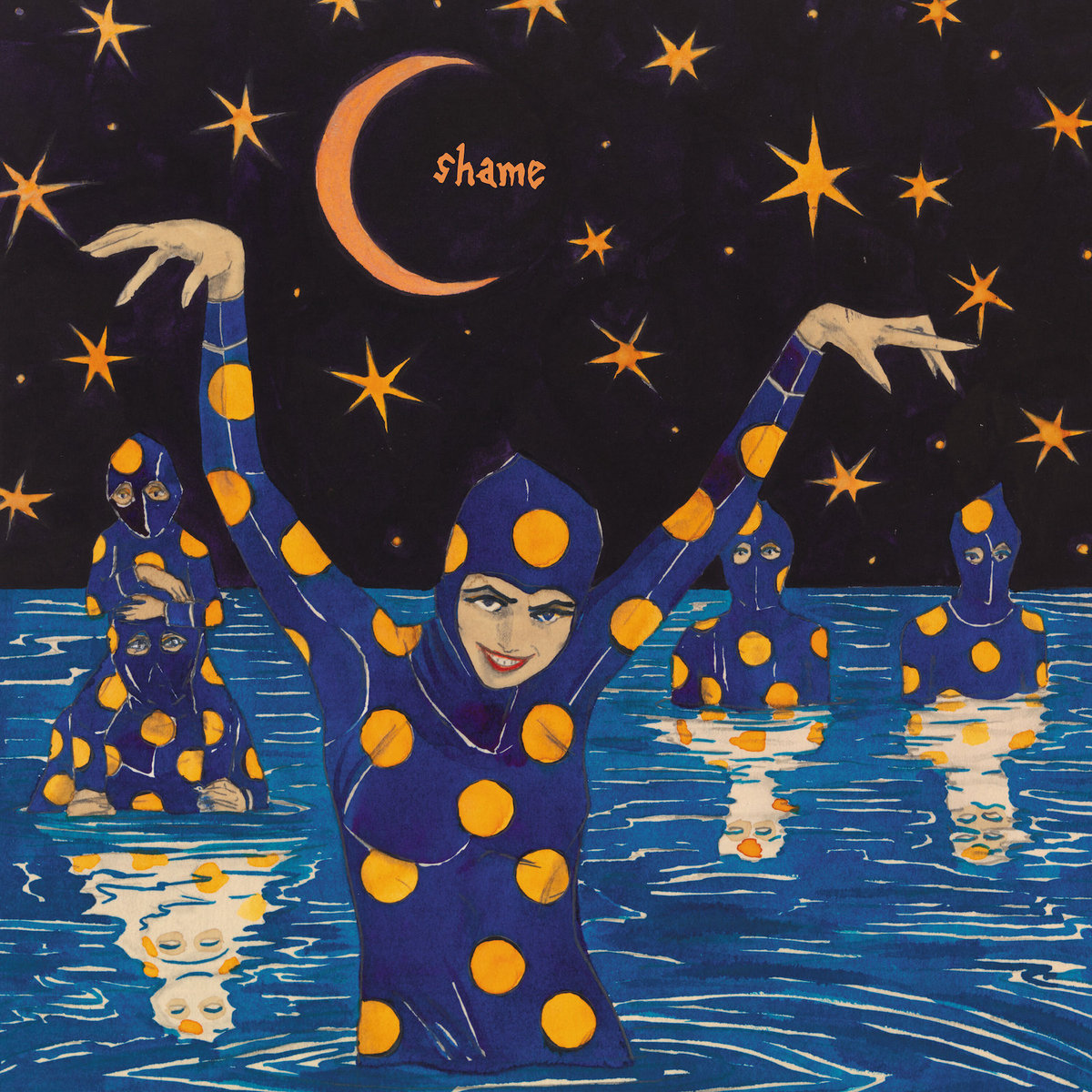
“Food For Worms” scratches a similar itch that Asia Menor did with “Enola Gay,” except on a level from the other side of the post-punk spectrum. It’s a complete overhaul of the work from Drunk Tank Pink, with an incredible amount of polish laid overtop. It’s a glimmering project with sterling vocals and powerful guitar riffs that overpower each track.

One of the most unexpected gimmicks that this record plays often is the use of dynamic bridges, like in the opener “Fingers of Steel” which perfectly sets the tone for the glorious music to come. Additionally, the flow from track to track is smooth and weaves a perfect sonic palette for the entirety of the project, making it instantly enjoyable for repeat listens. 

Sometimes a record like this is exactly what the doctor ordered. A solid body of work that epitomizes what makes a sound so amusing. shame has done that again and again and shows no signs of stopping.    

Laufey – Bewitched

“Bewitched” may not have saved the entire genre of Jazz like some critics will have you believe, but it certainly thrust it into the popular music hemisphere and made it marketable to an audience of young hipsters. Barring the backhanded compliment, Laufey is certainly one of the most unique artists to reach sudden relevance from the dreaded app that is TikTok. Perhaps the biggest tragedy is the song that reached peak popularity is not even the best on the record. 

That being said, each track is a delightful experience in its own way, the soothing coos of Laufey’s voice are as inviting as they seem and drape perfectly over each instrumental. Sappy lyrics of love and heartbreak are always welcome when the person singing it delivers so effectively.

Believing the hype is a dangerous game, but it seems “Bewitched” is one of the few sure things this year. Let’s just hope that the fame doesn’t get to her head.  

Model/Actriz – Dogsbody

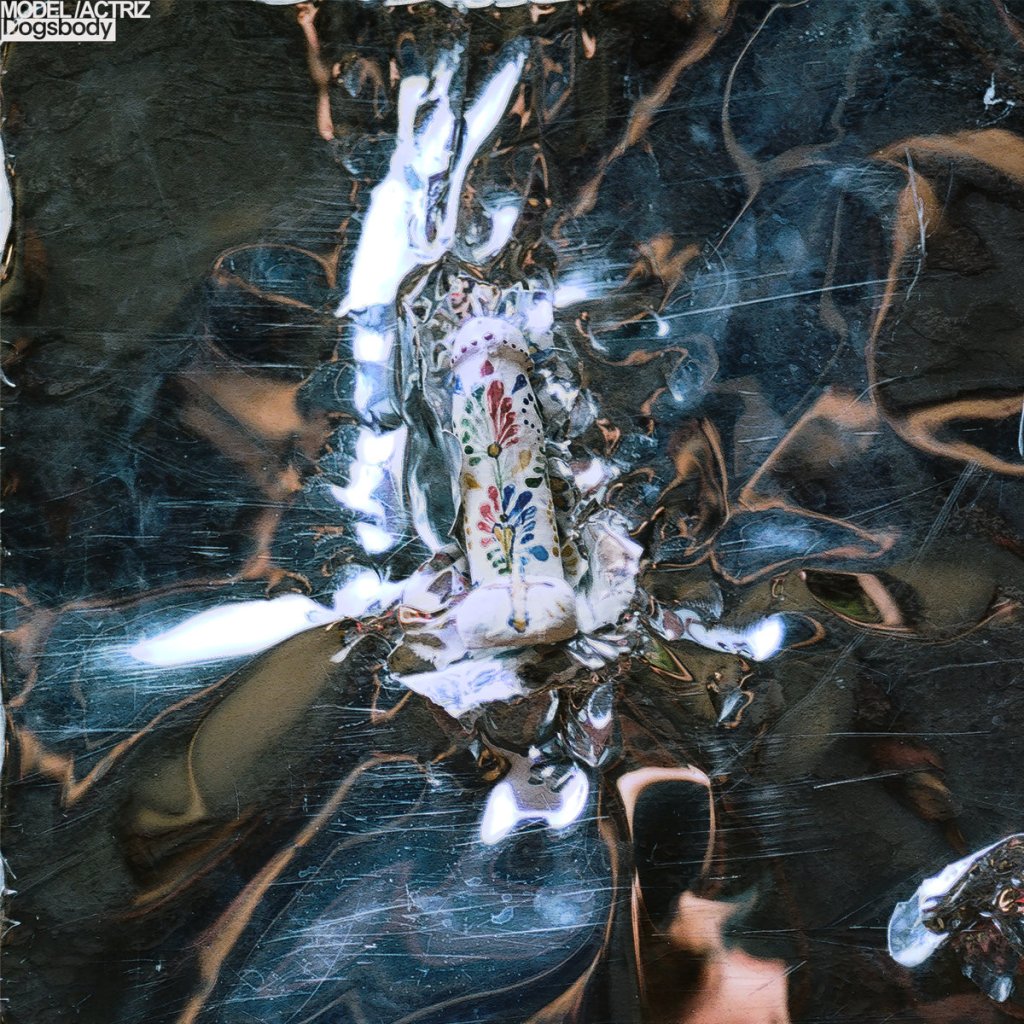
“Dogsbody” is the epitome of what the modern album from the British boyband is turning into. Not unlike black midi or Black Country, New Road this new eschelon of adolescent punk is a new energy audiences have not been exposed to in years. It’s a sound tainted with angsty lyrics and tonal shifts that can cause whiplash to the uninitiated. Model/Actriz has done all of this on their debut album and somehow they were formed in Massachusetts. 

Model/Actriz carves their own path in this admittedly bloated scene and does it unflinchingly. They’re visceral and angry, pushing the limits until they teeter into a sound entirely comforted by scratchy guitars, grimy drums and racy lyricism.

Frontman Cole Haden said in an interview with Interview Magazine that lyrically he was inspired by the musical Cats because it “filled [him] with sexual vigor and terror.” That’s just a little taste of the magical insanity that can be found in just one song from this record. Won’t be going into any more detail because it’s something that should go unspoiled. Listen now.  

Honorable Mentions:

Sampha – “Lahai”
Queens of the Stone Age – “In Times New Roman…”
McKinley Dixon – “Beloved! Paradise! Jazz​!​?”
JPEGMAFIA & Danny Brown – “SCARING THE HOES”
Yo La Tengo – “This Stupid World”   

Closing Night: ‘Mustache’ – 24th Annual San Diego Asian Film Festival Recap

Photo by Jose Bucad
Editors note: a “bildungsroman,” according to Oxford, is a novel dealing with one person’s formative years or spiritual education. This term could potentially apply to films as well.

Puberty and facial hair. Growing up and self-discovery. High school and the crippling anxiety of having to talk to people of the opposite gender. These are just three of the foundational pairs that constitute what it means to fight through the gauntlet that is male adolescence, and what are potentially the typical ingredients for a bildungsroman starring a young man. “Mustache” is no exception, much to its own chagrin.

Directed by Imran J. Khan, “Mustache” follows Ilyas, a 13-year-old Pakistani-American played by Atharv Verma, whose internal conflict in attempting to grasp puberty and his place in the world is represented through his “peach fuzz” mustache. The film begins with Ilyas in an Islamic private school, right before a fight between him and another student gets him sent to a public high school.  What ensues are a slew of classic “fish out of water” moments, girl troubles, helicopter parents, a “nobody understands me” mentality, an “all is lost” moment, sprinkle in a “this is who I am, take it or leave it” monologue or action, and conclude with the protagonist understanding that their own destiny is in their hands and not their community. That’s “Mustache” in a nutshell, and just about every other generic male-centric coming-of-age story.

I think shaving is one of those to-dos that men take for granted, having shaved so many times that it’s hard to remember when was the first time the razor made contact with our upper lip. However, I do remember mine, and I don’t ever recall the experience being so dramatic. Although, much like Ilyas’ mother in the film, my own mother warned that the hair would regrow thicker after being shaved, I never experienced the shame that Ilyas felt in having that kind of facial hair, it simply existed for me.

Eventually, the more I sat with these similarities with my own life and the similarities of the film with other bildungsromans, the more I came to realize that “Mustache” doesn’t provide anything substantially new to the genre or even pushes the envelope on any topic. In the past, the San Diego Asian Film Festival has premiered several bildungsromans like “Riceboy Sleeps,” “The Fish Tale,” “Hill of Secrets,” and “Death of Nintendo,” and all added a twist to what otherwise would be a run-of-the-mill story. “Death of Nintendo” is probably the closest to “Mustache” with the use of generic bildungsroman plot points. However, what separates “Death of Nintendo” from “Mustache” is that the former uses circumcision, and its significance in Filipino culture, as the transition into adulthood rather than facial hair. The main protagonist thinks circumcision will result in some drastic change, but realizes, after getting circumcised, that it was all in his head, potentially serving as a commentary on the arbitrary nature of circumcision as a cultural tool. Additionally, having foreskin serve as the main plot device adds more weight to the decision of the character because of the obvious: hair grows back and foreskin does not.

While facial hair does have cultural significance in Islamic culture, this is never properly integrated into the narrative. It’s more used to convey Illyas’s estrangement with classmates. At the film’s end, the viewer is left with a shot of Ilyas holding an electric razor, and staring into the mirror, before suddenly cutting to black. According to the director, the ending was meant to invoke a conversation amongst viewers as to whether or not he shaved his mustache, but because of the lack of consequences of his choice, all I could really think was, “Who cares?”

Beyond the plot points and cultural significance, I thought “Mustache” as a comedic film was fine. Several of the jokes throughout the film were funny and executed in a way that was dry and never overly played out. After the screening, in a Q&A, director Khan described the comedy of the film as almost British in nature: dry and needing the protagonist to be unaware of the circumstances around him. The film succeeded in this, especially since I’m a fan of humor that’s less on the exuberant or flamboyant end of the spectrum.

As someone who went to a Catholic private school from K-12, I really did want to like this movie as I felt it spoke to me in some regard. Regardless, I’m perhaps not the target audience of its cultural messages. Nonetheless, despite its humor, “Mustache” leaves something to be desired, something of substance that leaves an impact and begs the audience to ruminate post-screening, something that simply wasn’t there.

‘Waiting for the Light to Change’ – 24th Annual San Diego Asian Film Festival Recap

via IMDb

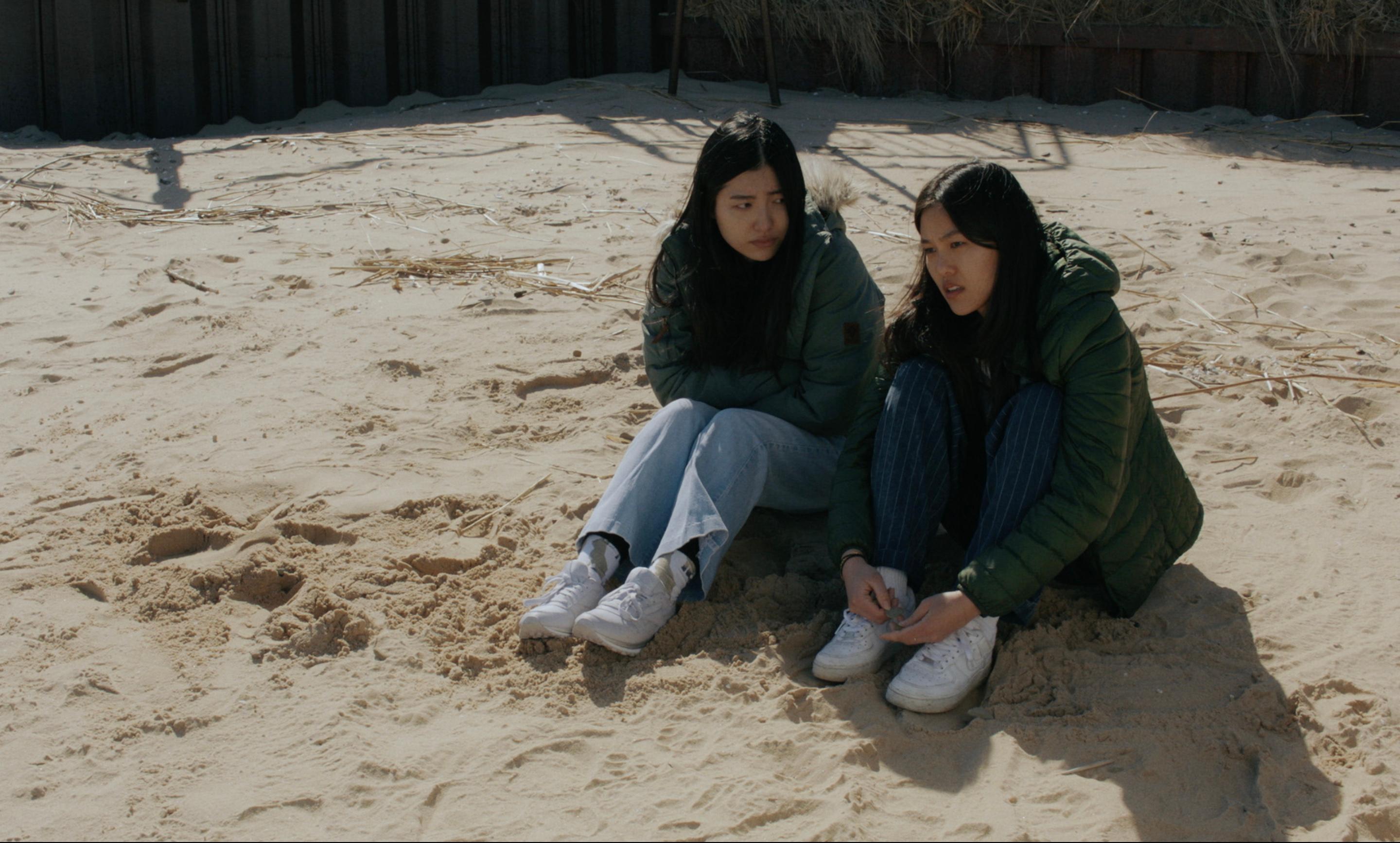
“Waiting for the Light to Change” is the directorial debut of Linh Tran, a Vietnamese filmmaker and graduate of DePaul University. Its premise revolves around the drama that emerges between a group of friends during a week-long beachside getaway. It’s a semi-coming-of-age story that focuses on that strange transitional period of personhood directly following the time when most young adults graduate from university.

In many ways, the film is a clear-cut example of what could be referred to as “post-Covid filmmaking.” A recently emerged sub-genre in cinema to describe movies that feature a usually small crew, cast, budget, and range, crafted during or immediately following the pandemic.  That being said, “Waiting for the Light to Change” is greater than the sum of its parts. Most of the film is told through the eyes of Amy (Jin Park), a relatable twenty-something who struggles with her ongoing jealousy toward her more-put-together best friend Kim (Joyce Ha) and the undisclosed feelings she harbors for Kim’s boyfriend Jay (Sam Straley). 

The true gamut comes from the film’s exercise of empathy. The personalities of the main characters are ultimately what’s meant to shine the most. It’s very easy to see yourself in the protagonist’s shoes and identify with her impulsive actions. Amy is a very lived-in character, almost as if each scene is ripped from a personal experience.

Inspired by the likes of popular “hangout movie” directors like Jim Jarmusch and Hong Sang-soo, a bulk of the runtime consists of static scenes where characters are shown just sitting around and talking. Tran noted in our Q&A after the film that shooting these scenes was very easy for the cast to do and left a lot of room for personal interpretation and variation. Aside from that, minor set pieces are used mainly to add visual longevity to some portions of the film which feels justified most of the time. The scenes where there is a lot going on stand out more as a result of these artistic choices. However, those are never meant to be the focus of the film.

The biggest fault is the inevitable cliches that are tapped into as well as some of the repetitious aspects of the film. There’s a noticeable lack of variation between acts that pollute a majority of the film. Scenes that feel like they lead nowhere, characters being regularly sidelined, and an excessive amount of drug use for whatever reason. While a majority of these things wouldn’t matter in these meandering types of films, as they’re already known for their lack of direction story-wise, Waiting For the Light to Change does follow a mostly emphatic narrative that reasonably paths from start to finish, despite the reportedly “bare script” the cast worked with. In all fairness, these things only superficially affect the overall quality of the piece, and the predictable loop that the film creates for itself is not difficult to engross yourself in.

Something interesting that Tran brought up after the film was the lack of emphasis race had on the film. Despite having a mostly Asian cast, the director emphasized that their identities were not central to the narrative. It was important to her to tell a neutral story where the characters just so happened to be Asian, in a way, a form of normalization for these sorts of portrayals.

For a debut film, Waiting for the Light to Change is a very strong start and proves the inspired character of Linh Tran has more than enough aptitude to continue an equally strong career.

‘Evil Does Not Exist’ – 24th Annual San Diego Asian Film Festival Recap

via IMDb

Following the success of his 2021 film “Drive My Car,” Academy Award-winning director Ryûsuke Hamaguchi, in his latest feature, is not concerned with showing you that evil does exist, but rather incentivizing you to think that it can.

From the moment the film opens, with a worm’s-eye-view dolly capturing the tops of snowy trees and the endless bright blue sky, there is a permeating sense of innocence — suggested via a young girl’s perspective as she walks through these woods — paralleled with nature. This level of purity is, for the most part, preserved for the duration of the movie, in the sense that nothing is ever fully exposed to the point where the viewer can become desensitized to all the answers.

The director recently stated in an interview at the New York Film Festival, that people often assume what is only naturally occurring must not possess evil like a tsunami or an earthquake. Perhaps then what is truly evil, even more so than the violence of natural disasters, is whatever our minds predict to come based on our accumulated observations of human intent throughout each other’s individual lives. The title, “Evil Does Not Exist,” therefore plays a role in describing the content of the movie, but it isn’t exactly a statement limiting the imagination of its viewers to look further into the plausibility of evil in a grander world than just what the film shows, like a tie-in with the bigger real one we’ve all experienced firsthand. 

Hamaguchi has rightfully approached this by ensuring the film remains impartial and refrains from taking a definitive stance. It doesn’t neglect the plausibility of danger towards any of the characters, nor does it neglect the plausibility of good in all of the characters, even the people from the “glamping” (a portmanteau of ‘glamorous camping’) company, the antagonists who want to build a resort in the mountains of a nanoscopic village at what they claim to be the small cost of polluting the village’s sole water source. There is equally just as much hostility that can be speculated in the very place being invaded by these disruptors.

For example, the ambiguous and cold townsfolk Takumi, performed with memorable oddity by Hitoshi Omika, seems just as open to positive and negative interpretations as the movie gives for the outside practitioners against nature itself. He is constantly seen chopping wood, and one can only see a striking ax for so long, or the sound of firearms blasting from fellow villagers in the distance, without wondering whether it’s to foreshadow something much more sinister happening behind the scenes that we have yet to decipher. Notions, such as his love for his daughter, seem to lessen the possibility of evil intentions towards these ‘enemy invaders’ so to speak, or at least something less than evil since he has a universally relatable motive.

The two lead glamping employees, Mayazumi and Takahashi (Ayaka Shibutani and Ryûji Kosakaon), the other hand, have an abundance of screen time to the point where the audience can easily sympathize with their respectable aspirations for a satisfactory life, and their desire to make things as right as they possibly can with the villagers to the point of jeopardizing their own jobs. This helps counterweigh the cruel reality of them being hired corporate schemers. While sharp tools have the potential to lead to evil, so does urbanization. From what’s being shown here though, evil evidently doesn’t quite exist, yet, we can still anticipate the proceeding steps for it to ultimately manifest as experienced human beings instinctively do.  

In classic Hamaguchi fashion, there are not a lot of scenes that make up its runtime as opposed to the usual feature length. Many of them go on for around ten minutes, which may seem excessive on paper, but completely humanize the subject matter in retrospect. This stylistic decision makes the environment and characters appear all the more real, however, like any film, it feels like only some of this ‘genuineness’ is superfluously cherry-picked given that there are so many moments that make up a life. Surely, what will catch most viewers off guard is the film’s ending, which won’t be spoiled here but, once you see it, you’ll know why.

Nonetheless, this all makes “Evil Does Not Exist” further evidence that Hamaguchi is steadily becoming a master at making his audience reconsider what they once knew in their own lives – which may now seem too calm to be true – via his relatable yet manufactured stories about characters realizing that there is always more to everything. He also reminds us once more that the death of innocence is often the draw of fictional movies and stories in general, usually at first mysterious yet eventually debunked. How? By choosing this time, despite these norms, to not completely kill it, but rather disrupt it a bit, especially during its unforgettable climax.

Opening Night: ‘Quiz Lady’ – 24th Annual San Diego Asian Film Festival Recap

photo by Millie Root @millie.r.photography

Opening night of the 24th Annual San Diego Asian Film Festival took place at the Natural History Museum in Balboa Park, much like last year did. However, compared to last year, the opening screener was much more lighthearted. 

Directed by Academy award-winner Jessica Yu, “Quiz Lady” is a family comedy focused on the relationship and reconciliation between two diametrically opposed sisters Anne and Jenny (Awkwafina and Sandra Oh). Complete with a cast of heavy hitters like Jason Schwartzman and Will Ferrel, the latter of whom actually produced the film via his studio Gloria Sanchez Productions, “Quiz Lady” is a film that’s grand in scale but not in scope.

Indeed, the movie is very content with being exactly what it is, a melodramatic comedy studying the complicated dynamics between two Asian American sisters. There’s nothing offensive about it, in fact, it’s one of the safest picks you could make for general audiences. It’s a movie you could recommend to an estranged in-law in order to get on their good side. That doesn’t necessarily make the film terrible but it does leave a lot of room for improvement. 

What’s reassuring about “Quiz Lady” is the meta-contextual elements. There are a million white-based comedies that do the same thing as “Quiz Lady,” in fact, the original script was not initially written to be about Asian Americans at all. It tackles all the same tropes you’d see in your usual post-2010 comedy. Personality-based humor, slapstick elements, scenes that run on for an uncomfortable period of time, and even a hyper-edited drug-tripping scene. The only difference is the very light Asian American lens it’s shown through, while that doesn’t save it from ultimately being generic, it does provide a modicum of brevity. In a way, it is refreshing to see it done modestly, without too much attention being drawn to the character’s background or heavy exploitation of stereotypes. 

During the Q&A portion held after the film screening, we asked Jessica Yu where the reoriented focus toward Asian American families came from. Yu said many of those post-script changes came as a result of Awkwafina and Sandra Oh signing onto the project as the talent and producers. It’s easy to spot where their creative influences manifested.  Their on-screen chemistry is charming if not a bit manufactured at times. According to Yu, a lot of their dialogue was ad-libbed, leaving the camera going and letting the two play off of each other. What makes their performances interesting is once again the meta-contextual elements. Seeing Sandra Oh play the reckless and free-spirited Jenny in contrast with Awkafina playing a more restrained character foil in Anne is certainly a unique experience.  

“Quiz Lady” seems like a return to Yu’s roots in family comedy filmmaking à la “Ping Pong Playa.” While the former is not a shining star amongst its contemporaries, it was a fun experience and a pleasant start to what would be another successful run of films at SDAFF.

Brown Eyes, Blue Skin, and Bleak Disappointment: DC’s Blue Beetle – A Review

photo via The Hollywood Reporter

DC has undergone major changes since it acquired acclaimed filmmaker James Gunn as its co-chairman and co-CEO. While DC has always tried to market itself as the more serious version of its relatively family-friendly counterpart, it wasn’t until Gunn’s entry in the Suicide Squad series that the label held some weight.

With Marvel taking a major hit earlier this year, losing Jonathan Majors as their lead villain amidst their already lackluster output and deteriorating social standing, DC is in an interesting position. Their chance to win over audiences and overthrow the cinematic giant seems more plausible now. We’ve already seen two attempts before Blue Beetle, with yet another set to release in December. With that said, is “Blue Beetle” really the film to overtake the MCU?

At first glance, “Blue Beetle” feels new and enticing because most audiences haven’t had the opportunity to become acquainted with the character outside of comics, video games, and minor television appearances. The same can be said about the actor portraying the titular character, Xolo Maridueña, who before this film was mainly known for his roles in various television shows like Netflix’s “Cobra Kai” and NBC’s “Parenthood.” For both of them, it’s not a very promising introduction.

The film feels a lot like its predecessors, somewhere between Spider-Man, Iron Man, Black Panther, and maybe even some Flash for good measure. There are a lot of shortcuts taken early on that try to do the work of characterization for the film. Perhaps to make its narrative easier to digest, perhaps because there wasn’t much to adapt in the first place. Its major struggles skirt along the surface, mainly due to the natural limitations of the origin story, which can only really occupy a small spectrum of nuanced tales.

We begin with Jaime Reyes, a recent college graduate with a degree that’s useless without a master’s program, greeting his Mexican family at the airport. His father runs a failing auto shop, his sharp-tongued sister doesn’t go to school, his comedy relief uncle doesn’t have a family of his own, and his mother and grandma are mainly there to flesh out the rest of the family. Its attempt at being universally relatable seems to be its ultimate misstep. Double dipping into clichés, Mexican stereotypes, and overall lazy storytelling. Aside from being a superhero origin story, Jaime Reyes must also come to grips with the effects of gentrification and poverty. The Reyes risk losing their family home because their landlords raised the rent, and of course, it’s all the evil rich white people’s fault. This subplot is epitomized by the main villain Victoria Kord (Susan Sarandon), the corrupt CEO of the namesake tech company, Kord Industries. Sound familiar?

This is a common issue that extends far beyond the scope of just DC. Marvel and Disney as a whole are guilty of exploiting various cultures to market to wider audiences and present themselves as cutting-edge and inclusive. Most recently, “Black Panther: Wakanda Forever” exploited Mesoamerican history to create a backstory for their main villain, Namor. While Blue Beetle’s use of Mexican-American culture as a character backdrop is not as egregious, it still demonstrates a degree of ignorance from producers and writers who continue to appropriate and make these contrivances commonplace.

By far, the most frustrating aspect of these choices stems from what parts of culture they choose to adapt and bring into the collective headspace of the audience. The pseudo-Mexican struggle, as the audience can understand it, doesn’t reach far outside the realm of generic poverty through lines, and white people pronouncing accented names incorrectly. The heavy use of Spanglish further estranges them from their so-called roots and further disambiguates the family. These are Mexican-specific “struggles” that have been adapted before and haven’t become any more interesting since producers found out they could capitalize on them. It’s the lowest common denominator, that doesn’t create a compelling ensemble cast simply because it’s relatable to the lowest common denominator. That being said, these mistakes seem to be more a virtue of ignorance than an abject disregard. There isn’t some sort of malicious undertone to this malpractice, more likely someone recycling their own experience and adapting to pre-written conventions.

This is a shame because there are moments where “Blue Beetle” can be quite compelling. Jaime’s interpersonal struggle is sympathetic and somewhat inspiring, preying on the all-too-familiar existential fear that college graduates experience after receiving their diploma, whilst incorporating elements of kindred responsibility. His family is also charming, portrayed with a healthy codependence and reliability that, while admittedly second to the plot, feels genuine most of the time.

The Reyes family plays a central role in the narrative of Blue Beetle, acting as the supporting cast and the main theme. However, that concept is rarely justified by the story or the protagonist. The biggest hurdle Jaime must overcome throughout the film is balancing his relationship with his family while adjusting to the mantle of Blue Beetle. Jaime, who feels like a nobody, doesn’t feel deserving of his powers and can’t understand why the Scarab chose him. This is an interesting take on the Spider-Man syndrome, stripping the choice of superdom away from the main character and instead leaving everything up to destiny. Jaime’s stance as a minority in an area currently removing his kind from their ancestral grounds could add complexity to his internal dilemma and moral conundrums, where there is none. However, there’s never a fundamental choice he has to make that feels substantial enough to call for adequate development. None of his potential is realized in any meaningful way.

Not unlike a similar scene from Black Panther, a near-death Jaime sees visions of his diseased father telling him “It’s not his time to go” and that he has to go protect his family. A teary-eyed Jaime begs his father to stay but realizes his purpose and accepts the Blue Beetle as himself. It’s a competently made scene but unfortunately underscored by a mediocre setup. In that respect, it feels completely unjustified and half-baked.

The majority of the film can be summarized using the same standard superhero colloquialisms. All the beats you’d expect are played in an elegy of emptiness. As stated previously, there isn’t a lot of new or interesting ground for the superhero origin story to cover unless major risks are taken, and while DC has been known to take a few creative risks here and there, “Blue Beetle” certainly isn’t one of those times. All the clear inspirations it’s lifted from don’t really make sense when Frankensteined together. As the first true American superhero film to feature a Mexican as the lead character, it’s truly disappointing. While there is an argument that these kinds of films are a necessary baby step toward making racialized films commonplace, it’s hard to imagine that there is no better alternative out there, waiting in the wings.

DC’s “Blue Beetle” is out in theaters now.

Injury Reserve Is Now By Storm: What We Know So Far And What’s To Come

Photo by Fabian Garcia for Turn Off The Bright Lights.

On July 15th two-thirds of Injury Reserve premiered a double music video at a special event in Los Angeles at the 2220 Arts + Archive. The videos in question were for a previous song released on their 2021 album By The Time I Get to Phoenix called “Bye Storm” and for a new song released under their new artist name By Storm entitled “Double Trio.” Along with the premiere of new material, Nathaniel Ritchie, stage name Ritchie With a T, and Parker Corey sat down with fellow artist Harmony Holiday for a Mythscience Talks discussion about the following presentation. 

Once the event started, fans were ushered into a theater behind the small performing hall. The theater was large and supported ample seating. On the stage, in front of the wooded and bricked walls, was a grey couch and black chair facing toward the audience. As Ritchie and Corey sat with Holiday, the conversation began. 

It’s been a rough couple of years for the Arizona-based group. Following the loss of their third member Jordan Groggs, who performed under the name Stepa J. Groggs, the band embarked on a worldwide tour whilst grappling with what to do without one of their core components. For the remaining members, it was always a battle of extremes, never in the middle. The internal dilemma they described during the conversation was almost verbatim what Ritchie had already told Huck Magazine two years prior, “ I can imagine him joking and saying: ‘Y’all better still do this shit!’. But then I can also imagine him saying: ‘You better not step on a stage without me!” Ultimately they decided that they couldn’t continue the name with just them two. Injury Reserve’s slogan was always 3/3, and there was no reason to change that. 

They needed to find a way to transition into something different and reopen the conversation about the group making new material. After their time away they had finally figured out how. Ritchie described their circumstances, and how it took two years to make a single track. The subsequent video for the aforementioned song “Double Trio” as well as “Bye Storm” represents their rebirth into By Storm and the last thing they will ever do under the Injury Reserve name. 

The video itself was ethereal and poignant first starting with the warm track “Bye Storm” which makes heavy use of a sample from Brian Eno. Clips of the band’s time together as a full team flash by in a heavily edited montage. For many, it was their first time seeing new footage of Groggs before his unfortunate passing. The second half of the video was a bit more traditional this time taking place in the very theater fans were sitting in. Ritchie lays in a makeshift wooded bed, which fans could recognize from a previous social media post. A linen blanket is placed precariously on top of him and interlaced is footage of him dancing in a yellow suit and rapping along with his own lyrics. The song itself is very reminiscent of their lo-fi material from 2020, the last 40 seconds break into a speedy footwork track while the camera spins around the art studio interior. 

Post-screening followed another conversation about the video which according to Corey, in a very mild way is about learning how to cope with disaster. They also spoke on the struggle of honoring their former groupmate without commodifying his death. Even in past material, they wondered if what they were doing was ethically right, especially in an era where AI-generated singers and posthumous verses are now widespread. Corey remarked that creating the music video for “Knees” wasn’t easy referring to the silhouette of Groggs they added in post, referencing his absence in the video. 

Aside from the creation of the dual music video, the group detailed how they aimed to maintain its structure with just Corey and Ritchie as the central focus. Ritchie described the process as a maturing period. How both members had to learn how to trust each other personally and creatively. Learning how to live with the flaw and natural processes that come with music creation. The breakdown at the end of “Double Trio” was heavily opposed by Ritchie, before he eventually gave in and allowed Corey to have more creative freedom. 

At the tail end of the event, questions were opened up to the floor. Fans asked the group about their favorite records, their relationship with fellow musician and engineer Zeroh, and where they tend to draw inspiration from. This portion ended up going on longer than expected because Ritchie kept asking for more questions to “end on a better vibe.” Despite the extra questions from fans, something was still on our minds even after the event ended. 

The whole purpose behind the shift from Injury Reserve to By Storm is not simply aesthetic but also ideological. With the new name comes with it a new set of principles and boundaries. Ritchie and Corey stressed the importance of the “now” and how they want to worry less about how future projects may be perceived once released. The members recalled how surprised they were by the overwhelmingly positive reception of their previous record, initially believing fans would hate it. They wanted to avoid having those fears from here on out. 

Regardless, we spoke with Ritchie post-show to ask where he wants to see By Storm go from here; if there were any sort of endgame. His response was sanguine, “There is no endgame…I think a lot of what we do has no goal, it has a lot to do with just competition and boredom, and there’s never a like a grand scheme when we’re doing anything.”

“Has it always been that way?”, we asked.

“We’ve matured into that. I think when we made Floss we definitely had a visual goal of what we wanted to make, and I think maybe Phoenix was the second time that’s ever happened, but at the same time, it didn’t happen until we started making songs…I don’t know that’s kind of a hard question,” said Ritchie.

Despite the apparent lack of a traditional game plan, Injury Reserve has always made a splash when it mattered and it was clear that momentum was building into something that would have equal stopping power. The group would not reveal when the double music video would release but said it should be “soon.” They also assured fans that while Injury Reserve is no more performing songs from that moniker is still fair game. With that being said, it would seem this is all just the calm before the storm.

A Repose of Fairytale: The Reality of Celine Song’s Past Lives – Review

Photo via NYT

Past Lives is slated to be 2023’s sleeper hit at the box office. It’s managed to remain a crowd favorite amongst its high-profile counterparts like Spiderman: Across the Spider-Verse and Indiana Jones and the Dial of Destiny, much thanks to the recent mainstream appeal A24 films have reached in the past few years. Not unlike last year’s Everything Everywhere All At Once, the indie entertainment company struck cinematic gold on the chance they took with South Korean-Canadian playwright Celine Song. The only difference has unfortunately been in numbers. Despite both films’ immediate cultural relevance, the contrast in narrative scope has not tamed the ever-evolving, ever-fickle, theatrical zeitgeist.

Numbers aside, Past Lives stands as an immensely satisfying film about the treachery of brutal romanticism and the inherently convoluted nature of interpersonal relationships. It’s truly refreshing to watch a film that feels like it was written by someone who lived through tangible experiences interesting enough to be stretched into a feature. Someone drawing on what they know, versus what they think. For that reason, Celine Song’s very first outing as a writer-director is nothing short of exemplary and inspiring. 

It’s already been confirmed that Past Lives is a pretty autobiographical interpretation of an experience Song had between her real-life Korean childhood lover and her very white American husband. So the small pieces that bring the story to life feel menial when compared to the bigger picture. Indeed it seems almost unimportant to analyze the framework by which the story is being told, the looming shots of New York City and Seoul are standard indie film fair. The same could be said about the sparsely written dialogue and the overall pacing of the narrative. 

Instead, the strongest portions arise from the deft intricacy of the prose and what plays out on screen. It seems to be fully aware of the modern cultural landscape and plays with the expectations that come with society naturally. What the audience is left with while the credits roll is unprecedented and something that should echo throughout the contemporary cinematic landscape. Past Lives may not be as categorically successful when compared to its vast peers, but it very well may be the first of its kind; a blueprint for more-successful predecessors yet to come.

Fairytales don’t exist, at least, not in the way movies portray them, and while it’s true Past Lives can be a fan of the contrived at moments, namely thanks to a convenient Uber driver, there’s a moderate effort to portray something feasible and fantasy deconstructing. What makes the film a wonder is that it bathes in the confines of reality. It’s a story we’ve seen play out a thousand times, but a version you can actually take seriously. In the real world settling down is okay; it’s what most people end up doing and who ultimately deserves the extraordinary is arbitrary and certainly isn’t based on any sort of merit or reverence. 

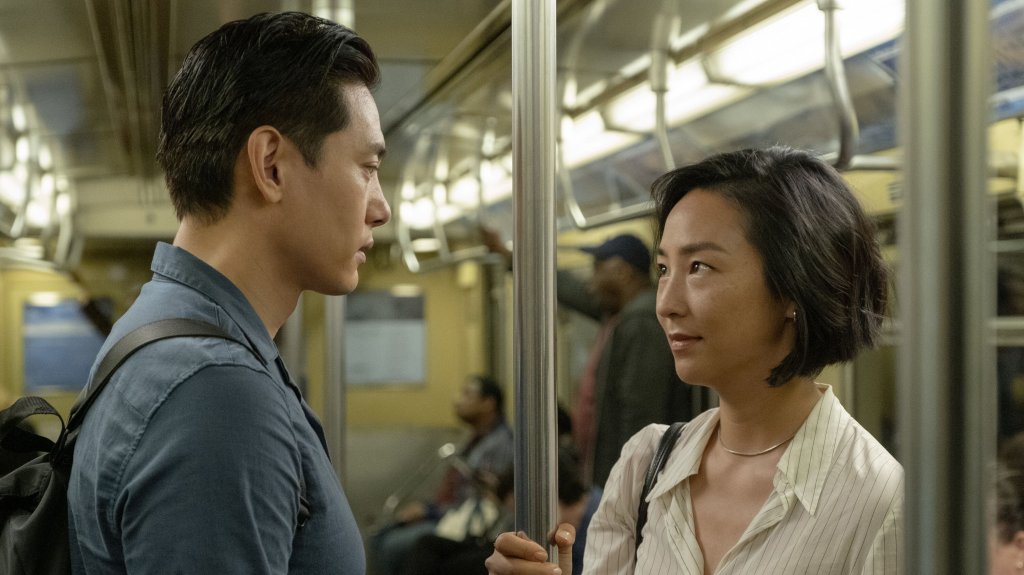
The main character and author surrogate, Nora (Greta Lee), whose Korean name is Na Young, the same as Songs, is caught between the quixotic lens of two different schools of thought. Eastern ideals of unstoppable fate and Western manifest destiny. Throughout the film, she struggles between the split personalities she created after immigrating out of Korea. Hae Sung (Yoo Teo), her childhood lover from Korea, holds steady in his belief in “in-yun” and refuses to let go of his past view of Na Young. “In-yun” is what validates his feelings for his childhood sweetheart but Nora in her new life ironically uses it to flirt with her future-husband Arthur (John Magaro).

Arthur can be understood as the other side of the proverbial coin, his relatively typical meeting and marriage with Nora, is uninteresting compared to the fabled romance that seems to exist transcontinentally. His status as a writer exacerbates this moral dilemma further and unlocks his own fears about his relationship with Nora. He feels like he’s stepping in the way of someone achieving their fate, something they were entitled to go and get. His “right” to Nora. 

This is also where the equally ill-considered fetishization of Ha Young and Korean women in general precipitated by both Arthur and Hae Sung is reproached. Nora reminds Arthur and by extension the audience that she’s “just a Korean girl.” That her ethnic status doesn’t warrant any sort of special treatment. That “Korean side” that both men want to unlock is not unique to her in any meaningful way. This is not so much to imply that either side likes her simply because she is Korean, although that could certainly serve as a harsh interpretation. Rather, our protagonist simply being dignified as a Korean seems to intermittently halt her life progress and cause doubt. 

It’s important to note that this clash between ideologies is purely subtextual. There is no scene where people scream at each other and violently break furniture. There are no righteous displays of brazen chivalry or glamorized confrontation. Along with a laundry list of other realities, Past Lives remind us that some battles are awkward and insignificant. They’re meandering and rarely end with someone slamming the door in angst. None of this is to say that Past Lives offers no theatrical or dramatic substance. Rather, the film takes its basis in reality earnestly. 

Arthur can be understood as a representation of the audience themselves, he picks apart how fantastical the elements of the plot truly are and laments how perfectly conclusive it would be if Nora were to leave everything for Hae Sung. It’s vulnerable and maybe even a little pathetic, but it’s also exactly what the audience is thinking. Where a slap in the face or bitter argument would usually go, a well-worded retort is anchored in its place. As Nora reminds Arthur that leaving everything behind for one guy she has barely spoken to in 24 years would be ludicrous and irresponsible. At last, the irreverent idealization of “true romance” commonly shared and idealized is appropriately questioned and rebuked. 

Aside from romance, Past Lives is also an immigrant story. Ha Young struggles to pick an American name before settling on Nora, and the next time we see her, she’s already earning herself an artist residency in the United States. Her reopened communication with Hae Sung reminds her of the disconnect between her and her roots. She remarks how masculine Hae Sung is but in a very traditional “Korean way,” something that makes her feel less Korean. In a way, Hae Sung represents her guilt and perhaps unresolved grievances from leaving her native country at such a young age. As a result, she experiences the all too familiar immigrant woe, being too ethnic for Western society but too Western for ethnic society. Whatever Hae Sung saw in the little girl he met so long ago doesn’t exist anymore, but that doesn’t make it any less real. It’s simply a mere shadow, the many parts that make up the matter. 

The thesis of the film is built into the beginning. Nora’s mother while talking about their inevitable move from Korea to Canada says to Hae Sung’s mom, “It’s true that if you leave you lose things, but you also gain things, too.” Choosing what you leave behind is difficult, especially when it isn’t a choice at all. Past Lives is a cruel reminder that every hello must be followed by a goodbye. That the recollections of missed connections are simply just that. Our communal faith in mythical concepts like “true love” wanes with our lives passing us in between.