Bi Gan and the Pursuit for Auteurship: A Resurrection Review – The 26th Annual San Diego Asian Film Festival Recap

via imdb

In “Resurrection,” 36-year-old director Bi Gan reveals a very telling thesis that helps explain the storytelling ethos of his previous work: humans cease to be humans without dreams; what it means to be us is to pervade logic from time to time.

In 2015, at the age of 26, he released his feature-length debut “Kaili Blues,” which progressively reveals subtle dosages of dream logic in an otherwise straightforward family drama. Much of the movie’s makeup appears inspired by the likes of auteurs such as Apichatpong Weerasethakul, Tsai Ming-liang, Edward Yang and even Andrei Tarkovsky. That is, until the second half of the movie, where we’re introduced to a 41-minute long take in which the pre-established reality of the film is shattered into something uniquely surreal. Suddenly, not only is Bi Gan’s signature long-take established, but it furthermore leads him into potential auteurship, where his sheer daringness as a filmmaker is blatantly revealed to the world.

In 2018, at the age of 29, Bi Gan released his sophomore feature-length “Long Day’s Journey Into Night,” which fully embraces the groundworks of having dreamlike execution throughout. The complete lack of confirmation as to what exactly is happening in the movie – insinuating that some parts are either reality, a memory or a dream – is used as a device to fabricate structural spontaneity, furthermore hinting at Bi Gan’s devotion towards depicting the illogical nature of our imagination.

In 2025, seven years after his last feature, “Resurrection” is released in what appears to be the director’s already attempted magnum opus: a straightforward anthology movie masquerading as an avant-garde dystopian sci-fi that’s much simpler than it’s made out to be. Yet, the sweeping elaborateness of its versatile set design and cinematography, and the attempted overbearingness of sandwiching multiple stories together, might convince viewers otherwise.

It’s a commendable effort on ambition alone, like any Bi Gan feature-length at this point, but one that is ultimately overcompensating for actual content or correlation, all professed in the name of the mystery of dreaming (i.e., cinema) being an extension of life’s incalculable assets and therefore, a necessary human right.

What about the objective reality that inspires dreams to exist in the first place? What about the potential psychological insinuations that dreams reveal about one’s self, subconscious and deepest desires? Why does a dream make us human, other than the fact that it makes us play out human familiarities? Why do dreams tend to escalate unrealistically? Is it because our emotions and feelings contribute to the sudden changes within the plot of a dream? Why are dreams a human right other than the fact that they allow us to place ourselves in any situation imaginable? Cause it enables empathy? Cinema enables empathy?

It could make sense though that expanding and elaborating upon these ideas wouldn’t concern or be the main priority for Bi Gan given his belief that the unknowing is much more compelling than the discovering, but the issue is, “Resurrection” isn’t exactly a whole lot of “unknowing” when we know, for the most part, exactly what styles he’s referencing and exactly what archetypes of tall-tales he’s riffing off of within his anthology stories.

Nonetheless, each anthology story in “Resurrection” has equal things to like about one another. The film’s introduction sequence is a euphoric recreation of not only the silent-era, but German expressionism more notably, which is perhaps the greatest cinematic movement one could reference when wanting to exemplify the surreal reinterpretation of reality that movies offer.

From then onwards, we’re placed in the film’s first segment: a homage to noir, featuring a gripping train fight and interrogation sequence, as well as a respectable homage to Orson Welles’s “Lady in Shanghai” during its mirror climax.

Next is maybe the best of the batch, that being a ghost tale set in a Buddhist temple where a man meets the alleged spirit of bitterness, who takes the form of the man’s father. The entire short is limited to a single location and is made up of almost entirely conversation, where Bi Gan showcases some genuinely spellbinding dialogue between the two characters, therefore causing the segment to appear less like a pastiche compared to the others.

Then, we get an admittedly generic one – the classic tale of a duo between a broke bachelor con-artist and an unusually gifted orphan – but executed exceptionally well, with the most transparent narrative development out of all the segments, therefore making it easily accessible.

Lastly, the closing story is where we get Bi Gan’s famous long-take, mostly riveting by the fact you’re watching an exceptionally thought-out and indisputably creative long-take with, howbeit, some pleasantly surprising supernatural elements, but it unfortunately relies on stereotypical and thus unfascinating romantic noir elements within its storytelling and characters that also plagued his previous feature.

The long takes in both “Kaili Blues” and “Long Day’s Journey Into Night” are much better earned than in “Resurrection,” however. In “Kaili Blues,” we’re gradually alluded to the prospect of our main character taking custody of his nephew, leading to the actual day he looks for him, which is mostly depicted via the long take. In “Long Day’s Journey Into Night,” the long-take is even better transitioned into, where the entire first eighty minutes of the movie are a structural duet between the believed past and the believed present, the present slowly moment by moment leading to the day he searches at the place he believes his long lost lover to be, which is when the long-take finally begins.

In “Resurrection,” however, the long take feels obligatory, something included solely because he did it in his previous two features. Perhaps, however, it could represent the latest stage in cinema at the moment, where we now have the technological advancements to actually shoot something as baffling as a long take, but it could just be coincidental, given that every Bi Gan movie has climaxed in a “oner.” Nevertheless, this long take may be more visually seamless and impressive than ever before when divorced from the rest of the film, but it ultimately lacks the emotional resonance and pay-off that his previous two delivered.

Some might say “Resurrection” rings familiar to ambitious classics about the filmmaking experience, such as Federico Fellini’s “8 1/2,” but one cult hit seems almost too comparable to it, being French auteur Leos Carax’s “Holy Motors,” released only a little over a decade before Bi Gan’s latest feature. This is also a movie about an outcast playing different characters, all homaging different styles of cinema, such as motion-capture and musicals. It even begins with a similar meta and self-aware, “you’re watching a movie in a theater right now, aren’t you?” shtick that Bi Gan opens with as well. Perhaps why, however, one might perceive Leos Carax’s attempt to be a stronger effort than Bi Gan’s is the difference in maturity, that being Carax has been making films since the early 80s, and decided nearly forty years later to then make what many consider his magnum opus or his love letter to the very thing that’s made up more than half a century of his life. The film is also carried throughout by a powerhouse performance from Denis Lavant, which gives the viewers something consistent to latch onto and also naturally creates a controlled flow that “Resurrection” severely lacks.

The inherent issue with anthology stories is that they have a greater chance of not accommodating enough time to really develop any of the characters or plots that embody them, thus creating a psychological disconnect from the audience. “Holy Motors” cleverly avoids this by making it obvious that the anthology stories are intertwined with a singular subject.

“Resurrection” works best as a showcase of genuinely mind-blowing visual and stylistic technicalism that is obviously beyond the craftsmanship of most filmmakers working today. It also works best if you just unpretentiously view it as a wives-tales anthology movie or a love letter to the evolution of cinematic aesthetics. If you think of worldwide renowned directorial auteurs like Christopher Nolan or Denis Villeneuve, you might as well start considering Bi Gan in the conversation at this point as well, because it’s bound to happen the more he gains support and budget. But perhaps, there is a humbleness missing that should’ve eased its way out incrementally during his initial work, where he needed to cipher through more storytelling resources to overcome financial limitations like those two other auteurs. That humbleness is ever so noticeable in “Kaili Blues” and immediately abandoned as soon as “Long Days Journey Into Night” comes along. Right now, Bi Gan has little reason to change and stop indulging in this pattern, given his success.

As enjoyable as “Resurrection” was to watch, a part of me believes I would’ve been an even bigger anticipator for his future if there were more of not knowing where he’d go next, some mystery, if you will. His hunt for continuously advertising himself as a quote on quote “auteur” or this next big thing by being potentially disingenuous via prioritizing even bolder presentation with each coming movie seems much more demanding to him than actually searching for and implementing all the components that make up not only a masterpiece of storytelling, but a narrative truly original like the ones that inspired his own, and not just one trying so hard to pretend to be instead.

It’s a movie intended to worship cinema, yet is unable to see its own filmmaking deficiencies to really epitomize a love for cinema that even less metatextual movies do by just being incredible in every way; it’s virtually blinded by its confident ethos of thinking plot disorder is the key to dreams or ideal filmmaking; it seems to lack nuance within its take on fantasy and cinema, and ultimately comes off somewhat naive because so. Perhaps then, what “Resurrection” can be appreciated most for is its being an exemplar in representing what cinema has accumulated after such time has passed, and how it’s furthermore interpreted by younger filmmakers who’ve grown up in the age of “brainrot” or hyperstimulant media where we have instantaneous access to art from any point in human history. This is about as modern as a movie can get, chaotically representing the state of new art now as almost literal libraries of influences.

Opening Night “Forge” – The 26th Annual San Diego Asian Film Festival Recap

via imdb

Following an exceptional 25th Birthday Celebration, the San Diego Asian Film Festival returned in 2025 for yet another round of quality filmmaking from Asian voices. 

The 26th Annual San Diego Film Festival opened in a different location from last year, the La Paloma Theater in Encinitas. It’s a historic venue and something of a change of scenery from the glitz and glam of the Nat in Balboa Park. Given that SDAFF’s brain has fully developed over the past twenty 26 years, the traditionalism of the new location makes sense and is fitting.

The film to kick off the 150+ on display this year was a debut film from Malaysian filmmaker Jing Ai Ng. An American comedy-drama film titled “Forge.” 

Forge is about two siblings, Raymond and Coco Zhang (Brandon Zoo Hoo and Angie Ju), who make a living by forging artwork and selling it to curators and collectors. Eventually or perhaps inevitably, the pair find themselves entangled in a multi-million-dollar forgery scheme after meeting disgraced millionaire Holden Beaumont (Edmund Donovan). Meanwhile, an FBI agent, Emily Lee, portrayed by San Diego’s own Kelly Marie Tran, attempts to get to the bottom of the siblings’ scheme. 

For a debut film, “Forge,” at least on paper, has a lot of potential. Crime dramas are nothing new in cinema and practically begging to be reinterpreted through a fresh lens. The film capitalizes on this fact by placing heavy emphasis on its concept and the strength of the main characters. What we’re left with is something that, by all accounts, is different. However, none of the film’s apparent strengths are ever fully harnessed.

For a film that has a lot of uniquely shaped puzzle pieces, the picture it creates is small and not very robust. It’s got everything you need to build something interesting, but doesn’t spread them as far as they could go. It’s not quite a cat-and-mouse thriller about a cop trying to bust a multi-level crime ring, nor is it a complex family drama about two kids lost in the underworld of coastal Florida. Instead, it would rather be all of these things, but only just a little bit. Enough to cross a few boxes without checking the work afterward.

In this instance, it’s not so much that the film is bad, just not as good as it could be. In some regards, this could be a worse fate than the former. That said, perhaps it’s more fruitful to accept “Forge” for what it really is rather than what it could be. 

Director Jing Ai Ng’s Q&A following the screening of the film was eye-opening as she appeared to have a pretty cut-and-dry vision for what the film was supposed to be. This includes her interpretation of what happens after the films light-cliffhanger ending. Whether it achieved that or not may be immaterial to some, but what’s reassuring is that she does have the chops to create it. 

In the least shallow way imaginable, “Forge” plays out like a television pilot more than a feature-length film. This is, of course, in spite of its nearly two-hour runtime. Which isn’t used to its fullest extent.

Despite being about a sibling duo entangled in a multi-million-dollar scheme, it doesn’t involve too many characters. The film is set in the sunny nethers of Florida, but there’s a noticeable lack of variety in locations and set pieces. For as much “plot” as the film has, not a whole lot does happen.

In addition, not unlike a television show, there are many transitional scenes featuring the two main characters meandering or clubbing, haphazardly placed in lieu of a hard cut.  

Now, the obvious answer as to why these limitations exist could be all chalked down to budgetary and time restraints, but that excuse feels rather cheap for a film like this. It certainly doesn’t want to appear indie even if it is. In a way, its commitment to traditional storytelling and restrained creativity actually makes it stand out in that department. However, there isn’t much of a balance between the two extremes. 

Perhaps the strongest moments of the film are when it’s not itself; there’s a handful of moderate scenes portraying the family lives of the Zhangs, and those never failed to garner a laugh or two from the audience. There’s a level of genuineness behind them that shines through that contrasts with the obviously produced scenes surrounding the art forgery scheme. It’s a nice break from the monotony.

In the future, it would be interesting to see Jing Ai Ng capture this type of energy in the future and perhaps harness it into another story. While tales of family have become something of a stereotype in Asian American cinema as of late, Ng’s small attempt here does seem to warrant a closer examination. The environment she creates is likable and charming. It’s almost like you never want to leave.

For what it’s worth, “Forge” manages to play to the beat it desires with a few distracting sounds clouding its way. Behind the curtain, there is a delicate beauty hidden that could be reimagined elsewhere. It’s a reassuring notion that makes whatever Ng goes on to create next an exciting endeavor. 

‘Blue Sun Palace’ – 14th SDAFF Spring Showcase Recap

via Lincoln Center

We’re far past the immigrant story in modern cinema. It’s a concept that’s been done to death but somehow continues to dazzle audiences. It’s not so much that these stories are bad or invalid, but they’ve become insular, the opposite of what they’re supposed to be. Many immigrant stories have become self-obsessed portraits meant for the layman to tongue bathe and virtue signal at. Things of inherent substance bastardized to capitalize on cheap pathos and lazy prose. That being said, every once in a while, someone is capable of readapting this tradition with something of greater significance.

What happens when you take an “In The Mood For Love”-esque plot and mix it with Tsai Ming Liang’s flavor of storytelling? Well, you get something like “Blue Sun Palace.” This is the directorial debut of Chinese-American director Constance Tsang, an artist who isn’t afraid to wear her influences on her sleeve.

Of course, the film does manage to become something more than its inspirations. It’s almost like a reimagining of antiquated film ideas repackaged through a modern lens. While that denotation may not sound flattering, it certainly is in this context. 

Tsang’s interpretation of the intrepid immigrant story is crafted with extreme care. The secret is not to focus entirely on the concept of cultural adaptation. Rather, how those from different cultures assert themselves into a unique environment. How those things affect what are otherwise ordinary human experiences. The significance isn’t found within the experience itself, instead, it’s the aftermath of what comes later.

In its simplest terms, the film follows two protagonists navigating loss in an unfamiliar territory. The audience is brought into this experience through the rough pre- and post-structure that the film follows. One could even argue the movie doesn’t even start until a tragic loss occurs.

To portray someone grieving, you have to slow things down. You depict stillness as life. Tsang is exceptional at this, and the performances from our respective protagonists, Amy (Wu Ke-Xi) and Cheung (Lee Kang-sheng), complement each other well and fit the world she created.

Kang-sheng is most known for being a regular in the aforementioned Tsai Ming-Liang’s films. His performance fits this style of slow-burn cinema and punctuates how unfamiliar his character is with his surroundings. His actions are listless and melancholic but filled with an air of whimsy that is overwhelmingly compelling.

Despite technically being an American film, a majority of the film is in Mandarin Chinese. This further estranges the characters from their foreign living arrangements but also strengthens their bonds with each other. There’s something relatable about a person you can communicate with earnestly, and the film takes the time to highlight that obscure pleasure. In fact, there’s a lot of time dedicated to mundane pleasantries that make the world feel lived in and natural.

Despite ending on a poignant note, there’s a lot of simple joy within what is otherwise a tragic package. That’s ultimately what the film excels at, and it makes sense given modern circumstances.

In the present reality, many immigrants have come to terms with their new identity. They accept who they are and now live mundane, relatable lives. They’ve already carved out their little space in America. The real question is, what are they going to do with it?

Phone Zombie

via J. Finn Schwartz

I quickly broke out into a sprint, leaving my blue satchel splayed on the floor. The wretched smell of decaying flesh, accompanied by a ferocious growl, was too much. I instinctively ran without a second thought.

“Janine!” I screamed countless times to no avail.

The growling had passed, but the stench remained. I slowed to a stop, approaching Janine as she sat comfortably on the broken bamboo bridge. A storm likely came through and broke the bridge; there was no getting to the other side.

Covered in sweat and my adrenaline turned up, Janine turned around and caught sight of the situation.

“What? Why do you have a fish in your hand?” she said. 

“Well, it was just floating along the shore, and I wanted it. It was a mistake, though, since those dogs immediately chased me,” I replied

My abandoned bag seemed to be the only thing holding the dogs back, although they could easily jump over if they so pleased.

“Would you get a pic?” I said. I wanted to memorialise this moment forever, the moment I caught a fish with my bare hands.

“You really want a picture with that stinky thing?” Janine asked with an incredulous look. The fish had been dead for quite some time.

“Of course,” I said enthusiastically.

“Quickly then. I don’t know how long I can stand that smell.” 

To be honest, I was more worried about the dogs kindly sitting behind my bag. It felt like any minute they’d agree my bag was an inadequate barrier.

“Alright, get that damn fish out of here,” Janine yelled as I threw the fish towards the dogs into the nearby lake.

Time passed smoothly, just sitting on the broken bridge with Janine, the dogs left, and I grabbed my bag. Rain fell as we began our journey home, and we got drenched.

“Another picture?” This time, I wanted to forever remember the moment I got drenched in rain with Janine.


Where had the time gone?

A week had passed since I was chased by dogs, but here I was, reliving the moments through my photos app.

Thank God I had those photos.

It felt like just yesterday I was being chased by a dog in the ever-looming threat of rain.

I thought to myself as I continued to doom-scroll, lying on my bed, extending a streak no one but me was keeping count of. My eyes were glued to the patterned lights blinking in front of me, and my thumb instinctively navigated the digital space to open my photos app and peek inside.

Scrolling through what might be just a highlight reel of my life, my thumb landed on the photo I was looking for.

The smelly fish! There I was making some face I thought would be photogenic, but how can you be when you’re holding a dead fish missing both its eyes? I could almost smell the fish through the picture, or maybe that was just me.

A sudden shift occurred on the bed, not heard but felt, pulling me down, my stomach sank, and I gasped for air. Frightened, I turned to face this new presence, seeing none other than my adorable kitty beckoning me to return to reality.

I obliged.

With her purring motor turned on, and my jarring return to the world completed. I suddenly realized all that I left unattended. Water was boiling on the stove, waiting for my attention. Dinner was prepared and ready to be eaten. All I had to do was get off the phone and start living again. 

What was I so afraid of?

As her purring died down, I got out of bed. Expecting a monumental effort, I effortlessly shifted my weight from the bed to the floor, asking my two feet to bear the entirety of my weight. They did so with ease.

Walking through my hollow studio, adorned with the various trinkets that I’ve imbued my spirits with, I found the cats chasing my feet.. I opened the fridge and grabbed exactly what they wanted, the acrid cat food they held so dear. 

What else was I supposed to do? 

Oh, that’s right, I have dinner waiting on a still-hot plate.

I ate from my plate while the cats ate from theirs. With my stomach full, I enjoyed a hot shower from the boiling water on the stove.

I debated two things next. Would I think about my dreams, goals, and wants? Or should I just cuddle up on the bed and watch a fun movie?

I heard crickets in the back of my mind as I pictured my dreams. I guess that means a film was in order.

I grabbed my laptop, opened up Netflix, got in a comfortable position on the bed, and quickly found myself scrolling mindlessly on my phone lying on my bed once again. Not a single movie in sight.

Nothing caught my attention, but I continued onward, mindlessly scrolling on my phone. I strained once again to think about my dreams, goals, and wants in life. The words echoed through my empty mind as the rain began to thicken outside. My phone seemed to respond, not knowing what to do, I gave my full attention effortlessly, falling once again into paralysis, fading into obscurity, simultaneously feeling anger and joy.

Another week passed in an instant, as if somewhere miscellaneous, I let my soul slip away. No worry, I later found my soul once again while in my office, five minutes before the clock rang, signifying the end of the work day.

My friends texted me earlier about running, but the ever-looming threat of rain had sufficed to cancel our plans. No bother, I’ll just run alongside the riverfront near my house, rain or shine.

I packed my things quickly to beat the setting sun. I only had about an hour, so I took the quickest transportation I could find to make it back home.

I hastily dropped off my work bag on the table and swiftly changed into my running clothes.

It appears I would beat the rain and the sun today, light trickling through my door. 

However, on my way to the riverfront, my statement proved false as the light rain progressively strengthened to a storm

By the time I was at the riverfront, the sun was still up, but the rain had begun falling like bullets. I was the only person outside.

All I could hear was the pitter-patter of rain on the concrete, the rustling of the leaves on the nearby trees. The birds seemed to scream for help while flying over the river, looking for protection.

I generally listen to music or a podcast while running, but the rain had sufficed to disconnect me from my headphones. With nothing but the sounds of nature around me, a new world seemingly opened up, as if I acquired a sixth sense for that which surrounds me.

I stopped caring how wet I got; the rain dripped from the bottom of my chin, mimicking a cold sweat. I was always told to avoid getting wet in the rain as I could get sick, but in this moment, I didn’t care. The feeling of running in the rain re-awakened something inside of me, something I still don’t know how to fully express

I was forced into the present moment, removing any need to pull out my phone, to feel connected to the digital world.

I made it home, dripping as if I had just showered, and I could once again think about my dreams, goals, and wants.

This time, instead of crickets, I heard something, as if a tiny man was yelling something at me. I couldn’t quite make it what they were saying, though.

I leaned into my thoughts, hoping to better understand what they were saying. I would be lying if I said I was not looking for something profound, something to give meaning to this life I live. I’ve been looking for that simple phrase to help me live in the moment, to simply live.

“BRaTh… BATITH… BaToMb,” I couldn’t quite make out what they were saying.

I returned to reality and opened the door to my apartment. I smelled something foul immediately. Thoughts of the fish floated through my mind. Terrible thoughts emerged: did my kitty pass away? I flipped the switch to turn on the light, full of dread, not knowing what to expect. A shadowy figure was illuminated adjacent to my bed. The figure jumped off the bed and ran out of sight.

My cat had shit the bed. 

My head went blank, ignoring the tiny voice, the smell of shit remained, the sight of shit in a napkin, the remorse my cat seemed to exhibit. I just went through the motions to clean the place, as well as myself, after running in the pouring rain.

I thought back on my dreams, goals, and wants, and the voice remained, but this time, it was clearer.

“BATHROOM” Bathroom? That was all? What could that mean?

I looked at the shit in the napkin and felt something off. I started sweating, felt clammy, and I knew something was coming out.

I rushed to the bathroom and let out all the contents of my stomach into the toilet directly underneath me.

I guess you really can get sick from running in the rain.  

With everything seemingly out, I cleaned up as best I could and thought once again about my dreams, goals, and wants.

Crickets were all I could hear, but something felt different, as if that tiny voice was encouraging me to listen.

Something felt removed, maybe all that life amounts to lies in the details.

I started paying attention.

Inside Somar’s Hunk Boot Pop-Up Event in Los Angeles

Somar Hunk Boot Pop-Up Interior

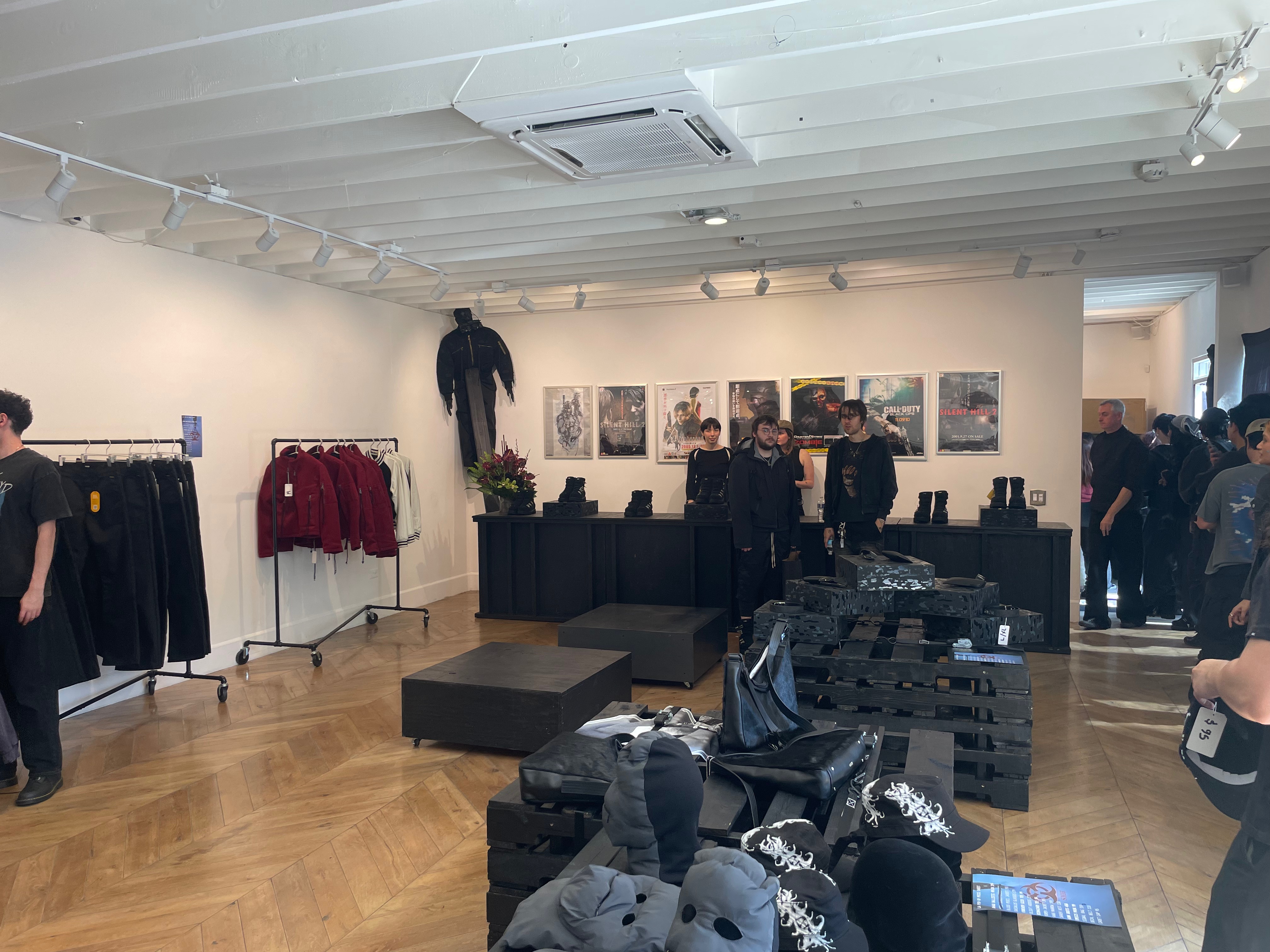
No dress code was necessary for admittance to the Somar Hunk Boot Pop-Up store in Los Angeles, but somehow, someway, everyone came dressed like they were going to a funeral. The line stretching around the corner of The 3110 Gallery in Silver Lake consisted of young adults wearing nothing but black and their sister shades. These “Somarians,” as the label calls them, awaited the release of an exclusive pair of boots from the LA-based brand Somar. This is the first pop-up shop event from the niche collective, but the waves they made that day in the heart of Silver Lake were felt across the city.  

The black blob surrounding the building was easy to blend into with plenty of friendly people waiting in line and chatting amongst themselves. One of the most underrated parts of events like these is the opportunity to connect with like-minded people. Not unlike a concert or a sporting event, everyone in attendance was there for one specific reason. Clothing is an inherently expressive medium, making events like this a chance to showcase your style and bond with others who will appreciate it in the same way you do.

In line were various looks that embodied the brand’s ethos. Video game t-shirts, button-ups, selvedge denim, platform boots, all of these things, in some way or another, have influenced and become staple styles for Somar. Their fanbase naturally adapted to this aesthetic, embracing it as an extension of Somar’s identity. In fact, it’s not unreasonable to suggest that the label is redefining what a “gamer” can look like. This was evident in the store’s industrial, military-inspired interior.

Stepping inside felt like entering a video game rest area, where merchants gather to offer supplies before the next mission. Displaying the various garments were knee-high pallets painted black. Toward the back was a fitting room for people to try on the hefty helping of clothes available for purchase. On the other side of the store, contrasted against a white wall adorned with a series of framed video game posters, was the pièce de résistance, the Hunk Boots. 

Based on the Guidi 20 Trekking Boot and the Carol Cristian Poell Pirate Clasp Boot, this particular design is characterized by its rough suede upper and custom silver clasp enclosure. The rugged yet refined aesthetic bridges the gap between avant-garde footwear and everyday wearability.

The boots were available to try on in person, and staff made themselves available for anyone who wanted to inquire about sizing. Amongst them, of course, was the label’s creator, 27-year-old Owen Hyatt. After trying on the boots ourselves, we managed to slip away from the bustling crowd for a moment to speak with Hyatt directly.

Designer would usually be the title preceding his name, but Hyatt is hesitant to use such a term when referring to himself. In his eyes, Hyatt’s title falls closer to being something of a clothing connoisseur or even curator than a seasoned designer. “I’m not fashion classically trained, I know what I like and I build the brand around that,” he said. Hyatt added that he didn’t even get into fashion until he was in his late teens. It’s through this fashion-maverick lens that Somar’s distinctive creativity comes to the forefront of its identity.

Hyatt is a man of many interests; his social media presence is very indicative of this fact. His YouTube videos and Instagram reels often highlight his love of video games, movies, comics, music and archive fashion. Each of these interests has found a way to integrate itself into the studio in some meaningful way, and the Hunk Boots are no different. In fact, the “Hunk” in the name is a tribute to a character from the Resident Evil series of video games.

However, Hyatt’s creative process goes beyond just not-so-subtle references. In many cases, Hyatt’s interests are often demonstrated through the various reference pieces lifted for his drops. In theory, it’s a semi-unorthodox approach to product creation, but in practice, it has shaped Hyatt’s authentic sensibilities.

One way of looking at Somar could be in terms of wish fulfillment. For Hyatt in particular, it’s the chance to reimagine something you enjoy and make it that much better. It’s like an infinite sandbox on display for anyone to see. Hyatt himself thinks as much. 

“If something really resonates with me, and I wear it a lot and I’m like ‘Damn I wish this detail was different’ or ‘I wish it was in this material’ or ‘I wish it had this fit on it’ then I’ll put my twist on it and sample it,” he said. 

While this isn’t necessarily a rare concept, it’s refreshing to see an artist who isn’t afraid to share their inspirations so candidly. Aside from creative integrity, Hyatt’s motivations are more selfless than many would first consider. He cited accessibility as the motivating factor for why repurposing and remaking pieces became an iconic fixture of the brand.

A lot of the reference pieces used by Somar generally aren’t available to the public, whether that be due to scarcity or cost. With that in mind, Somar is a unique opportunity to make these garments available for a wider audience. It’s also a way for more people to learn about fashion and appreciate something they perhaps wouldn’t have otherwise.

“I want to be able to put the Somar twist on it and then also make it as affordable as possible for people that appreciate the brand…I’m never trying to price somebody out,” said Hyatt.

In the past, the “Somar Twist,” as Hyatt put it, has manifested in a multitude of different ways between each product launch. Some can be self-referential, while others are as simple as a change in material. The Hunk Boot in particular was a chance to reimagine how the brand wants to produce footwear and serve as a subtle callback to the Somar Grunt Boot, a previous product many have wanted to see make a return. In any case, it’s a testament to Hyatt’s transparency and desire to invite people into the creative process of maintaining and curating a brand identity.

With more events planned and production set to double this year, the average “Somarian” could soon become a permanent fixture in LA’s fashion zeitgeist. Let’s face it, if you can convince a large group of twenty-somethings dressed in all black to wait in the Southern California sun just to get the chance to purchase a pair of boots, you must have something really worth the hype.

Turn Off The Bright Lights 97th Academy Awards Predictions

As award season comes to a close, the staff at Turn Off The Bright Lights decided to cast our personal ballots for who will win the Oscars this year. All previous award shows have had rather surprising results, which makes this particular Oscars a particularly hard one to predict. That being said, this article will reflect the personal opinions of our staff and our interpretations of how the Academy votes. As a gentle disclaimer, not every category will be present in this article and not every writer has seen all nominated films. For a full list of nominations please click here.

ACTOR IN A LEADING ROLE

Adrien Brody – “The Brutalist” (Fabian Garcia)

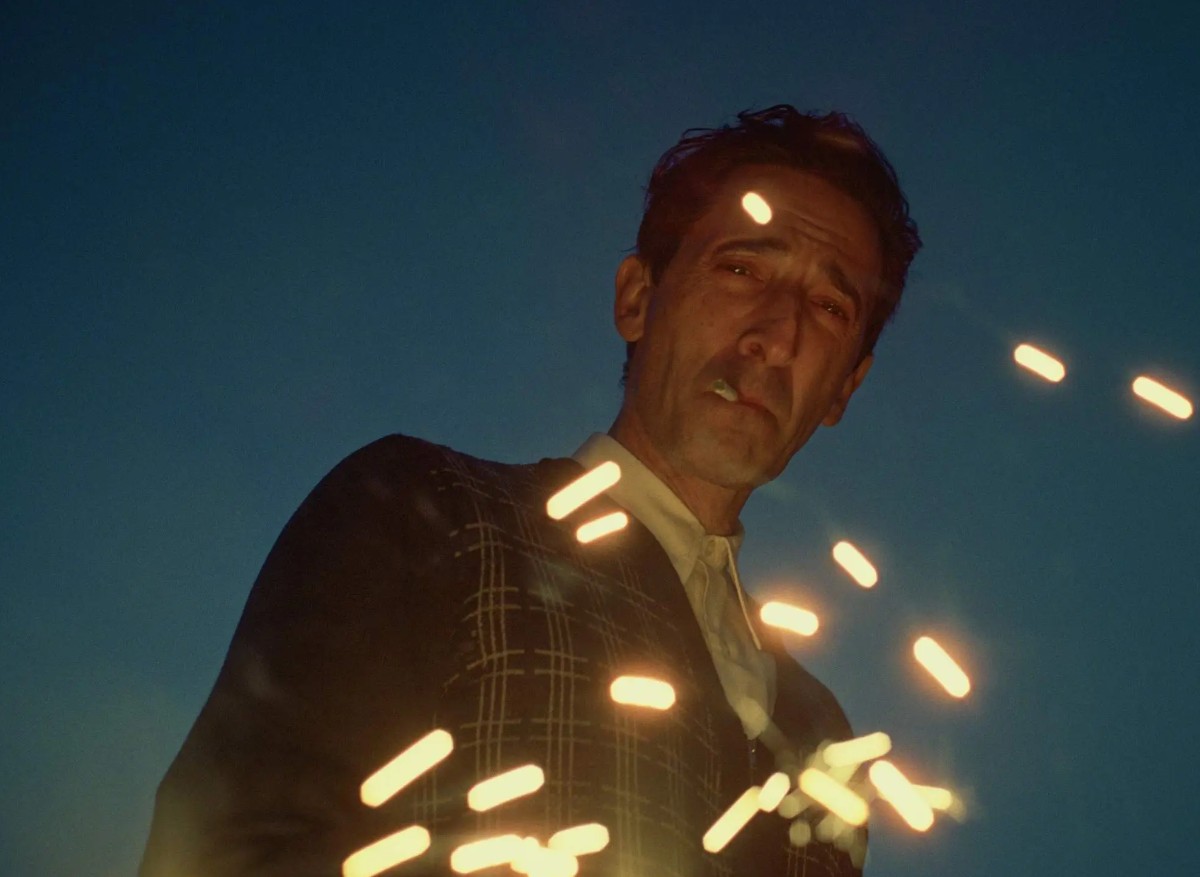
“The Brutalist” is an old-school movie and many of those old-fashioned sensibilities come through in Brady Corbet’s directorial choices. However, Adrien Brody’s performance as László Tóth reflects this point just as powerfully. Such a restrained character like Tóth rarely garners the amount of praise Brody has, but multiple standout moments propel his character away from the simple and into the complex. His performance as Tóth is so convincing many people walked out of the film thinking his subject was a real person. His performance was able to breathe life into this fictional character and allow them to flow into the seminal consciousness as seamlessly as a real historical figure would. It’s akin to the performance from Cate Blanchett in “Tar.” Her acting as the titular character added a layer of depth rarely achieved by their contemporaries. While Blanchett didn’t win the Oscar for her spectacular performance, perhaps we could rectify this by giving Brody his just deserves. 

Additional Staff Predictions:

Adrien Brody – “The Brutalist” (Hector Arrieta, Kamiah Johnson)

Ralph Fiennes – “Conclave” (Evan Ambrose)

ACTOR IN A SUPPORTING ROLE

Guy Pearce – The Brutalist (Hector Arrieta)

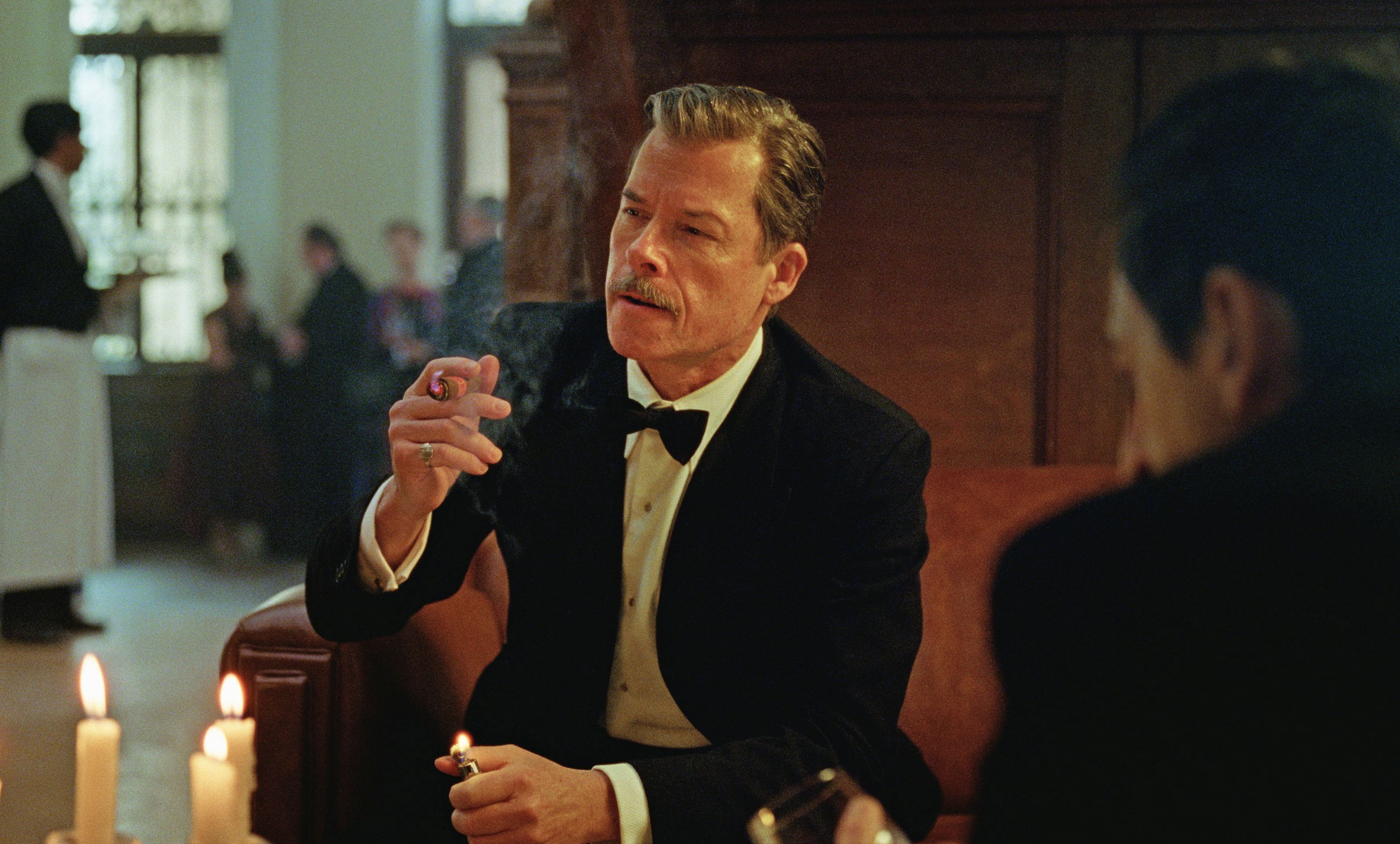
A supporting actor, although not the principal focus of a film, is nonetheless a star in their own right and can often steal the show. This year features a lot of strong nominations for best-supporting actor with the likes of Jeremy Strong and Guy Pearce, in “The Apprentice” and “The Brutalist” respectively. Although, in an ideal world, all these actors would receive their flowers, in my opinion, Guy Pearce has the highest chance of winning in this category. His performance in “The Brutalist” as Harrison Lee Van Buren Sr. was particularly memorable and elevated by his acting abilities.

Additional Staff Predictions:

Kieran Culkin – A Real Pain (Fabian Garcia, Evan Ambrose, Kamiah Johnson)

ACTRESS IN A LEADING ROLE

Demi Moore – The Substance (Kamiah Johnson)

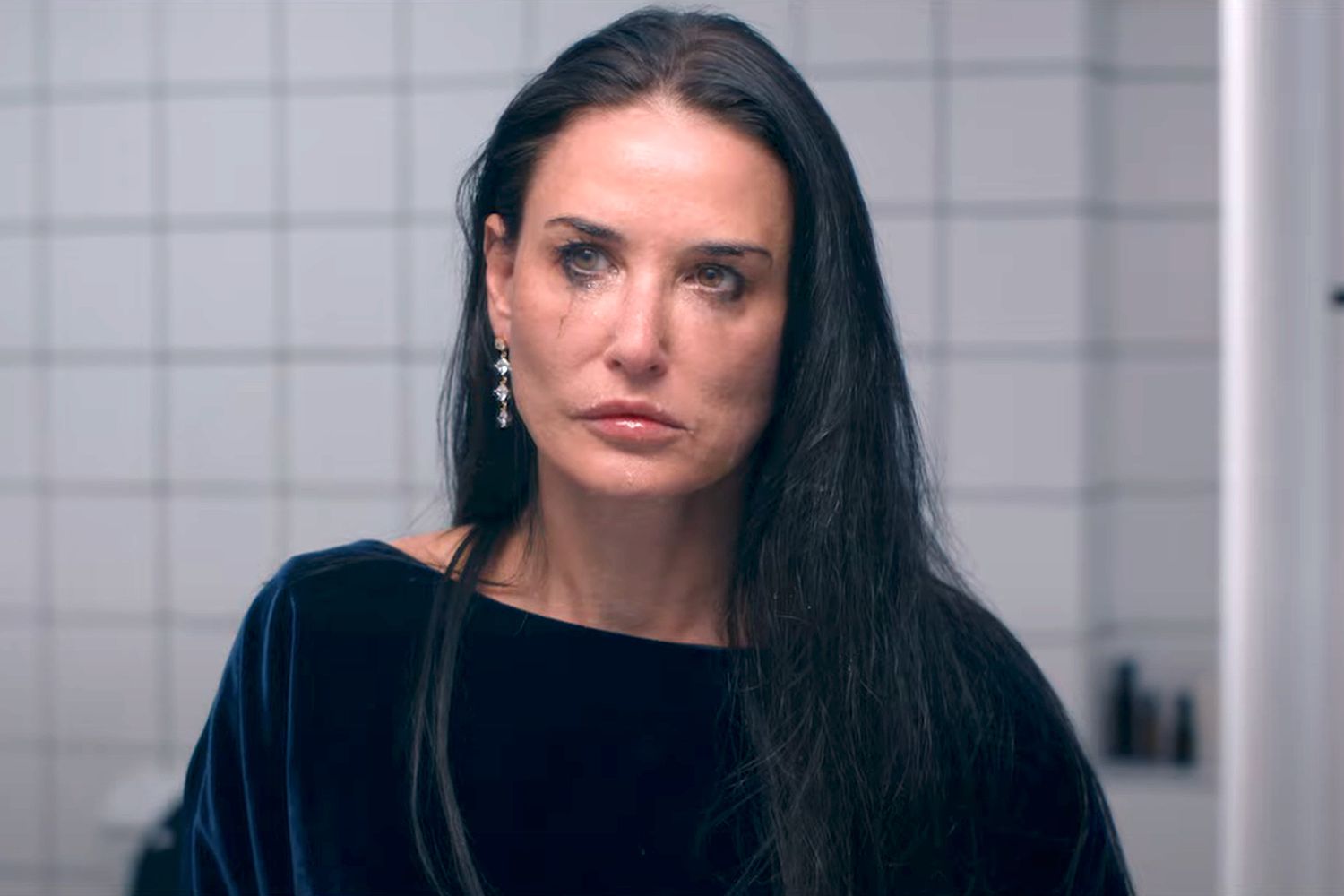
The Academy has a long-standing reputation for not acknowledging and honoring the horror genre. Before this year, there have only been six horror films nominated for Best Picture. “The Substance” is the seventh film to join that list. It’s been a surprise to see “The Substance” get recognized this awards season and I believe the biggest award it will take this year will be Best Lead Actress for Demi Moore. “The Substance” pushes Moore to become someone she has probably felt like before. In an industry where the older you are, the less valuable you become -especially for women- the feelings that come with that are channeled into her performance. Moore does a hell of a job playing a scornful woman who watches her life diminish before her eyes. She doesn’t need the incredible hair, makeup, and prosthetics, but they enhance her performance. The film ends with Moore in a final shot that will stay in your mind forever. In her acceptance speech at the 2025 Golden Globes where she won Best Actress in a Motion Picture she said “Thirty years ago, I had a producer tell me that I was a ‘popcorn actress’ … And that corroded me over time, to the point where I thought, a few years ago, that maybe this was it…And as I was at kind of a low point, I had this magical, bold, courageous, out-of-the-box, absolutely bonkers script come across my desk called “The Substance.” And the universe told me that you’re not done.” The academy would probably seeth at the idea of awarding her at the most opportune time in her career. 

Additional Staff Predictions:

Mikey Madison – Anora (Fabian Garcia, Evan Ambrose)

Karla Sofía Gascón – Emilia Pérez (Hector Arrieta)

ACTRESS IN A SUPPORTING ROLE

Felicity Jones – The Brutalist (Fabian Garcia)

“The Brutalist” is an extremely strong contender for Best Picture this awards season, and one of the things that makes it most salient is the performances supporting the film. Felicity Jones spends ninety percent of her time on screen sitting down, and one would think that his caveat would make her character hard to work around. However, in practice, that simply isn’t the case. Jones delivers an extremely strong performance despite her handicap, no pun intended, and emotes perfectly. The second half of the Brutalist is devoted to her character, Erzsébet Tóth, and her relationship with László Tóth. The subtle pain in László is juxtaposed with Erzsébet’s obvious physical toll perfectly. Demonstrating not only the lasting effects of the Holocaust but just how irreversible trauma can be. Indeed, it is an enduring reminder that suffering doesn’t just end when the event is over, it’s a struggle that is carried up until death. Jones embodies this undeniable fact perfectly and lets it show on screen for the whole world to gaze.

Additional Staff Predictions:

Zoe Saldaña – Emilia Pérez (Hector Arrieta, Evan Ambrose, Kamiah Johnson)

DIRECTING

Sean Baker – Anora (Evan Ambrose)

The line-up for best director includes Sean Baker for “Anora,” Brady Corbet for “The Brutalist,” James Mangold for “A Complete Unknown,” Jacques Audiard for “Emilia Pérez,” and Coralie Fargeat for “The Substance.” Something interesting to point out with the nominees is that none of them have ever received an Academy Award nomination before, except for James Mangold who had been nominated for two Oscars for two separate movies previously. Logically, this would make Mangold the forerunner to win the award, but with all the other movies that “A Complete Unknown” is up against, it seems as if it was the one that made the least amount of noise (positive or negative) during award season. This leads me to believe that a first-time nominee will actually win best director this year, and personally, I think Sean Baker is the most likely choice. With the controversy surrounding “The Brutalist” and “Emilia Pérez,” and the unconventionality of a horror movie (The Substance”) being nominated, it just makes sense that long-time and consistently critically acclaimed filmmaker Sean Baker would be the safest pick to win this year’s award, yet deservedly so.

Additional Staff Predictions:

Sean Baker – Anora (Fabian Garcia)

Brady Corbet – The Brutalist (Hector Arrieta, Kamiah Johnson)

BEST PICTURE

Nickel Boys – Dede Gardner, Jeremy Kleiner and Joslyn Barnes, Producers (Evan Ambrose)

The line-up for best picture includes “Anora,” “The Brutalist,” “A Complete Unknown,” “Conclave,” “Dune: Part Two,” “Emilia Pérez,” “I’m Still Here,” “Nickel Boys,” “The Substance,” and “Wicked.” If I had to choose which movie I’d want to win, my pick would be “Nickel Boys.” However, due to the lack of buzz around it arguably compared to any other runner-up, I doubt it’ll get the recognition that it deserves. As far as who I believe will win for best picture this year, it’s a tough call. Despite its domineering acclaim, many speculate “Dune: Part Two” won’t win because they believe that the Academy voters are holding out for its sequel “Dune: Messiah” to potentially win instead, in the same sense that a “Lord of the Rings” movie didn’t win best picture till it’s third entry “Return of the King” back in 2004. If this is a “sweep year” (i.e. a year where one movie in particular takes home a substantial amount of the awards) then I would guess “Anora” or even “Wicked” winning best picture. However, if by the end of the award ceremony when Best Picture is about to be announced we alternatively see a variety of winners, then I can see “I’m Still Here” winning Best Picture, as it has become a fan favorite, especially amongst its predominantly Brazillian fanbase. This would align with when the South Korean movie “Parasite” won back in 2019 due to how overwhelming the favoritism for it was from the majority populous despite a foreign movie winning Best Picture being unheard of.

Additional Staff Predictions:

Nickel Boys – Dede Gardner, Jeremy Kleiner and Joslyn Barnes, Producers (Fabian Garcia)

The Brutalist – Nick Gordon, Brian Young, Andrew Morrison, D.J. Gugenheim and Brady Corbet, Producers (Hector Arrieta, Kamiah Johnson)

WRITING (ADAPTED SCREENPLAY)

Emilia Pérez – Screenplay by Jacques Audiard; In collaboration with Thomas Bidegain, Léa Mysius and Nicolas Livecchi (Hector Arrieta)

What does it mean to have an adapted screenplay? Does it simply mean, as the name suggests, adapting a preexisting work for the big screen, or does it involve creating something entirely new with a fresh vision, sharing only the name like the ship of Theseus? Well, I don’t have answers to either of those questions, but I do know which nomination in this category will win. This year, the adapted screenplay category resembles a smorgasbord with varying levels of quality. On the high end, there are films like “The Nickel Boys” and “Conclave,” while on the low end, we find films like “Emilia Perez” and “A Complete Unknown.” The former are captivating films with strong storylines, interesting characters, and stellar performances, whereas the latter embody the opposite of those qualities. Therefore, this means the showdown is between the latter two films, and considering the current momentum that “Emilia Perez” has both at award shows and online, I believe that, unfortunately, “Emilia Perez” will win this category.

Additional Staff Predictions:

Nickel Boys – Screenplay by RaMell Ross & Joslyn Barnes (Fabian Garcia, Kamiah Johnson)

Sing Sing – Screenplay by Clint Bentley, Greg Kwedar; Story by Clint Bentley, Greg Kwedar, Clarence Maclin, John “Divine G” Whitfield (Evan Ambrose)


WRITING (ORIGINAL SCREENPLAY)

Anora – Written by Sean Baker (Kamiah Johnson)

Every movie starts with a screenplay. Without the words on paper, how can you translate a story to the screen? A great screenplay will set the bar high for what a movie can become, and that’s what I believe Sean Baker’s screenplay for “Anora” does. With six nominations, including acting, directing, and best picture, I think its strongest aspect is its writing. Baker’s dialogue carries this film and makes two hours and nineteen minutes fly by in a flurry of expletives, arguing, yelling, and best of all, talking. At its core, “Anora” is a character study. We follow Anora as she experiences what seems to be a Cinderella story, which quickly turns into a manhunt movie. Throughout the film, we learn who Anora is and how badly she tries to hold on to this fairy tale that is slowly leaving her grasp. Baker seamlessly intertwines drama and comedy in his screenplay which is filled with an emotional depth that will take you by surprise. Baker flips the romantic comedy on its head, incorporating drama, and underneath it all, heart. This is why it sets itself apart from the other nominees and is a shoo-in to win Best Original Screenplay this year.

Additional Staff Predictions:

The Brutalist – Written by Brady Corbet, Mona Fastvold (Fabian Garcia, Hector Arrieta)

The Substance- Written by Coralie Fargeat (Evan Ambrose)

The 97th Academy Awards will be held on March 2 at the Dolby Theatre at Ovation Hollywood starting at 4 p.m. PT.

Where’s The Time Gone?

photo by J. Finn Schwartz

Does time move fast or does my memory just get worse? My thoughts chug along on their destination, it’s all a bit hazy, but I’m sure they’re on the right track.

What did I even do the past year? How’d I make it here? All thoughts running around aimlessly, seemingly in grasp, but never caught.

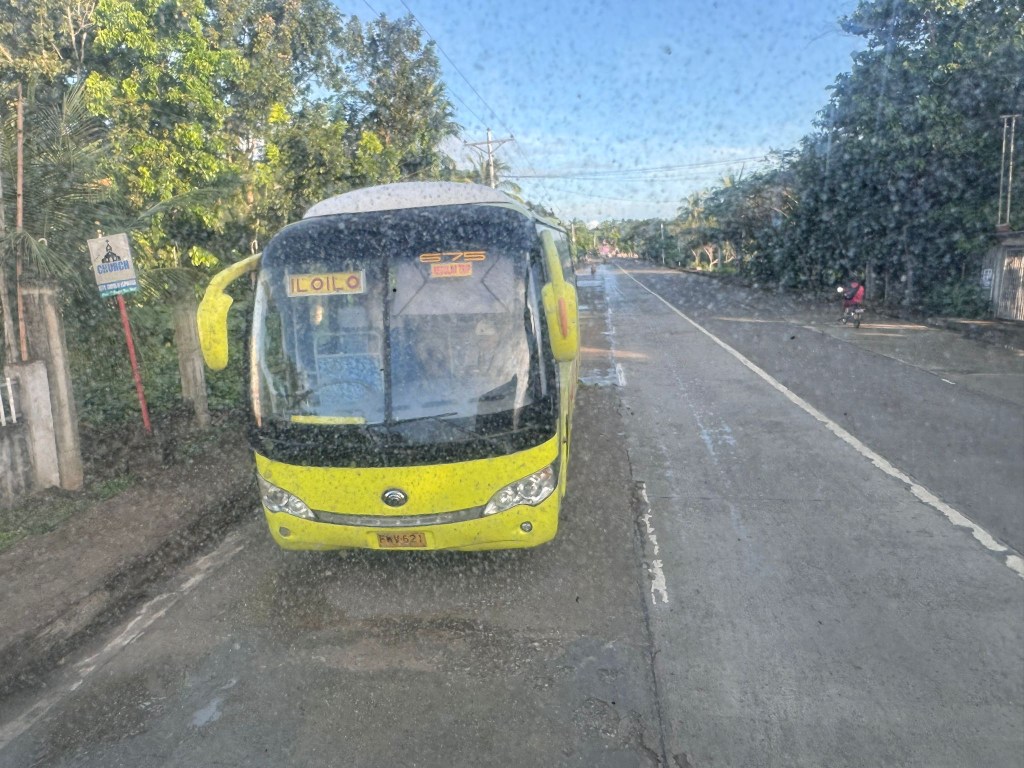
Suddenly my bus slowed to a stop and the conductor, wearing an oversized name tag and an indecipherable name, sprung out of their chair and forced us along the narrow hallway down to the street.

“But this isn’t our stop,” the couple in front of me whispered. It wasn’t mine either. 

What were we doing? Where am I? Proceeding down the steps felt like slowly walking into an air fryer, with each step increasing the temperature. I took my last step out of the bus onto the uneven concrete below me. I was already drenched in sweat. 

The street had no lanes but was just wide enough for 3 vans to drive next to each other comfortably. Despite its size, the street could really only accommodate 2 lanes, as the adjacent houses ran up right to the street. There was no breathing room for a sidewalk, greenery, or even people, yet there we were. 

I looked around, hoping to identify the reason for our abrupt stop. Steam appeared to be coming out from the back of the bus, no, not steam, smoke. Above me, I saw the incoming clouds which seemed to offer a solution if a flame were to break out. However, the smoke remained unremarkably low, allowing the potential storm to worsen the mood.

The conductor, seemingly finished with any immediate responsibilities, addressed the passengers after 5 unbroken minutes of scrambling around the bus. He then began his clearly unprepared speech, and I just sat there. Unfortunately, I couldn’t understand a single word they said. I noticed the bus driver on his phone in the back of the bus. I assumed they were describing where we had stopped to the person on the other line as they seemed lost, scattering glances at every street corner. 

It seemed to me that everything would be taken care of in due time, or maybe I just didn’t care to learn the truth.

Who knows how long we had to wait? Actually, it seems like everyone knows but me. The conductor pushed steam at the tip of his head in a winless argument, while the passengers bickered in self-righteous anger. Of course, I wasn’t listening to them, nor did I intend to try and understand. I was just looking for a place to go to the bathroom and knew that if things really got bad, the information would find its way to me, directly or indirectly. 

I set off to find a bathroom and stumbled on an open storefront. I figured there had to be some sort of bathroom here, so I proceeded to look around. My efforts proved to be in vain, so I grabbed a cold glass of tea instead and gave up on my intrepid search. 

I walked out and felt like I was amidst nothingness, I mean there’s a highway, and some buildings, but it all amounts to nothing. It was as if this place exists solely for transient beings, to be viewed through the glass of a bus, as you sit soaking in your thoughts, romanticizing your life with music blasting through your headphones separating you from the reality surrounding you.

I saw a vehicle parked across the street from the bus. No one seemed to be attending to the car, and the other side had a patch of grass. It seemed as good a place as any to call a bathroom. Looking both ways before crossing the road, I briskly walked over. The patch of grass beside the vehicle had ample privacy, a perfect spot. Regardless, I swiftly moved my eyes side to side at the perception of the smallest movement, anxiously waiting to finish and move on.

Feeling slightly ashamed, I zipped up and attempted to reintegrate into the mass of people on the other side of the street, crossing once again, but this time at a gradual pace.

Everyone seemed to be staring at me, or at least they seemed to be averting their eyes when mine had glanced at theirs. Was my zipper down? Or does everyone know what I did on the other side of the street?

Laughter broke out amongst a group of three, two seemed to be part of a couple, the laughter arising from presumably the third wheel. Were they laughing at me? Why would they even laugh at me? I watched as they slowly lifted their arm to drink from the sweating can of soda. 

That’s right! I had some tea, but first I wanted a seat. A quick glance at my surroundings made it obvious that I wasn’t gonna find a seat for comfort. Instead, I opted to squat, heels remaining firmly on the ground. A nice stretch, but not sustainable for the entirety of my stay along the side of this street.

Firmly squatted on the ground, I opened my bottle of tea and enjoyed a sip of the lukewarm liquid. My tongue squirmed in the presence of immense amounts of sugar, a taste easy to get used to but overwhelming at first.

Was I still being stared at?

I remained squatted, feeling hyper-aware of my person, unable to delve into my thoughts as I had before. Despite sitting in close quarters with these people while traveling on the bus, their presence seemed heightened when standing together in a half-circle around the car. We stood waiting, for who knows how long. People chatted amongst themselves and laughed, and the conductor wandered around making side comments at the crowd of passengers, I sat there with my mind, still thinking I was being stared at.

In the distance, a van sped around the corner, shrieking to a stop directly behind the bus. The rain had started, seeming to ease the smoke but giving no respite to my thoughts of a potential crash. No such crash happened, was I the only one to think that was possible?

The door swung open into the street without hesitation, and the driver hopped out of the van as if they were the only person in the world. Wearing the same outfit as the bus driver, I assumed they worked for the same company. With a mix of joy and haste in each step, this new driver made His way to smoke. He quickly glanced at the passengers and yelled some words with a beckoning hand gesture. A swarm of passengers headed towards this new van. There seemed no way all these passengers would fit, but one by one, 10 maybe 15 people were lost from view as they crammed into this van about a quarter of the size of the bus from earlier.

I remained squatted amongst a group of about 35 remaining individuals. Surely we would fit in the next van, right? Would there be a second van? Should I have made my way to that first van? No, that driver seemed careless. I wondered what other people were thinking; the staring seemed to simmer. I settled in, no longer squatting, but at least I was comfortable.

A new van turned the corner, and things unfolded exactly as before: a shrieking stop, a quick glance, mumbled words, and a beckoning gesture. However, this time I found myself among the throng of people advancing toward the van. There was no way we could all fit, so I hastened my pace to get the most comfortable seat.

I had arrived by the sliding door of the van, a cool breeze washing over me. I was the first to arrive and had free choice to pick my seat. Which one should I take? Which one would offer the most comfort? All thoughts rushed through my brain as I entered the van, it felt like autopilot when I found myself directly behind the driver seat sitting down. There was adequate legroom and a window seemed to offer a small comfort. I sat there being squished as each successive human found space in the small confines of the van. At least the fan was blowing directly on my face.

Eventually, the doors closed, and the driver buckled in. The van started moving toward our destination. The unexpected stop slowly faded away behind us, becoming once again a nondescript location at the side of a highway, returning to its former form as an unexpected place for transients. 

I stared out the window and found myself caught in the trance of my thoughts.

What just happened? How’d we get here? All thoughts running around aimlessly, seemingly in grasp, but never caught.

It seemed as if I had spent an eternity at that stop, never to arrive at my final destination.

Did time slow down when I stopped along the highway, or was I just hyper-aware of myself and others? My thoughts spun around as if on a neverending carousel.

I leaned back, remembering our unexpected stop was only halfway to where I was supposed to go. I let my thoughts run as I stared at the shifting landscapes along the highway. Each place offers an unexpected stop for transients.

Suddenly we screeched to a halt, pulling me out of my absentia. We had arrived.

The Ten Best Movies of 2024

2024 felt like a year of rebuilding. Where the previous year had a heap of significant events that severely limited the industry, it felt like audiences were finally subjected to the consequences of those incidents. It would be disingenuous to call this another year of missed potential when nothing seemed to gleam among the sea of darkness. That being said, the items featured on this list deserve their placement not for their inherent mastery but for their ability to make something out of what would have otherwise been a standard year of releases. This list will highlight ten of them, in order of their U.S. (theatrical or limited) release dates with a few honorable mentions below.

Honorable Mentions:

  • “Hundreds of Beavers” (Mike Cheslik)
  • “Kinds of Kindness” (Yorgos Lanthimos)
  • “Memoir of a Snail” (Adam Elliot)
  • “By the Stream” (Hong Sang-soo)
  • “Phantosmia” (Lav Diaz)

“About Dry Grasses” (Nuri Bilge Ceylan)

February 23, 2024

​​Do you think it’s a sign of immaturity when one constantly seeks external validation? Either way, it seems that co-dependent minds thus influence the world and its inhabitants the most, yet they always personally feel as if they’ve impacted it the least more so than those who actually have. Like it or not, the outspoken are the most attractive of our species no matter how disagreeable or insatiable they can be. Nuri Bilge Ceylan’s “About Dry Grasses” is one of the greatest character pieces of this decade so far, following a children’s teacher named Samet (Deniz Celiloğlu) who leans too far into this character flaw. 

In every forced act of submission against his peers, the deeply insecure Samet seems to dread never achieving the impossible in seeing himself through others’ minds, since real-life affirmation is his only known coping mechanism for discerning his own identity. This is something that should’ve been sorted out long before he grew old enough to have social authority. Now, it may be too late for him to take responsibility for such failure. Now, others will suffer. Generations even. 

Here lies a valuable message about how nobody can fill the void from unknowing but oneself. Nobody can stop themselves from caring but themselves. The sooner they learn that the sooner they stop becoming the spitting image of an individual like Samet: a pathetic little man who feeds off of the weak just so he can agree with his mind’s consensus on his inflated self-worth. If I had to pick, this is my favorite movie of 2024. It’s essentially just a huge PSA advising its viewers that at some point in their life, they should just accept their losses contently instead of taking revenge on the world or else they might just end up becoming as filthy of a swine as this film’s lead character. 

“Dune: Part Two” (Denis Villeneuve)

March 1, 2024

What more can I say about “Dune: Part Two” that hasn’t already plagued the internet for most of this year? It’s a simplistic political space opera with arguably perfect special effects like its predecessor. The worms are fun. The religious metaphors are still weighty. That ending one-on-one fight made me and I’m sure most of its viewers unlock a primal urge they didn’t know they had for good old-fashioned, lawful combat. Denis Villeneuve don’t miss! 

“Do Not Expect Too Much from the End of the World” (Rada Jude)

March 22, 2024

With his latest feature-length, director Rada June provides the most composed critique you could make on the modern world as the imminent death of humanity. Here’s a filmmaker who understands that our species’ failure (if true) deserves to be epitomized by the chaos that it is like the amusing impact of a fart joke suddenly colliding with the gloominess of a serious self-insert. This makes for a seriously one-of-a-kind, and more importantly, hilarious, “doomer” piece. All I’m saying is, I don’t think June is expecting our demise to be quite like “The Day of the Lord.”

“The Beast” (Bertrand Bonello)

April 5, 2024

Bertrand Bonello’s “The Beast” is kinda this year’s “Blade Runner 2049” but alternatively led by a lonely female character (Léa Seydoux) this time to clash with its enigmatic male counterpart (George MacKay). This movie harkens back to the science-fiction of directors like Lynn Hershman Leeson but with a hint of Lynchian horror and Kaufmanesque romantics to boot. Here, the past is depicted as Shakespearian, the present polluted with vain incels and wannabee superstars, and the AI-administered future is quite literally futile nothingness to combat this history of such intense emotions conceived from our species’ evolving segregation. What a frankly tragic time-jumping odyssey that owns the saying, “as if things couldn’t get any worse…”

If there’s such a thing as the most “important” or “relevant” movie for people to watch this year, then “The Beast” is certainly that. It features a telling message about how love dies once you make the world revolve around only you. It’s as if the film is urging its viewers to kill this modern paranoia, but perhaps not completely to the point of killing one’s self i.e. killing one’s human experience.

“Challengers” (Luca Guadagnino)

April 26, 2024

Picture a hodgepodge of “Y Tu Mamá También,” “Whiplash” and Luca Guadagnino’s usual YA romantic degeneracy and you essentially get “Challengers.” Which dares to ask the question: is it gay to be a bad boy or a nice guy? Well, if you’re still hellbent on playing with just your balls and haven’t evolved past either of these common male archetypes, especially if you’ve hit your 30s, then yes, you might be a little. If not for these underlying messages on farce masculinity, I’m sure its witty, exaggerated script, sharp visual technicalities, and Trent Reznor and Atticus Ross’s musical score of the year will make it worth the watch alone.

“I Saw the TV Glow” (Jane Schoenbrun)

May 17, 2024

If you ask me, “I Saw the TV Glow”  is Jane Schoenbrun’s homage to David Lynch’s nostalgic mini-series “Twin Peaks: The Return.” This is a movie that mercilessly embodies an intense existential crisis regarding if fictional media consumption as a child — particularly those spotlighting biblical prophets that viewers can arrogantly mirror themselves in — provokes the gloomy mental illnesses, barriers between self-actualizing, and antisocial behavior people deal with while aging in the real world (i.e. the humbler world), which begins to look more and more like a sadistic prison ever since the mass production of such transcendent entertainment. More notably though, it’s a movie that warns the audience to never let a goth girl put you into her weird hobbies. Now that’s priceless advice.

Read more about “I Saw the TV Glow” here.

“Furiosa: A Mad Max Saga” (George Miller)

May 24, 2024

Arguably, one could boil “Furiosa” down to simply being an elongated fan service for people who worship the world of “Mad Max: Fury Road.” Luckily, it’s so much more than that. George Miller ambitiously borrows from the tone of his previous film “Three Thousand Years of Longing” even more so than his beloved “Mad Max” predecessor to create an episodic revenge fable unlike anything you’d expect from a $150-million blockbuster. Chris Hemsworth as a post-apocalyptic communist leader also marks this franchise’s most well-realized antagonist to date. Go figure.

“In a Violent Nature” (Chris Nash)

May 31, 2024

On paper, the “arthouseification” of “Friday the 13th” does sound obnoxious, and there’s a tacked-on monologue towards the end here that proves said theory a little. Yet, for the most part, this is evidently made by someone who gets the charm of classic B-rated horror. The kills, however, are way more grueling to sit through than anything from the franchise it’s inspired by, even when they’re absurdly imaginative regarding the slasher genre. This gives them a level of authentic uneasiness that is rare to find when it comes to modern horror movies today. Not to mention, it’s shot gorgeously like a refrained wild animal documentary and also features some enticing attempts at humanizing the slasher villain without completely revealing a clear backstory, unlike say, Jason Voorhees, which is consistent with the movie’s gimmick of having a limited observer’s perspective throughout most of its runtime. “In a Violent Nature” received mostly polarizing reactions this year, but personally, I deduce, “Why the hell not?”

“Anora” (Sean Baker)

October 18, 2024

Sean Baker’s latest and arguably most critically acclaimed feature-length has one of my favorite endings of the year. Though I’m not entirely sure it was built up too perfectly, it still leaves the kind of impact on its audience the same way Old Hollywood melodramas akin to that of Billy Wilder or Elia Kazan used to leave on us. It’s a surreal feeling witnessing this nostalgic kind of intention in an indie narrative of all genres, one especially anchored by the fact that it very blatantly takes place in the modern age despite having an old-school tragicness to it. Needless to say, that’s sort of what makes “Anora” special: it is a marriage between a dying style of insistent plotting and Baker’s typical neorealism which ironically gives the movie a grounded sense of urgency and unpredictability. 

“The Brutalist” (Bradey Corbet)

December 20, 2024

No, “The Brutalist” is not quite awe-inspiring enough to be, say, this generation’s “Lawrence of Arabia” or “There Will Be Blood.” However, it is quite awe-inspiring in context with the modern age of filmmaking, where studios often reject making sweeping historical epics like they used to when more fantastical large-scale productions are a safer bet. Just like in his previous feature-length “Vox Lux,” Bradey Corbet doesn’t fear getting extra dark and controversial to depict the tragic subjugation of his characters, who in this case, are inspired by the very real xenophobia occurring in a post-WWII America. He shoots the absolute hell out of this movie, perhaps more than any other filmmaker this year, and Daniel Blumberg’s accompanying musical score is nothing short of ethereal. 

You can read last year’s list here.
Closing Night: ‘New Wave’ – 25th Annual San Diego Asian Film Festival Recap

Via SDAFF

All good things must come to an end. After another week of Asian-American and international cinema, the 25th annual San Diego Asian Film Festival ended. Many celebrations were held. Amongst the fanfare, Todd Gloria, the first person of Asian heritage to serve as San Diego’s Mayor, proclaimed the week of the 7-16th as “San Diego Asian Film Festival Week” in the City of San Diego. Of course, such a momentous occasion would have to be followed by an equally commemorative film.

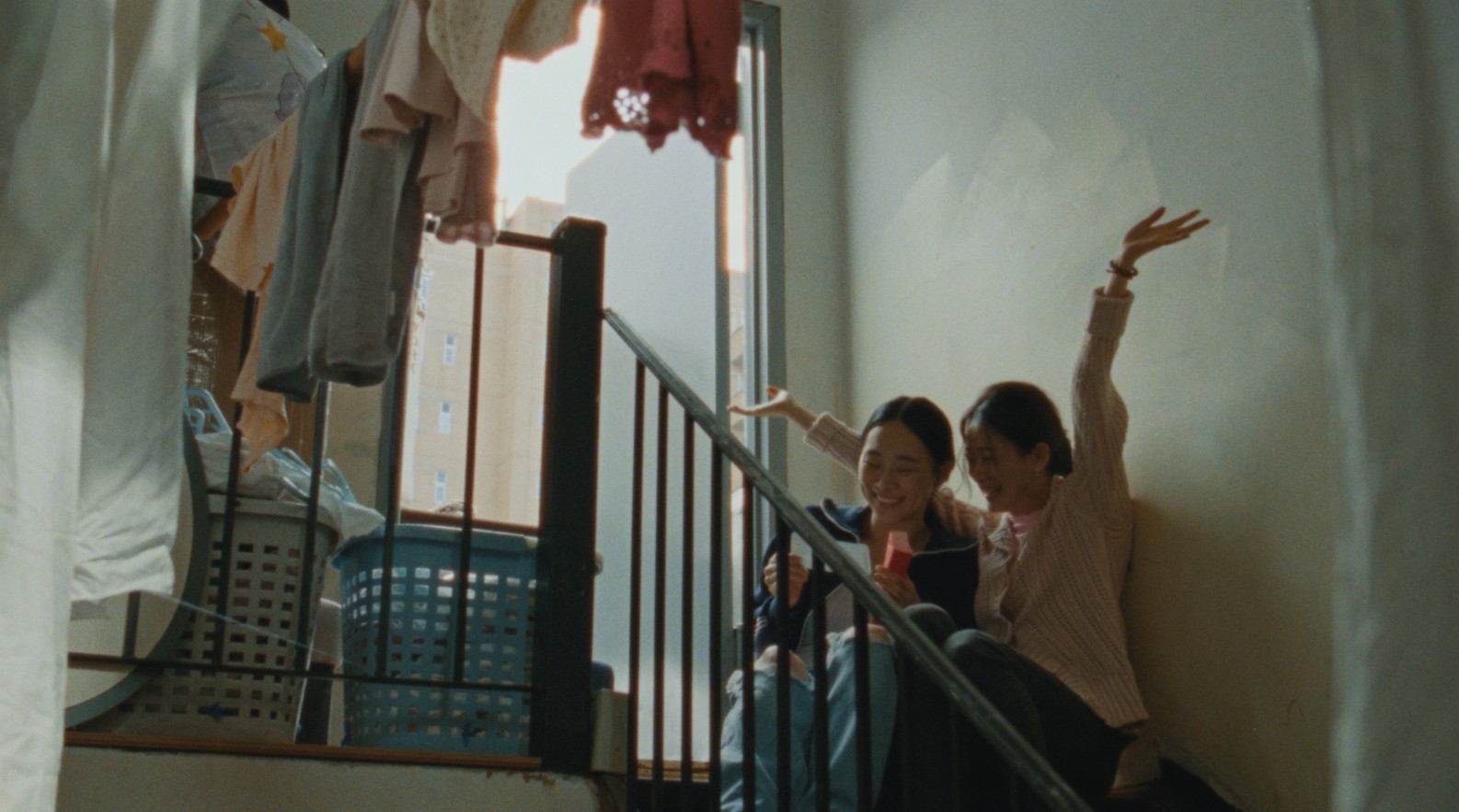
“New Wave” is the directorial debut of Elizabeth Ai, a Vietnamese-American director and producer. Ai was kind enough to appear at Regal Edwards Mira Mesa and introduce her film to the “biggest audience” it had ever been screened to. What started in 2019 as a production she made during her pregnancy that she wanted to eventually share with her daughter blossomed into something far more. A love letter to her past and future. 

The film is a documentary primarily focusing on the boom of the new wave genre amongst Vietnamese refugees in the 1970s and 80s. Throughout the film, Ai crafts a connection between the experiences of those in the music industry during that period and her own experience living in post-Vietnam America. Despite primarily being an informational documentary focusing on the effects of a particular period on an underrepresented group of people, a significant portion of the movie is dedicated to the director herself. In fact, the last 20-30 minutes of the film features several private discussions between her and her absent mother as they attempt to mend their broken relationship. Ai eventually gains a new understanding of her mom’s circumstances and learns to forgive her.

Preceding “New Wave” was a short film by Trace Le who also composed original music for the film’s soundtrack. The short film is loosely connected to the overarching plot of “New Wave,” focusing primarily on the generational gap between an Asian mother and daughter. It’s about as basic as it gets and could easily be shelved amongst the recent heaps of autobiographical stories that get pushed out regularly. However, it’s obvious the two films as a coupling do have merit between one another. Whereas Ai takes a literal approach to her story and chooses to be as personal as possible, Le metaphorizes her life as if hiding behind a curtain. Trace Le’s “No More Sad Songs” could benefit from expansion but would need to be substantially rebuilt to be worth more than it takes. A pretty picture with seldom pathos is still just a pretty picture.  

In this way, “New Wave” and its preceding film are almost the same. It’s not so much a product of its time but more a coupon long expired. What initially begins as a nostalgic run-through of experiences we thought we’d forgotten eventually morphs into something of a memoir. It’s obvious the 70s backdrop of the film is meant to be a foundation for the true story at hand but that begs the question, why? There are many answers presented throughout the film but none are satisfactory. 

As previously mentioned, it’s clear that Ai is trying to weave a connective tissue between herself and fellow Vietnamese refugees from that time. Uniting everyone through shared trauma and the methods people would use to escape. New wave music was there for people when they needed to pretend they were somewhere else and forget about all of life’s woes. It wasn’t just a music genre but a lifestyle. However, in Ai’s experience, her escape quickly dies and instead serves as a reminder of the people she lost during that time. This almost certainly isn’t everyone’s experience so perhaps her true intention was to highlight the diversity of voices amongst those who lived through that time. This would explain the abundant focus on prominent Vietnamese new wave figures like Ian Nguyen and Lynda Trang Dai. However, their stories also feature strong themes of parental neglect and generational gaps. Likely, Ai didn’t anticipate this would happen. She probably wasn’t aware that so many people would connect to a story she felt so centralized in, and while the circumstances are extraordinary, that doesn’t necessarily translate to the film. 

“New Wave” is the ultimate artistic nightmare. It’s what happens when you hold onto the things you’ve held inside and let them become the anchor by which you’ve shaped your perspective. Your world and the world you created in your head blur together so far that you can hardly tell what reality is anymore. Your assumptions become truths and your delusions become facts. However, something about this denotation still feels a little too self-aware for the product we received.

The modern cinematic moniker is a rat race to see who can create the most personal film imaginable. To see who can venture into the depths of their psyche and share everything they possibly can with the world. Perhaps this is an offshoot of what has become vlog-style, cinéma vérité content, simply vehicles for portraying the artist’s lifestyle. “New Wave” does somewhat break that mold and essentially presents a film that’s almost entirely about the author, but cleverly masked under the pretense of being an informational documentary. However, the payoff to the reveal, if one could even call it that, is poorly set up with haphazardly paced self-inserts and references. The main subject, Ai herself, doesn’t feel like an adequate subject until the last few scenes. The ending, while powerful, doesn’t justify how it was presented. 

It gets many things right, the aesthetics, the characters, the niche references and commentary. However, it’s all executed in a way that isn’t entertaining or gratifying to complete. Its lack of depth ultimately holds it back from weighing more than it does. Its most compelling elements are held back by an, at best, shaky foundation. 

For what it’s worth, thematically speaking, “New Wave” also shares an intrinsic connection to the San Diego Asian Film Festival itself. As mentioned, escapism and coping with circumstances are prominent motifs throughout the film. In a way, the San Diego Asian Film Festival is a modern-day escape from the hustle and bustle of our complex world. Multiple speakers echoed this sentiment during the festival including artistic director Brian Hu. Meta-textually, “New Wave” was the ideal choice to cap off a week predicated by uncertainty and certainly was more than enough to make audiences forget that.

‘Victory’ – 25th Annual San Diego Asian Film Festival Recap

Via SDAFF

Whether one would like to believe it or not, the paths of cheerleading and filmmaking are intertwined. Although one could make the argument that cheerleading – in the sense of gathering together and screaming in support – has existed since the dawn of civilization, cheerleading as we know it today dates back only to the 19th century, the same century wherein the first undertakings of motion pictures took place. Thus, it would only be a matter of time before the “cheerleading movies” genre was born and subsequently evolved.

One could argue that the era of “cheerleading movies” in the United States has come and gone, with its height in popularity primarily in the late 1990s and early 2000s with films like “But I’m a Cheerleader” and “Bring It On.” However, with the 25th rendition of the San Diego Asian Film Festival, the Korean film “Victory” directed by Park Beom-su – which was stated to have been Korea’s first “cheerleading movie” – indicates that time is circular, and what was once a fad always has the opportunity to come back, and with just as much fervor.

Set in 1999 in the small shipbuilding town of Geoje, Korea, “Victory” tells three stories that intertwine throughout the movie. The first, and main storyline, follows Pil-sun (Lee Hye-ri), a high school girl with an attitude who aspires to become a dancer in the K-pop industry in Seoul, and her friend, another aspiring dancer who is always rocking a Baseball Hat, something that will be important later, Mi-na (Park Se-wan).

The film’s main subplot revolves around the football team of the main protagonists’ high school. Their American football equivalent would probably be Cleveland Browns i.e. they suck. However, all that changes when the football-obsessed principal of the school (Ju Jin-mo) manages to transfer football phenom Jin-tak (Cha Joo-wan) from a high school in Seoul over to Geoje. Alongside him comes his cheerleading sister Se-hyun (Jo A-ram).

This is where these two storylines begin to intertwine, wanting a room to practice their hip-hop dancing, Pil-sun and Mi-na convince Se-hyun to trick the school into believing they are starting a cheerleading team to support the football team. They get their wish, and eventually, they form the ragtag group of cheerleading girls known as the Millennium Girls, commemorating the Y2K phenomenon of the time. Initially aren’t very good, but after an obligatory training montage, they become superstars, and the boys become champion contenders.

The film’s lightheartedness is where it shines most. From the cheerleading side, the dance choreography and cinematography were high energy, and the music choice of late 90s K-pop complemented each dance section in the movie. Additionally, the cheerleaders’ costume design was extremely creative. When the group first started, they used plain pink sweatshirts with the letter M stitched onto them, but as the group began to perform better, their outfits also got better, culminating in an outfit that mirrored the football team’s uniform, but with “millennium” in bold lettering across the chest along with a pair of matching white leg warmers. They looked like an actual team of professional cheerleaders.

More important than the outfits is the cheer squad themselves. It’s worth mentioning that each character does fit an admittedly generic archetype: the nerd, the tomboy who secretly knows taekwondo, the weird one, etc. However, none of the archetypes are too over the top or become annoying. All of the characters in the cheer squad are likable and display a clear chemistry between each other.

None of this is to shortchange the football side of the story either, for being a “cheerleading movie,” this was also a good football movie. They did not skimp out on the high-intensity athletic scenes, there were times that it felt like I was watching a football anime, with camera shots and angles that were almost inhuman. Each goal was satisfying, especially the play to win the team’s final game – a third-place game in a tournament – which was a flying sideways kick performed by, none other than, soccer phenom Jin-tak.

However, as all this plays out in the film, a third storyline takes place. Pil-sun’s father Woo-yong (Hyun Bong-sik) is the manager at one of the shipbuilding yards in the town. The viewer is cued into the fact that the working conditions of the shipyard are not good. They’re overworked, behind schedule and it’s to the point where people are beginning to get injured. As a result, the workers begin a labor strike that halts the production of ships. Woo-yong is caught in the middle, wanting to support his comrades while also wanting to appease the higher-ups.

Coincidentally enough, during the training montage, one of the venues where the Millenium Girls practiced their moves was the shipyard part of the labor strike. Fast-forward, to a scene that involves a fight between the protagonists and another school, it turns out that one of the injured students from the other school was the son of an important person from the company who operates the shipyard. This then causes Woo-yong to beg for forgiveness from the girls, this sight of her father leads Pil-sun to run off to Seoul – believing that her father does not have the strength to stand up against a tough world – to pursue her dancing career.

Before leaving, Mi-na and Pil-sun have a heart-to-heart, which ends with Mi-na giving Pil-sun a Padres hat as a parting gift, oddly fitting since the film festival takes place in San Diego. However, of course, Pil-sun eventually comes back, has an “I love you” moment with her dad, gets the gang back together right before the last game, and cue the happy ending with a major victory.

Despite the predictable ending, the two lighthearted storylines are the most enjoyable parts of the movie, but it’s the third storyline with the father and shipyard that could have been left out. This isn’t even mentioning a love triangle subplot that simply isn’t worth divulging. With all four of those moving parts, there was simply just too much going on in a movie that could have easily been streamlined into something more cohesive

Nonetheless, for Korea’s first attempt at a cheerleading movie it’s garnered some success – amassing $3,293,889 in its gross worldwide box office – it’s evident that Korea’s era of “cheerleading movies” is finally upon us and can improve from here on out.