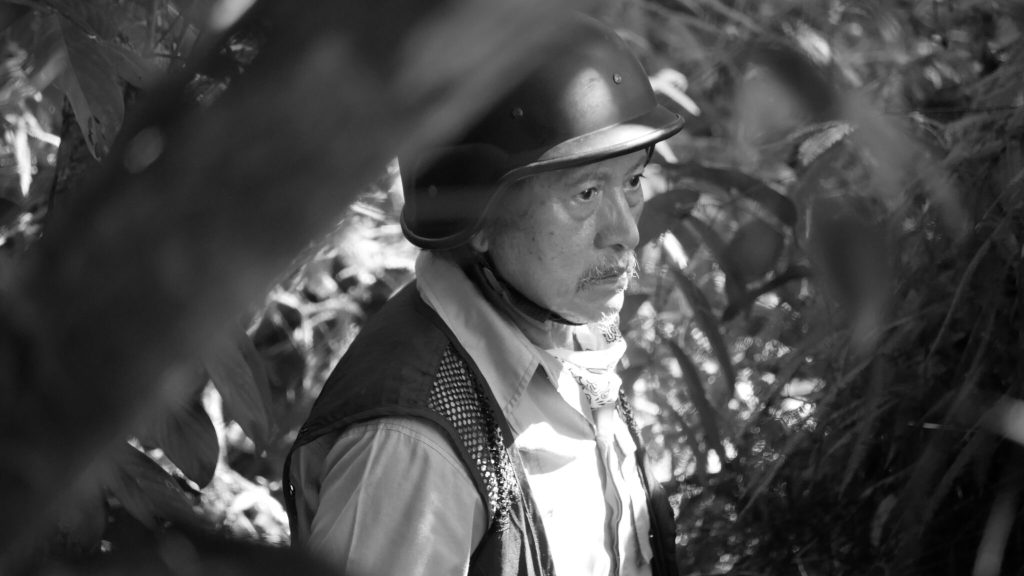
In any given society, there will always be people who develop deep regret from committing acts of service for their government regardless of whether or not they’re socially encouraged as something to evoke pride in. We often hear stories about war veterans or anyone who worked a government job that required soliciting violence, struggling with PTSD for the rest of their lives. Occasionally, having a respected public image is enough to keep one content with the actions they have produced to get to where they are now. Still, on the other hand, it could also be temporary mental gymnastics.
Hilarion Zabala (Ronnie Lazaro) is a man who, from the looks of it, has never actually thought about the things he’s done to others. He’s never thought about the innocent people he put in danger during his time in the military, he’s never thought about his assigned assassinations and he barely even thinks about what his personal desires have done to shape his children over the years. That is until he begins developing phantosmia: the condition of smelling something that isn’t actually there. This situation brings back vivid memories of his past military services which had ultimately made him a renowned soldier in the Philippines.
With this set-up, director Lav Diaz tells a familiar story about an elderly man wanting to redeem himself out of distaste for the life he’d lived. Think Akira Kurosawa’s “Ikiru” (1952) butting heads with Martin Scorsese’s “Taxi Driver” (1976) but executed in a methodical and vérité manner that’s trademarked to Diaz’s usual mode of lengthy storytelling — 4 hours and 6 minutes this time to be precise.
The end product is a virtually unembellished look at processing failure and wanting to promptly overthrow it by trying to understand one’s current environment for a change. It’s about finally picking out the elements that morally do not sit well with it rather than abiding by its accepted flow of social norms or assigned duties. It’s a viewpoint that sides with rebellion when justifiable and for the betterment of victims who suffer under corrupt government regulation.
While “Phantosmia” is a tale of redemption, it is not a clean-cut one as is real life. There’s a slight cynicism to the movie, where the main character’s solutions, due to the way he was raised, ultimately result in violence even in the present at his old age. It embodies the saying, “Old habits die hard.” Yet, by the end, Zabala commits the kind of violence that at least tries to compromise with what little good it can lead to in a world where people will always have the power to control and maneuver via brutality.
 Turn off the Bright Lights