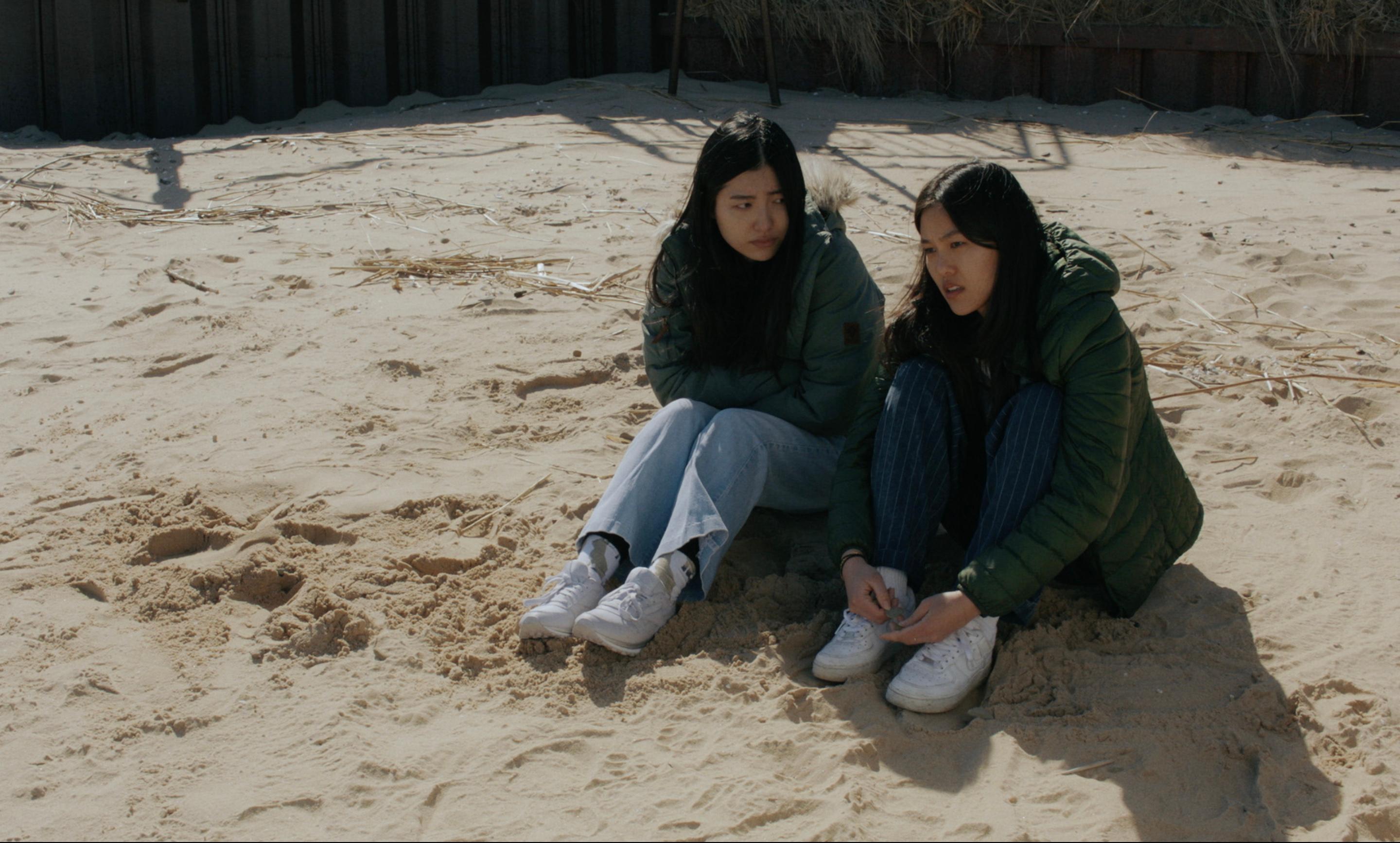
“Waiting for the Light to Change” is the directorial debut of Linh Tran, a Vietnamese filmmaker and graduate of DePaul University. Its premise revolves around the drama that emerges between a group of friends during a week-long beachside getaway. It’s a semi-coming-of-age story that focuses on that strange transitional period of personhood directly following the time when most young adults graduate from university.
In many ways, the film is a clear-cut example of what could be referred to as “post-Covid filmmaking.” A recently emerged sub-genre in cinema to describe movies that feature a usually small crew, cast, budget, and range, crafted during or immediately following the pandemic. That being said, “Waiting for the Light to Change” is greater than the sum of its parts. Most of the film is told through the eyes of Amy (Jin Park), a relatable twenty-something who struggles with her ongoing jealousy toward her more-put-together best friend Kim (Joyce Ha) and the undisclosed feelings she harbors for Kim’s boyfriend Jay (Sam Straley).
The true gamut comes from the film’s exercise of empathy. The personalities of the main characters are ultimately what’s meant to shine the most. It’s very easy to see yourself in the protagonist’s shoes and identify with her impulsive actions. Amy is a very lived-in character, almost as if each scene is ripped from a personal experience.
Inspired by the likes of popular “hangout movie” directors like Jim Jarmusch and Hong Sang-soo, a bulk of the runtime consists of static scenes where characters are shown just sitting around and talking. Tran noted in our Q&A after the film that shooting these scenes was very easy for the cast to do and left a lot of room for personal interpretation and variation. Aside from that, minor set pieces are used mainly to add visual longevity to some portions of the film which feels justified most of the time. The scenes where there is a lot going on stand out more as a result of these artistic choices. However, those are never meant to be the focus of the film.
The biggest fault is the inevitable cliches that are tapped into as well as some of the repetitious aspects of the film. There’s a noticeable lack of variation between acts that pollute a majority of the film. Scenes that feel like they lead nowhere, characters being regularly sidelined, and an excessive amount of drug use for whatever reason. While a majority of these things wouldn’t matter in these meandering types of films, as they’re already known for their lack of direction story-wise, Waiting For the Light to Change does follow a mostly emphatic narrative that reasonably paths from start to finish, despite the reportedly “bare script” the cast worked with. In all fairness, these things only superficially affect the overall quality of the piece, and the predictable loop that the film creates for itself is not difficult to engross yourself in.
Something interesting that Tran brought up after the film was the lack of emphasis race had on the film. Despite having a mostly Asian cast, the director emphasized that their identities were not central to the narrative. It was important to her to tell a neutral story where the characters just so happened to be Asian, in a way, a form of normalization for these sorts of portrayals.
For a debut film, Waiting for the Light to Change is a very strong start and proves the inspired character of Linh Tran has more than enough aptitude to continue an equally strong career.
 Turn off the Bright Lights
The best thing about viewing TV or Streaming is the access we now have to other countries and their films they make.
LikeLike